Nation
Why Indian tourists fail to navigate global cultural nuances
The increasing number of Indian tourists going abroad, and their behaviour, has become a topic of discussion with some recent incidents drawing attention
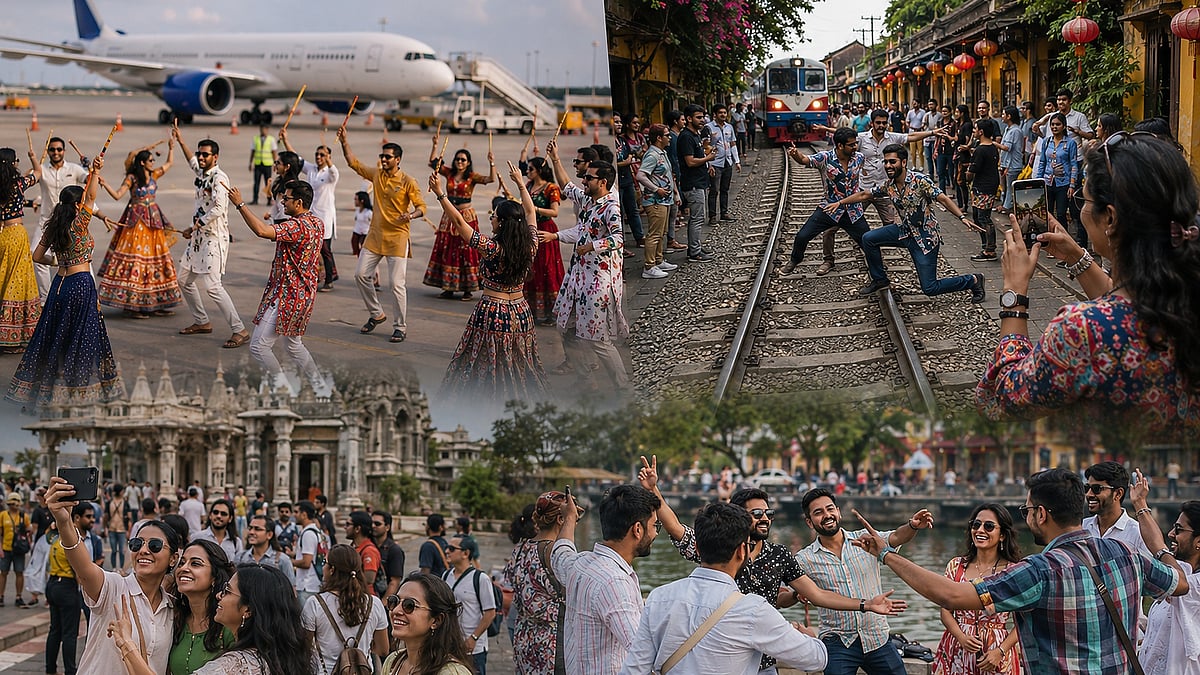
Reports and visuals of impromptu garba on an airport tarmac in Vietnam, dancing on railway tracks and high noise levels—often characterised by a blend of enthusiasm and cultural differences—have drawn the ire of locals. While such behaviour is far from representative, and the vast majority of Indian travellers are respectful and considerate, certain patterns have emerged, prompting advisories from establishments and sparking conversations on social media.
A recent advisory issued by a hotel in Gstaad, Switzerland, highlights some of these behavioural nuances. While not explicitly naming any nationality, the advisory subtly addressed issues such as noise levels, appropriate attire in public areas and the responsible use of hotel facilities.
Though framed neutrally, it was widely interpreted as a response to observed behaviours and, in this instance, understood to be directed at Indian guests.
One common observation relates to the volume of conversations and the exuberance that can sometimes be perceived as disruptive in quieter, more reserved environments. As one travel blogger, @Wanderlust_India, tweeted, "It's a fine line between enjoying your vacation and respecting the local culture. Sometimes, we Indians can get a bit too loud, forgetting we're not in a Bollywood party! #IndianTourists #TravelEtiquette."
This sentiment echoes concerns raised by incidents in Vietnam, where "inappropriate behaviour" by Indian tourists has been reported. These have ranged from littering at historical sites to loud and boisterous conduct in temples and public spaces. While such incidents may be isolated, they often gain traction and shape perceptions.
A news report from Vietnam quoted a local guide as saying, "We welcome all tourists, but we ask them to respect our heritage. Some visitors have not understood the sanctity of our temples."
The underlying reasons for such behaviour are multifaceted. For many Indians, international travel is a relatively recent phenomenon, with outbound tourism witnessing a significant surge over the past decade.
This rapid growth means a large segment of travellers may not yet have extensive experience navigating diverse cultural norms. Moreover, concepts of personal space and public decorum can differ significantly from Western or East Asian standards. What is considered normal social interaction within India may be perceived differently elsewhere.
Social media often amplifies these discussions. A viral tweet from a user in Vietnam, @VietnamVibes, said, "Disappointed to see some Indian tourists not respecting the rules at Hoi An. Please, let's be mindful of the places we visit. #RespectCulture #Vietnam." The post highlights the role of social media in documenting and shaping narratives around tourist behaviour.
There is no denying that the overwhelming majority of Indian tourists embrace local cultures with respect and curiosity, with many actively seeking meaningful engagement with host communities. The incidents that attract negative attention are often outliers, but their visibility can overshadow countless positive experiences.
As travel agent Priya Sharma, who specialises in Indian outbound tourism, commented, "We constantly educate our clients about cultural sensitivity. Most understand and appreciate the importance of respecting local customs. The few who don't are unfortunately the ones who make headlines."
Ultimately, the behaviour of Indian tourists is a dynamic aspect of global tourism. As more Indians travel internationally, there is growing awareness of the need to foster positive cross-cultural interactions.
Advisories and public discussions, while sometimes critical, can serve as valuable learning opportunities, encouraging a more mindful and respectful approach to exploring the world. The goal is to ensure that the joy of discovery does not come at the expense of cultural understanding and mutual respect.
Popular tourist destinations within India have also highlighted "boorish", "loud" and "inappropriate" behaviour by visitors from other states. Goa, Himachal Pradesh and Uttarakhand are among the states that have taken steps to regulate tourist inflows and limit environmental and cultural damage. However, tourism remains a mainstay of their economies, leaving them caught between the need to preserve local interests and the economic benefits that visitors bring.
Join our official telegram channel (@nationalherald) and stay updated with the latest headlines