Opinion
Bengal receives a lesson in the right (way) to pray
Time Bengalis understood that everything must change — even their settled ways of life
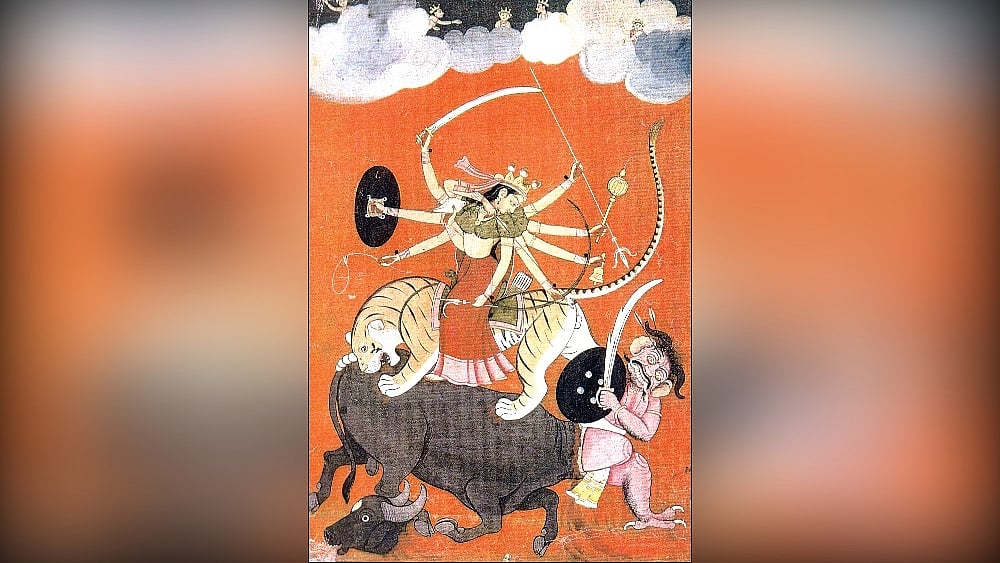
Of course the lion has to be replaced. You cannot have Durga ride a fierce carnivore and ask worshippers to be strict herbivores. And why should Ma Durga, a pure and authentic goddess, ride an animal that devours flesh? Why should she not ride a plunderous pumpkin or an eccentric eggplant? True, some hymns will have to be subtly tweaked, but who understands Sanskrit anyway? If a reddish radish is glorified in a bombastic shloka with imperfect metre, who is going to complain?
Yes, the goddess will be unhappy at first; she isn’t used to a ‘vahana’ that won’t respond when she bids it to roll forward or veer leftward, but even she must bow to superior ethics. And if she throws a tantrum, how about a rambunctious rhinoceros? Or perhaps a monumental mammoth?
Oh, Ganesha will not like that and the choreography of the divine ensemble will be disturbed, but Durga might have the just-right herbivore to command. That aggressive yet stately jumbo could coil its trunk around Mahishasura, hoist him and fling him and trample him and for good effect sink its tusks into the asura’s villainous breast. Wouldn’t that make a glorious spectacle? And isn’t it time to change the old vahana anyway?
Which brings us to the subject of stubborn Bengalis. Bengalis are a weird tribe. They are so lazy, physically and mentally. Especially mentally. Their cerebrums and cerebellums simply do not admit the idea that everything — even Bengaliness — must change with time. Why must they go on and on with the same old ways of celebration? Why can’t they see that they have been irresponsible worshippers and non-introspecting revellers?
They have elected a new ruling party, and now that the party is trying to energetically implement Bengal 2.0, they are gagging and throwing up. What sort of dumb, disloyal reaction is that?
If a race thinks their identity depends on gobbling animal flesh, it must be reined in and gene-edited. So many people are trying to correct the Bengali way — by scolding, trolling, abusing, pontificating, decreeing… yet the Bengali shrugs and continues to chant the same-old mantra: ‘freedom to choose my food’, ‘freedom to express my opinion’!
But a good citizen should express opinions certified by the Government, that is the only freedom allowed. Remember, you are blessed with the power of the double engine now, so do not try to be singular and snobbish.
If you are Indian, and if most Indians have vegetarian food during a period of pious worship, how dare you munch on egg-chicken rolls? That pollutes the prayers, cancels the oblations and the collective curse of dead animals lowers the GDP.
The VHP (Vishva Hindu Parishad) is so generous, it is not even demanding a blanket ban on ‘non-veg’ during the pujas; it is merely asking that the place of worship should not be sullied with the sight and smell of fried/ boiled/ mangled animal tissue.
Yes, no tandoori prawn within, say, 200 metres of a puja pandal. Another matter that these food stall owners must be clear which pandal they are trying to avoid when there are three in much less than 200 metres of each other, their loudspeakers crisscrossing each other’s songs.
So what must shift? The pandals, the shops or the commandment? What if the food stall is at a respectful distance, but a customer, delighting in succulent kababs, gets too close to the pandal or the deity?
The simple answer may be: do not eat, do not even think food; after all, this is a time for piety and purity. Better focus on patriotic petitions to the goddess about India overtaking China or winning over Trump. Time Bengalis thought of the Puja as a cleansing ritual, a time to abjure individual greed. But try convincing a Bengali and you’ll likely get a mouthful of ‘freedom to eat as I please’.
****
Why should the pandal decorations have a ‘theme’? When did worship need flights of imagination? To ‘theme’ a puja is to think — somebody must conceive of a theme, others must understand it. But isn’t unthinking obeisance the essence of worship? Why should imagination, interpretation, analysis interfere with spiritual surrender?
How about an all-white Durga Puja this year, untainted by the sensuousness of colour? What if all pandals were a stark white, with white idols and white lights (and unadorned flute tunes enveloping it all) to give the puja the right aura of purity?
But Bengalis would grumble and compete to come up with new and innovative themes. They want to outdo each other in reimagining their idols, pandals, lighting and music. They see the puja festival as a showcase of their talent. They want to weave their take on current affairs into puja art. They want to be playful and irreverent. They are impossible!
Why don’t we just say it as it is? That in Bengal, Durga Puja is not primarily a religious festival but an extended picnic that encompasses the joy of meeting friends, of eating out, of dressing up in new clothes and endless adda. It’s a gigantic art exhibition pulsating with creative energy, a carnival over five days. It’s an explosion of sensory delight.
That’s the problem! How can puja be about pleasure? The very idea is preposterous. As for the conceit that it’s an art showcase, that’s what museums and galleries are for. What could be more anti-spiritual? All that distracting ‘art’ needs to be scrubbed off, so that the Puja can become what it’s meant to be: clean, austere and sombre.
The stubborn Bengali needs to learn that puja is about self-negation, not hedonism. West Bengal’s greatest festival needs to be rigorously redefined. Bengalis should seriously ponder the question: what is Puja? It should be alright to humbly pray to the deity for more money. Or the humiliation of your enemies. Or your brother-in-law. But in a serious tone, not bouncing like a bubbly bunny!
What’s the Puja spirit? A state of mind that lets you grasp that devotion goes hand in hand with frugality, when your being has been cleansed of any desire to buy gold or go on foreign holidays.
What’s just deserts for Bengalis who have ignored (even mocked) this self-evident truth? Ban the festivities, announce a curfew or a lock-down, if you will, and make everybody stay in for those five days. God knows they need the time and isolation for reflection, and they could use the time to memorise all the six stanzas of Vande Mataram.
Chandril Bhattacharya is a lyricist, poet, essayist and filmmaker from Kolkata. More of his writing here
Join our official telegram channel (@nationalherald) and stay updated with the latest headlines