Opinion
Democracy deficit: How India's hasty lawmaking is eroding hard-won rights
Rapid, unchecked lawmaking threatens democratic scrutiny and accountability, sparking controversy and public unrest
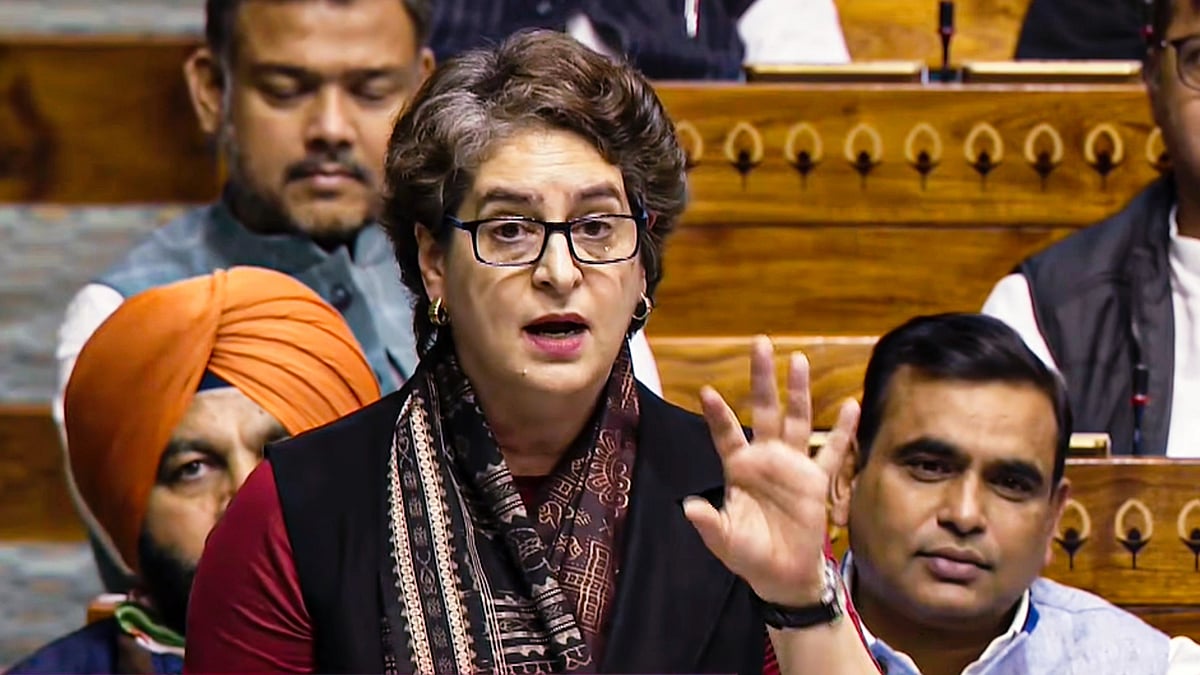
On 17 December 2025, Wayanad MP Priyanka Gandhi Vadra requested the Lok Sabha to refer the Viksit Bharat-Guarantee For Rozgar and Ajeevika Mission (Gramin) Bill 2025 to the Standing Committee for a thorough review. Opposition MPs said the bill was made available only at 5 p.m. and amendments sought by 5.45 p.m. the same day, leaving little time to read and understand the legislation.
The request was denied, and the bill passed by voice vote on 18 December. MGNREGA, one of our most important laws, has been finished off and we do not really know why.
The trend of passing bills hastily without proper scrutiny has accelerated through the Modi era. In the 14th Lok Sabha (2004–09), 60% of bills were sent to committees; in the 15th Lok Sabha (2009–14), it was 71%. However, this dropped sharply to 25% in Modi’s first tenure as PM, further dipping to 16% in the second stint. The long-standing practice of review by department-related parliamentary standing committees has been overlooked, leading to important legislation being passed without thorough scrutiny.
The dilution of the Right to Information (RTI) Act in 2019, passed without committee scrutiny, resulted in India’s global RTI ranking falling from 2nd to 9th place. Opposition parties also raised concerns about the end of public consultations, a key democratic practice that allows stakeholders to contribute to legislation.
In 2019, Telugu Desam MPs had joined their Congress, Samajwadi Party, Bahujan Samaj Party and the Communist Party of India (Marxist) colleagues to express concern at the ‘hurried passing’ of bills without scrutiny. They wrote that public consultation—in which groups and individuals engaged with particular subjects are invited by legislators to put forward their views on prospective legislations—had also stopped. ‘Public consultation is a long established practice where parliamentary committees scrutinise bills, deliberate, engage and work towards improving the content and quality of the legislation,’ they wrote.
This however had no effect and in 2020, not a single bill was sent to a committee for scrutiny. In September 2020, the government passed three farm laws in the Rajya Sabha by voice vote, ignoring demands for division votes. During the process, parliamentary broadcast was stopped and MPs’ microphones were turned off. The bills were signed by the President, making them a law, and triggered protests.
These laws deregulated agricultural markets, legalized contract farming without adequate legal protections for farmers and removed restrictions on essential commodity stockpiling. Although intended to help farmers increase their income, these laws were repealed after a year in the face of widespread protests.
These laws also violated the Constitution under which agriculture is a state subject. Here, the excuse given was that these laws really regulated trade and not agriculture itself.
What is the point of writing this now? It is that the government must learn that often this haste and arrogance produces outcomes that are unwanted.
Like MGNREGA, these were laws that would deeply impact the lives of crores of Indians. The government did not consider the reaction it would evoke and was surprised and taken aback at the pushback.
When it became clear that it could not actually get the laws implemented, Modi ignored the fallout for a full year. Eventually he apologised and retreated. But why get into this position in the first place? Why mess with the lives of crores of people with this level of casualness and arrogance? It is hard for the writer and indeed for the reader to say. One has to believe in the gift of unlimited power and authority to consider such moves and only one person in this country thinks in that fashion.
(Views are personal)
Join our official telegram channel (@nationalherald) and stay updated with the latest headlines