Opinion
Guilty until proven innocent: India's criminal justice reality
The presumption of innocence is increasingly under strain as the State expands its powers to arrest and detain individuals
News arrived recently of New York announcing the closure of the jail that holds its undertrial prisoners. Called Rikers Island, in the New York borough of the Bronx, the facility is isolated, making it difficult for those accused to meet their lawyers and families. It will be replaced by smaller facilities in each of the five boroughs.
This is a good decision, especially because it shows responsibility towards a group of people who otherwise receive little sympathy: undertrials. Mayor Zohran Mamdani also wants to reduce the city’s undertrial population from 6,700 to no more than 4,100 by expanding alternatives to detention, restoring online bail payments, investing in programmes that aim to reduce repeat offending, and shortening court delays.
He said court delays can leave people “detained for years in what is essentially legal purgatory”. Again, this is to be applauded. It is not seen that way, especially in our part of the world, but the criminal justice system of the civilised world is deliberately designed to protect the rights of the accused. And this is the correct way of seeing it. Why? Because in a criminal case, there are two parties in adversarial positions: the accused individual and the State.
A crime is an offence against the State and not a private wrong. When a theft, assault, murder or fraud happens, the rules by which the State runs the country (rules that we call laws) are violated, and it must deliver justice to society. This is unlike in ancient Greece, where a crime was a personal wrong that needed to be avenged or repaired. In the criminal justice system of our time, it is the State that takes on the role of the punisher.
It engages with the accused to bring about justice and puts the individual through a process that is the criminal justice system. But the State controls the rules under which the system operates. It legislates the laws that punish the accused. It appoints, pays the salaries of and manages the police forces that accuse, arrest and investigate. It appoints and pays the prosecutors who will represent it against the individual. It pays and promotes the judges who determine innocence or guilt.
The State holds all the power. The accused individual holds none. Most accused in India have no money even to get proper representation and, therefore, a defence against the State.
That is why we have the principle of innocent until proven guilty. The understanding is that the State has overwhelming and terrible power in a criminal case. A conviction, even for a minor offence, has the power to destroy lives permanently. Even though justice is represented as a blind woman with balanced scales, the scales are not balanced. The State can load as much weight as it wants on one side. In India, after Independence, the State has not been satisfied with the amount of power it has. It has always needed more.
There are few hurdles stopping the State from giving more power to itself except the voters. And voters in India have little interest in the criminal justice system. That is why a politician raising the issue, as Mamdani has done, is so rare.
Most of us elites (aka ‘the middle class’) do not think the criminal justice system concerns us. So, the State can give itself whatever sweeping power it wants. What it wants is to reverse the most fundamental judicial principle to ‘guilty until proven innocent’.
In India, the State has been giving itself the power to do this. Laws that Indians protested when they were being written by the British colonial State can be implemented today by a democratic State, even though their effect on the individual is the same. This is a power under which the State can arrest individuals without a crime, on the assumption that they may commit a crime in the future. This is ‘guilty until proven innocent’.
India’s preventive detention laws provide for an advisory board to examine whether there is sufficient cause to keep individuals jailed. These boards are usually not functional, and there is no interest on the part of the State in ensuring the rights of those detained. This apathy is endemic and is also reflected in the rights of those who cannot afford their own legal counsel and are supposed to be provided with legal aid by the State.
Even with more power against the individual than any other modern democratic nation, Indian governments want more. Uttar Pradesh has set up a police force that can arrest without a warrant and without the orders of a magistrate.
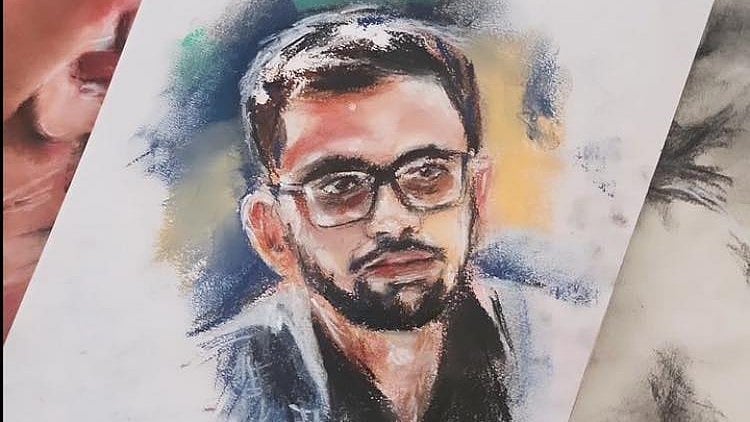
We have not even touched upon the issue of individuals in whom the State has a specific interest. The scholar Umar Khalid has been an undertrial for six years, with no sign of his trial ending for many more years. But because the Modi government sees him as an opponent, it has kept opposing his bail, and the courts have kept obliging.
For all these reasons, it is refreshing and encouraging to see what is happening in New York, because it is based on a true understanding of what the criminal justice system should be in all nations.
Views are personal. More of Aakar Patel's writing here