Opinion
India has a new sugar riddle
...and it’s not all down to diverting sugar and equivalents to ethanol production. Jaideep Hardikar on the contradictions in India’s sugar economy
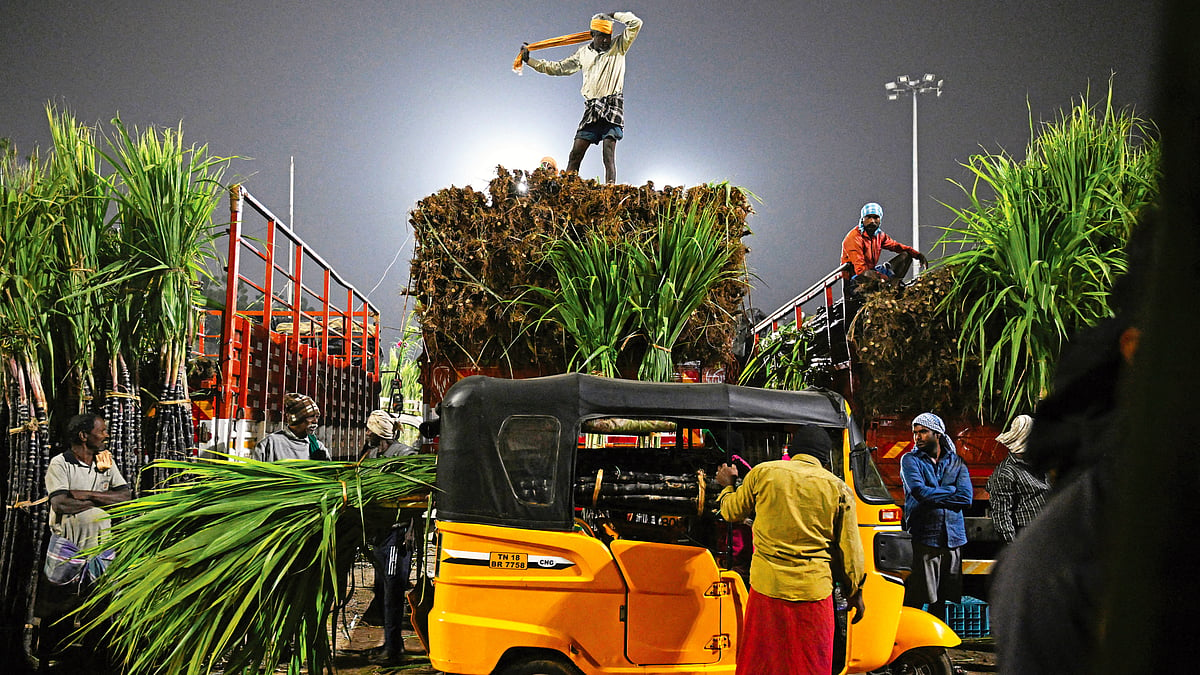
Sugar has suddenly become an unlikely inflation story. Retail sugar prices, which averaged Rs 48 a kilo on 20 July, had climbed to Rs 56 on 20 August. In some markets, prices went up to Rs 60 a kilo. Wholesale prices in Maharashtra, one of India’s principal sugar-producing states, have also climbed sharply.
The Centre’s initial response was to impose stockholding restrictions on dealers and wholesalers. Later, for the first time in a decade, it allowed zero-duty imports of one million tonnes of raw sugar till 31 October. The timing is crucial. The long festival season is about to start. That’s when sugar demand surges and high sugar prices can cost politically.
The current spike in sugar prices does not fully reveal the profound contradictions in India’s fast-restructuring sugar economy. There are political, environmental and agriculture policy variables in play. It’s an industry shaped by guaranteed cane prices for farmers, politically influential sugar mills, water-intensive cultivation, climate volatility, ethanol policy and the government’s perennial dilemma of balancing the interests of farmers and consumers.
India consumes 28-29 million tonnes of sugar a year. In previous decades, production often exceeded consumption, leaving sugar mills grappling with large inventories and low prices. Governments responded with export incentives, buffer-stock measures, soft loans and then a BIG push to divert sugarcane into ethanol production. With the surplus now narrowing, any sign that sugar production might drop leads to panic, as we see this year.
The immediate problem is supply. India’s sugar production in the 2025-26 season is now estimated to be 306 lakh tonnes, way below the initial projection of 343 lakh tonnes. That’s a 12 per cent drop. The latest official assessment suggests that opening stocks for the next season could fall to 33-34 lakh tonnes, compared with 50 lakh tonnes a year earlier.
For the second year running, the country’s sugar production has been below par.
A big reason for this drop is last year’s extreme rain events in the sugarcane growing regions of Maharashtra, Karnataka and Uttar Pradesh — three key sugar states. Sugarcane is a long-duration crop. Its yield and sugar recovery are highly sensitive to weather conditions in different stages of growth. More sugarcane does not automatically mean more sugar.
Maharashtra, for instance, recorded an increase in sugarcane production in 2025-26 — from 1,099.7 lakh tonnes to 1,316.5 lakh tonnes, according to the agriculture ministry’s third advance estimate. But sugar production can fall even when cane availability rises if the recovery rate (the amount of sugar extracted from cane) deteriorates.
The state, in fact, crushed more cane than in the previous season, but crushing season was much shorter — barely 100–105 days in the 2025-26 season compared with a normal of 150–160 days. By mid-March, a large majority of the state’s 210 sugar mills had already shut for want of mature cane. Unseasonal rain in November and December 2025 damaged standing cane, while weather-related stress affected yields, recovery and the availability of mature cane. The mills could not operate for the normal duration or fully utilise their installed capacity.
Demand is another stress factor, which picks up during the long festival season — Ganesh Chaturthi through Dussehra and Diwali, stretching about two months. Sugar consumption rises during this period, not only in households but also in the large informal and formal food-processing economy. Expectations of tighter supply also accelerate buying and stockpiling.
The Centre says there is enough sugar in the country to meet domestic requirements and has warned traders and other market participants against profiteering. It has imposed inventory limits on dealers and, from September, on bulk consumers.
Sugarcane farmers are protected through a government-administered pricing system. The Centre fixes a ‘fair and remunerative price’, and some states have historically announced higher state-advised prices. The system gives farmers price assurance.
But assured cane prices have downstream consequences. Sugar mills must buy cane at politically determined prices even when the market price of sugar does not adequately compensate them. This is one reason why India’s sugar industry has repeatedly swung between surplus production, mill losses, large cane arrears and government intervention.
Sugarcane is not an ordinary crop. It is among the most water-intensive crops grown in India. Its expansion has been particularly significant in regions such as western Maharashtra or Marathwada where massive investments in irrigation have made cultivation possible on a large scale.
The economics of cane are attractive to farmers precisely because the crop has an assured market and established mill infrastructure. But climate change complicates that model. A crop dependent on large quantities of water becomes increasingly vulnerable when rainfall is erratic — and too much rain at the wrong stage of the crop is also damaging.
This brings us to ethanol — a big recent factor affecting the fortunes of the sugar economy. The correlation between higher sugar prices and the diversion of sugar into ethanol production is simplistic. The proportion of sugar diverted for ethanol has actually declined — from around 12 per cent in 2022-23 to about 9 per cent in 2025-26. Nearly 75 per cent of India’s ethanol now comes from grains, particularly maize.
But the ethanol programme and increasing private sector participation in the sector has certainly altered the economics of the sugar industry.
For years, India’s sugar problem was one of surpluses: too much cane being converted into too much sugar. Ethanol offered sugar mills an alternative source of revenue. For the Centre, ethanol is tied to energy security, domestic petrol-blending objectives and global climate commitments.
When the sugar market tightens, as it has this year, the inherent contradictions of policy come to the fore. About three million tonnes of sugar equivalent is estimated to have been diverted so far to ethanol this year. But the government is planning to restrict the use of sugarcane and other cane-based feedstock for ethanol in the coming season, while maintaining the 20 per cent ethanol-blending target by relying more heavily on grain-based ethanol.
Even though the current sugar shortage and the resultant price increase is not attributable to diversions of sugar for ethanol production, it does focus attention on a policy conundrum: when sugar is scarce, how should the same agricultural resource be divided between food and fuel? The question acquires a bleeding edge when you consider that climate volatility is making sugar production less predictable.
There is another policy paradox, which affects distillers.
Over the past ten or so years, the Modi government encouraged investments in building ethanol capacity to deal with surplus sugar. Distillers are now sitting on idle capacities even as climate volatility wreaks havoc on cane and sugar production. India has been forced to import sugar because domestic availability has tightened.
Are the duty-free imports a short-term price-control measure? The government says the imports, combined with stock controls and early commencement of the new crushing season, will prevent a serious shortage. Even if these measures do successfully avert a serious crisis in the short term, a larger structural problem will persist.
India’s sugar economy serves competing interests: farmers want remunerative cane prices, sugar mills need financial viability, consumers want cheap sugar, the government wants low food inflation, the energy establishment wants ethanol and the environment is serving warnings to limit water-intensive agriculture.
The present sugar-price spike is not simply an inflation episode; it’s a warning about the inherent contradictions of India’s sugar economy.
Dealing with a price-spike episode is easier than tackling the more fundamental questions that roil this economy. Can India continue to guarantee remunerative prices for a water-guzzling crop when climate change is impacting production and recovery? Can it afford the price of keeping a politically powerful sugar-mill economy onside? Can it do this even while diverting a part of that crop towards fuel? And is it even possible to also simultaneously maintain supplies and keep retail prices in check?
The answer can’t be one import order or more stockholding curbs. India may need to rethink the political economy of sugar.
Jaideep Hardikar is a senior Nagpur-based journalist and author of Ramrao: The Story of India’s Farm Crisis. More by him here
Join our official telegram channel (@nationalherald) and stay updated with the latest headlines