Opinion
Is Yogi’s balancing act to save RSS the blushes?
FIRs against Ayodhya trust employees raise questions over accountability, with critics alleging those responsible for oversight have escaped scrutiny
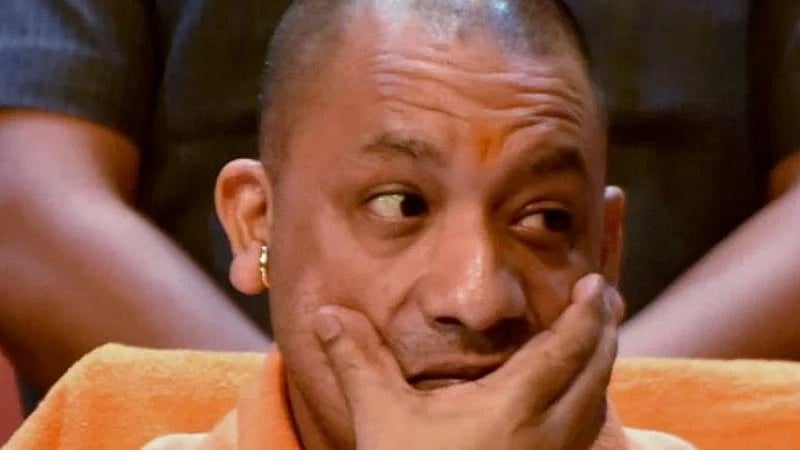
The belated decision to register FIRs against eight employees and a retired banker for alleged embezzlement of funds from the Shree Ram Janmabhoomi Teerth Kshetra Trust in Ayodhya confirms a suspicion voiced by many. In absolving the trustees, all of whom are RSS associates, of wrongdoing or responsibility for failures in managing, accounting and supervising funds, the Uttar Pradesh government of Yogi Adityanath has made these employees the fall guys.
Will that be enough, though, to secure his own position in the state? The question is doing the rounds in the political circles of state capital Lucknow.
The uneasy relationship between the BJP bigwigs at the Centre and the Yogi government is a fairly open secret. Yogi, who is not from the RSS, had no say in either appointing Trust members or managing the donation or other construction activities of the temple.
If senior RSS functionaries were arrested for negligence or complicity, the chief minister ran the risk of falling afoul of this extra-constitutional powerhouse. But he still risks losing face with his admiring Hindutva hordes, even though it’s hard to believe that the embezzlement of funds and donations happened without the complicity or connivance of the trustees.
With assembly elections due in Uttar Pradesh in 2027, Yogi faced a difficult choice, and the temple controversy was the last thing the chief minister needed. He was damned if he acted and damned if he didn’t, say analysts, adding that the controversy will damage him, irrespective.
The timing of the exposé by a section of the RSS, and which was amplified by Dainik Jagran, a prominent Hindi newspaper known to be close to the BJP, and the deafening silence of the BJP and RSS in the immediate aftermath, were suspicious. Some analysts speculate that the idea was to sideline certain trustees, paving the way for a possible government takeover of the management of the temple.
Shree Ram Janmabhoomi Teerth Kshetra Trust, which was formed in 2020 after the Supreme Court verdict settled the disputed title suit in favour of the Hindus, is possibly the only private trust managing a prominent temple visited by crores of devotees every year. The temples at Tirupati, Kashi and Mathura, by contrast, are headed by government-appointed CEOs and commissioners. The Trust at Ayodhya is however controlled by people with affiliations to the Vishwa Hindu Parishad (VHP) and the RSS, which spearheaded the political movement for the demolition of the Babri Masjid.
The Ayodhya Trust has been dogged by controversies. An internal audit in 2020 flagged dubious practices and poor record-keeping, especially of donations. The audit recommendation for a Standard Operating Procedure (SOP) was ignored. In 2021, the Trust was accused of buying land at far higher prices than the seller had paid for the plots the same day! In 2024, a fake website racket was busted for collecting money on the false promise of delivering ‘prasad’ from the temple. In June 2026, the Trust finds itself in the middle of a ‘donation scam’ with allegations that insiders have siphoned off donations in cash, jewellery and gold and silver bricks.
More serious allegations pertain to the absence of an audited statement of accounts and details of donations received, taxes paid and an income and expenditure account. There are also allegations that proper receipts were never issued for donations like 200 ‘silver bricks’ by a body of Sindhi devotees. While it seems improbable, the allegation has been made by several alleged donors that they were not issued proper receipts.
Registered as a private religious trust, it is expected to keep audited accounts and produce them to the authorities. However, there is complete opacity and no record is publicly available about revenues and expenditure or an income and expenditure account that devotees can access.
Unsurprisingly, the RSS seems to have lost its voice even as a slanging match continues among the faithful. The sudden prosperity of a few local acolytes of the RSS in Ayodhya has not gone unnoticed. The controversy has also exposed the rift between the original karsevaks who were at the forefront of the movement and the lot running the show at Ayodhya.
Santosh Dubey, a karsevak who took four bullet injuries when police opened fire in 1990, is a bitter man today. He was among the Shiv Sainiks who brought down the Babri Masjid on 6 December 1992, and was later jailed. “The loot has been going on since 2002, when the theft of golden, silver and diamond-studded bricks donated during the shilapujan ceremony came to light,” he recalls. Not a single member of the Trust, he says, was associated with the Ram Janmabhoomi movement. “They are all RSS people, who have captured everything,” he claims.
Nripendra Mishra, the former principal secretary to Prime Minister Modi, who was tasked with setting up the Trust and oversee construction, admitted in media interviews this month that a loot had indeed taken place. Mishra, who is deemed to be close to the PM, is said to favour a government takeover of the temple and the appointment of a CEO. He wouldn’t have said this without getting a nod from the PM, it is believed.
Purnima S. Tripathi is a senior journalist and commentator based in Delhi
Join our official telegram channel (@nationalherald) and stay updated with the latest headlines