Opinion
It’s not really about reservation for women…
...and the attempt to yoke the proposal to an expansion of the legislature is disingenuous, argues Radha Kumar
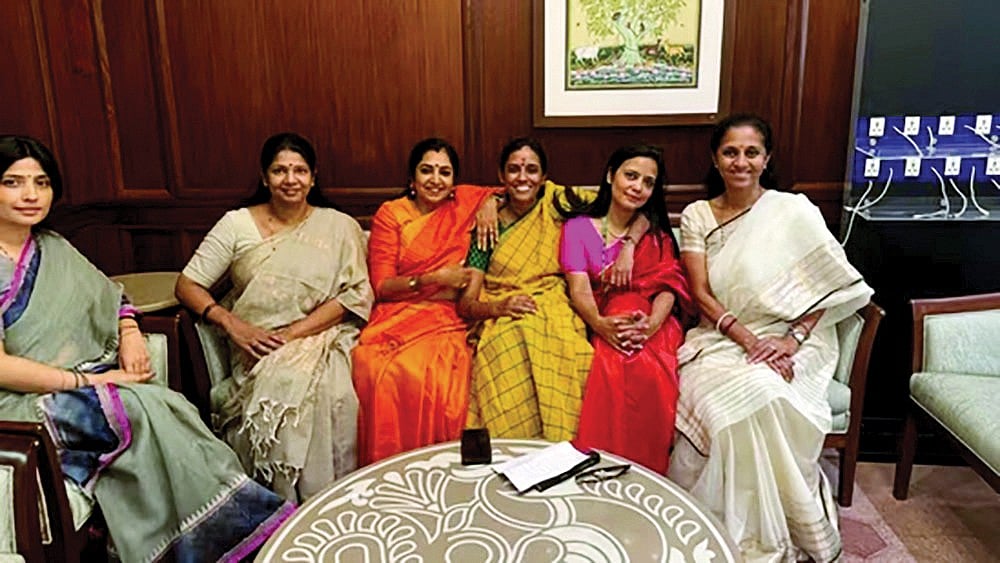
The ruling BJP is making a push for delimitation without waiting for the 2027 Census findings, on the grounds that it will enable implementation of the Nari Shakti Vandan Adhiniyam of 2023, mandating 33 per cent reservation for women in the legislature in time for the 2029 general election. But is it really about implementing women’s reservation? Or is women’s reservation a pretext to push for an expansion of the Lok Sabha?
On 24 March, the media reported that home minister Amit Shah, in closed-door consultations with NDA allies and select opposition parties (i.e., minus the Congress — the principal opposition — the TMC and Left parties) had proposed a 50 per cent expansion of legislative seats so that a third could be reserved for women.
The ploy would allow sitting MPs and MLAs, 85 per cent of whom are male, to potentially retain their seats even while making room for women, who would have a third of the seats (273 of 816 in the expanded Lok Sabha).
To allay the concerns of southern states, each state’s seat share would be retained at the current level. The six southern states (plus the Union Territory of Puducherry) account for 24 per cent of Lok Sabha seats.
In order to implement these proposals, the Modi administration would bring two Bills — one to freeze each state’s seat share at its current level for the next 25-30 years and another to appoint a Delimitation Commission, which would use the 2011 Census figures as its base — not the 2027 Census — since the final figures of the new Census would be released too late to enable delimitation before 2029.
By the evening of 24 March, the same news outlets clarified that these were four standalone proposals:
Delinking 33 per cent quota for women from the 2027 Census
Expansion of Lok Sabha (and state Assemblies)
Reserving ~273 seats for women (in the expanded Lok Sabha)
Conducting the delimitation using 2011 Census data, while maintaining state-wise proportions
In other words, the proposed 50 per cent legislature expansion is not linked to the33 per cent reservation for women. The real agenda, it seems, is to push for legislature expansion/delimitation ahead of the 2027 Census and in time for the 2029 general election while making it look like it’s about reservation for women.
To foreground women’s reservation when the real agenda is to expand the Lok Sabha is politically expedient, for women’s reservation has the support of opposition parties and public influencers. Indeed, the Congress first piloted a bill for women’s reservation, in the early 1990s under then prime minister P.V. Narasimha Rao.
Expansion of the legislature is a tangled objective: legislators want it — more seats, after all, equal more opportunities for them — but the southern states have legitimate worries and the public is suspicious given the disillusionment with elected representatives. To bundle women’s reservation with legislature expansion cloaks the dual goal of expansion and protection of sitting male MPs.
The proposal to freeze states’ seat shares at the current level is clearly intended to win the support of the southern states. Led by Tamil Nadu chief minister M.K. Stalin, these states have opposed a population-based expansion of the Lok Sabha, which will reduce their share from a fourth now (~24 per cent) to less than a fifth of total seats.
Why the 2011 Census? Waiting for the 2027 Census findings, this argument goes, will delay women’s reservation till the 2034 general election (at the earliest) because the findings of the new Census will likely be available by 2030.
But why must women’s reservation wait till the legislature is expanded? Why not carve it out of the current strength of the Lok Sabha and state Assemblies? The only reason it is tied to said expansion is to protect sitting male MPs.
Could it also be that the Modi administration wants to avoid the 2027 Census because it is supposed to include a caste enumeration, and the ruling BJP is concerned how caste figures might impact public demands for representation?
While the BJP’s electoral and activist base includes substantial numbers of OBCs (Other Backward Classes), its use of these castes and their prominence has caused considerable dissatisfaction amongst the upper castes. The Scheduled Castes, too, appear to be turning away, as are several Denotified Tribes that have been omitted from the 2027 Census list.
Reportedly, Mr Shah wished to rush the two Bills with these proposals in the ongoing parliamentary session ending 4 April. But under pressure from the Opposition, he agreed to postpone, possibly to the monsoon session. Opposition parties have asked for an all-party meeting after the upcoming state elections, so that they can study the proposals.
Among the issues to consider, the uppermost are: a) delinking women’s reservation from legislature expansion; b) ensuring that the new Delimitation Commission is headed by an impartial jurist well-versed in the norms of democratic representation, and includes legislators of all parties in equal numbers, including at least 33 per cent women; and, c) making it mandatory for the Commission to put its draft recommendations in the public domain for feedback.
They might raise another issue: whether half the reserved women’s seats should be allocated to constituencies from which no woman has won in the past four to six elections.
Such a move, it is argued, would remove the taboo on women public figures in these constituencies and send a message to other constituencies seen as male fiefdoms. It might even indirectly spur action on the prime minister’s ‘Beti Bachao, Beti Padhao’ slogan, which has remained an empty call thus far.
There is also the question of the methodology to be used in allocating women’s seats. And while Mr. Shah and his party can propose an expansion of the legislature, it is the prerogative of a delimitation commission to decide on numbers. Also, reservation for women, as stated above, does not depend on this expansion, nor on population counts. The attempt to yoke reservation to expansion is not only unnecessary, it is deceitful.
Question for Mr Shah: why should women’s seats be additional seats? Did the male MPs who voted for the Bill do so only because they were assured that their seats would not be allocated to women? What made the male MPs so sure they would be re-elected?
Finally, it’s time Opposition parties began in earnest to identify and nurture women candidates. The BJP started doing this some years ago, though none of their women legislators have been vocal about women’s rights, content instead to be a shrill echo chamber for the prime minister and his administration.
Among the Opposition parties, the Trinamool Congress stands out for having the largest proportion of women, who do their homework and are combative. The Opposition does have articulate women legislators, as the debate on Operation Sindoor showed. I hope they will take a joint lead in formulating Opposition policy on the issues discussed here.
Radha Kumar is a historian and policy analyst
Join our official telegram channel (@nationalherald) and stay updated with the latest headlines