Opinion
Jamia students’ union and the larger promise of democracy
The fight to restore an elected students’ union is about more than campus representation — it goes to the heart of Jamia's identity
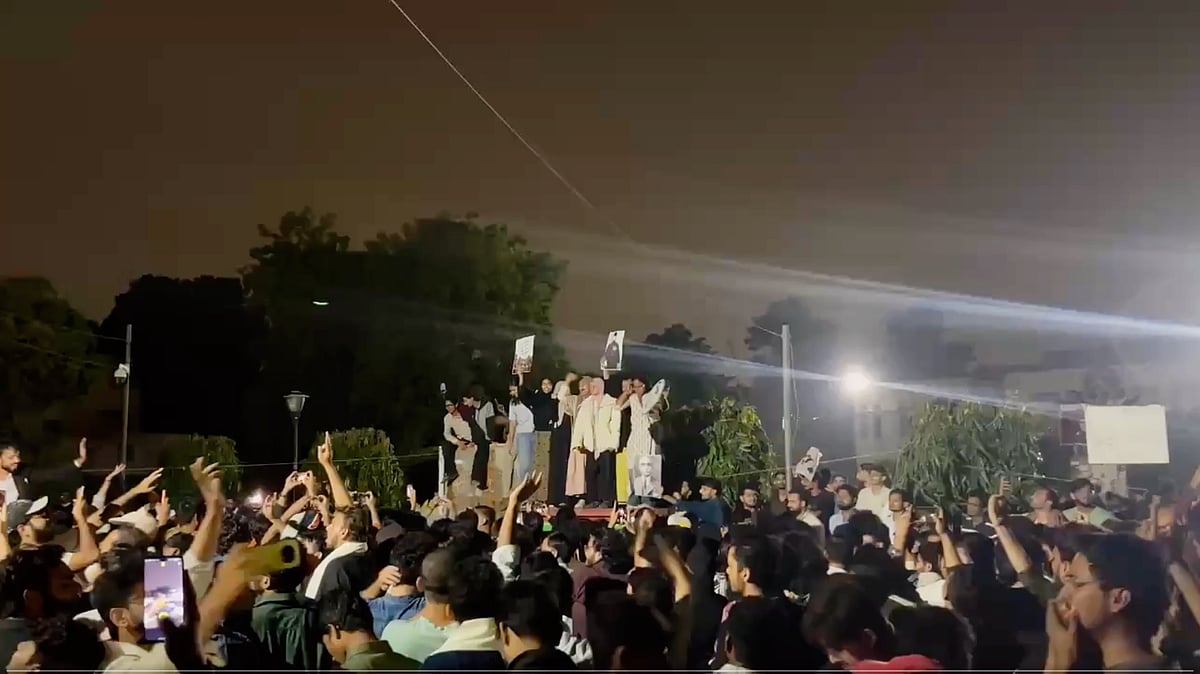
A university is perhaps the last place where students should have to choose between learning and questioning, between education and the right to dissent. At Jamia Millia Islamia, this choice has acquired a painful history.
The present agitation is significant partly because of how students have chosen to assert their demands. The university where dissent was violently suppressed in 2019 has once again become a site of collective mobilisation, but the immediate demand is now for democratic representation within the institution. Students want an elected body through which they can participate in university affairs. The continuity between these moments is unmistakable: students must be heard, authority must remain answerable and peaceful dissent cannot be treated as an affront to the institution.
The recent 18-day mobilisation brought the unresolved question of the students’ union back to the negotiating table and secured an important administrative commitment towards its restoration. For those who sustained the agitation, this represented the reopening of a democratic space that had been unavailable at the university-wide level for nearly two decades. But the announcement marks the beginning, not the end, of the process. The real test will lie in the union’s constitution, functioning and autonomy.
Its rules must be framed through meaningful student consultation, ensuring transparent elections, clearly defined responsibilities and accountability. The Lyngdoh Committee’s recommendations should safeguard electoral integrity and prevent money, muscle power and intimidation without reducing the elected body to a symbolic institution.
The union must have a recognised channel to engage the administration on student welfare, academic infrastructure and institutional governance. Its legitimacy will also depend on whether students across faculties and socioeconomic backgrounds can participate meaningfully. Student politics must accommodate ideological contestation without becoming a space for intimidation, factional capture or the silencing of alternative viewpoints.
Born in the crucible of the Non-Cooperation Movement, Jamia was founded in 1920 as a radical educational experiment in which anti-colonial nationalism, intellectual independence and social reform were intertwined. Its origins lay in the convergence of anti-colonial Islamic activism and the political awakening of a section of the Western-educated Indian Muslim intelligentsia. Jamia was founded on the conviction that education could become an instrument of national emancipation and social reform. Its name, conventionally translated as the National University, reflected this ambition.
In his article of 10 September 1946, Jawaharlal Nehru described Jamia as 'a lusty child of the non-cooperation movement'. Recalling his early visit, he spoke of its vitality under Maulana Mohammad Ali’s leadership. Rabindranath Tagore, too, recognised Jamia as one of India’s progressive educational institutions. Their recognition was significant not merely because of their stature, but because it acknowledged the contribution of an institution rooted in a distinct Muslim intellectual and cultural tradition to the wider national life. Jamia’s history demonstrates that a strong community identity and an inclusive conception of Indian nationhood are entirely compatible.
Its contribution to nation-building extends beyond the classroom. Dr Zakir Husain shaped Jamia’s educational philosophy and institutional direction after assuming its leadership in the 1920s. For him, education was inseparable from character formation and service to society. Jamia’s alumni have since contributed to India’s political, administrative, intellectual and cultural life, including S.Y. Quraishi, Akhlaqur Rahman Kidwai, Shah Rukh Khan and the late Danish Siddiqui. Yet the institution’s contribution to the nation cannot be measured merely through the successful careers of its graduates.
Democracy and dissent are not peripheral to Jamia’s identity; they are central to its existence and evolution. An institution that emerged from a movement challenging colonial power cannot treat questioning authority as a disruption of its educational mission. Nor can intellectual independence flourish where dissent is regarded as indiscipline.
A university is not simply a place where knowledge is transmitted; it is where inherited ideas are interrogated, competing viewpoints encounter one another and young people learn to become citizens. Dissent is not something an institution must reluctantly tolerate. It is essential to remaining intellectually alive.
The history of Jamia’s students’ union makes this particularly relevant. The first elected union dates back to 1981–82 and continued until 1997. Revived in 2005, it was discontinued in 2006 amid concerns over regionalism, campus violence and academic disruption.
The administration’s responsibility to maintain discipline and protect academic functioning deserves consideration. Nevertheless, withdrawing an elected university-wide representative body created a democratic deficit. Departmental associations could represent students within their respective units, but could not replace a common platform for university-wide representation.
Universities do more than prepare young people for employment. They are spaces where citizens learn to debate, negotiate competing interests, question authority and assume public responsibility. Student politics, guided by institutional responsibility, can itself become an education in democracy. It teaches that representation entails responsibility, electoral victory does not confer unlimited authority and those exercising power remain accountable to those they represent. This reflects the educational philosophy of Dr Zakir Husain, whose vision placed character formation at the heart of education and service to society.
The absence of an elected union did not eliminate student politics. Protests, discussions and collective mobilisation continued; what disappeared was a recognised mechanism through which students could articulate grievances and engage regularly with the administration. Issues concerning hostel accommodation, academic infrastructure and student welfare require transparent grievance-redressal procedures and collective representation. Without these, disagreements risk becoming recurring confrontations rather than opportunities for institutional dialogue. The challenge is not to choose between discipline and democracy, but to create arrangements through which both can coexist.
The events of 15 December 2019 remain among the most painful chapters in Jamia’s history. During the anti-CAA protests, Delhi Police personnel entered the campus and used force against students, storming the library and assaulting those inside. Footage showed police personnel beating students with batons. More than 100 students were reported injured. Law student Mohammad Minhajuddin was among those seriously injured and lost vision in his left eye.
The National Human Rights Commission investigated complaints concerning the incident, raising concerns about the use of force and tear-gas shells inside the library. The episode left a lasting mark on Jamia and the national debate about peaceful protest, police power and the protection owed to students within educational institutions.
Today, the victory of the protesting students lies in bringing the demand for representation back into the democratic process. The journey from a battered library to the prospect of restoring an elected union is more than a story of student activism; it is a reminder of what the Republic must defend. Democracy cannot survive on the promise of participation while denying people the means to exercise it. It must be practised in universities, defended in institutions and made meaningful in citizens’ everyday lives.
The significance of the students’ victory extends beyond Jamia. The Indian Republic is not the preserve of any one community, political party or cultural tradition. It is a shared constitutional project in which every citizen has a stake. Its promise lies in enabling people of different faiths, languages, histories and convictions to participate as equals without surrendering their identities.
Jamia, born out of the anti-colonial aspirations of Indian Muslims yet deeply embedded in the country’s intellectual and public life, embodies precisely this possibility. By demanding the right to shape their university, Jamia’s students remind India that the Republic belongs to all who participate in its making, question the exercise of power and take responsibility for its future. This is not a challenge to the idea of India. It is one of the most powerful ways of keeping that idea alive.
Nasir Khuehami is a doctoral scholar at Jamia Millia Islamia and national convenor of the Jammu and Kashmir Students Association. Shadman Shaidai is a PG student of Political Science at Jamia
Join our official telegram channel (@nationalherald) and stay updated with the latest headlines