Opinion
MGNREGA and the meaning of gram swaraj
Pitting farmers and agricultural labourers against each other is an assault on social justice
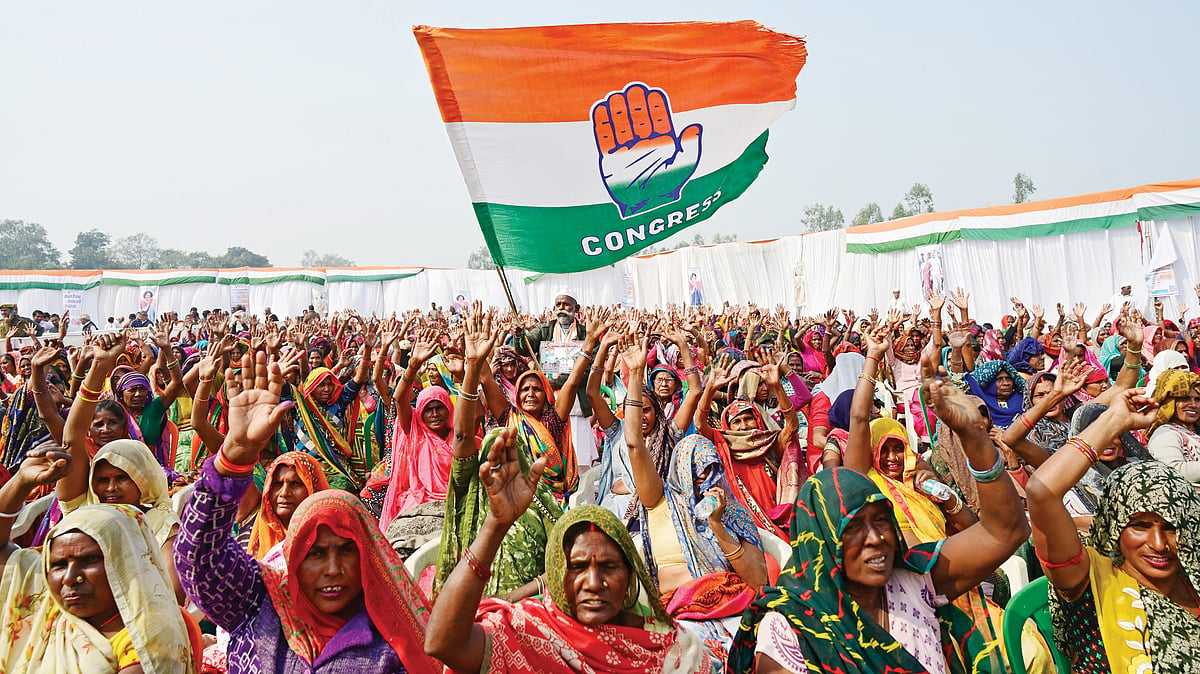
Swaraj, or freedom, is never a one-way street—and the very impulse to seek the truth enjoins thorough scrutiny. Much has already been written about the new scheme that has come to replace the Mahatma Gandhi National Rural Employment Guarantee Act (MGNREGA), a key feature of which was the right to demand work. This right has been extinguished under the new scheme. But to grasp MGNREGA properly, one must understand its economic and social dimensions—and its political economy. That terrain is complex, and it is not uniform across India.
In regions with scant rainfall and barely one crop a year, MGNREGA was a lifesaver. In other areas, where agriculture itself generates ample work—especially where two or three crops are harvested annually— dependence on MGNREGA as a source of employment was lower. Coincidentally, western Malwa in Madhya Pradesh has long enjoyed relatively prosperous agriculture, though even there falling groundwater levels are beginning to change the picture.
Conversations in village chaupals have thrown up some questions. First: did regions like these not need MGNREGA at all? And if so, will its withdrawal have no impact there? Should MGNREGA have been restricted only to regions where agriculture cannot sustain livelihoods? If demands for its restoration are made again, should such regional variations be factored in? Is MGNREGA merely a job-creation entitlement, or is it a deeper, transformative institutional arrangement?
MGNREGA functioned as a guarantee establishing a minimum wage for labourers—much as the minimum support price (MSP) fixes a floor for agricultural produce. That early post-Independence decision meant crops wouldn’t be sold at throwaway prices. Later, the UPA government extended support prices to minor forest produce as well, breaking the grip of middlemen and exploitative commission agents—though further reforms are still badly needed. Pulses and oilseeds are procured only up to about 25 per cent of output; grains face no such ceiling. For marginal farmers, this is hardly reassuring. Socially, too, they occupy the lowest rung. In mandis, private traders continue to dominate government procurement. Still, the legal compulsion of the minimum support price does exist.
MGNREGA delivered a similar transformative right to labourers. Living near a predominantly tribal district, my entire childhood was spent watching men and women workers alight from early morning trains at the town square. For decades, daily wages never rose beyond Rs 10 or Rs 20—later Rs 50 at best—whether for construction or harvesting. The entire rural economy ran, in effect, on cheap labour.
Benevolent landowners sometimes allowed workers to take home a little grain—usually the refuse. MGNREGA changed this. Wages were first fixed at `150, then gradually raised; in western Malwa, minimum wages reached `222. Today, wages below `300 are rare anywhere. MGNREGA sparked a wage revolution. It is hardly surprising that repeated demands were made to link MGNREGA with agriculture—a recommendation still voiced in many places, particularly by large farmers.
MGNREGA was, in fact, linked to agriculture. Marginal farmers were allowed to improve their own land, with the government paying wages if family members worked on it. But had MGNREGA been fully integrated with agriculture, wage rates would have collapsed again. It’ll happen even today if the arrangement is revisited. Labourers will receive government rates alright but they will lose the premium that comes from competitive wages. Wages will then get locked into an official minimum rate.
The new scheme is even more damaging. Since work will no longer be demand driven, nor year-round, agricultural seasons will offer no alternative. Labourers will be forced to accept whatever rate the landowner sets. The result will be predictable: within a year, wage rates will start falling.
Many progressives argue that in rural areas where landowners come from backward classes, this new arrangement is particularly welcome. It signals a return of older forms of social dominance. This group also happens to be close to the ruling party. A small section within it has actively nurtured majoritarian ideas—the same group that opposed land titles for Scheduled Castes, resisted bank nationalisation, objected fiercely to legal curbs on usury, and treats such measures as sin. Yet agriculture itself has been under growing pressure in recent years.
Marginal farmers, too, must pay higher wages. With limited resources, they fall behind. Costs have risen across the board, but crop prices have not kept up with higher input costs. In regions where soyabean once yielded handsome profits— prices had touched `4,500 per quintal in 2011-2012—imports have crashed the market. The government aligns customs duties with the interests of large businesses, deepening ties with edible oil brands like Fortune (owned by AWL Agri Business, formerly Adani Wilmar).
Soyabean becomes cheap while oil gets more expensive. Domestic procurement prices fall. The same trend plays out internationally. China, once the biggest buyer, turns to cheaper Brazilian soya.
The meaning and purpose of swaraj lie in understanding the entire rural economy and being sensitive to every class within it
Even large farmers—landowners from backward classes—find themselves pushed to the margins, squeezed between rising input costs and rising wage bills, without commensurate returns on their crops.
The new regime may bring some relief to this class. Perhaps the ruling dispensation calculated that this would draw them closer, countering campaigns for caste census and social justice. Most of them belong to relatively affluent backward communities. In the absence of a political consciousness, this manoeuvre may appear comforting. But let’s be clear: the government has not acted out of empathy for their distress.
This class rose through hard work, skill and enterprise—supported by early post Independence reforms such as the abolition of the zamindari system of landlordism, income-tax exemptions and subsidies. They experimented with agriculture—from polyhouses to horticulture, medicinal crops and orchards—striving to make farming profitable. To form prejudiced opinions against them would also be a betrayal of the idea of swaraj.
Yet this class, too, must ensure that easing its own economic stress does not mean forcing the weakest into desperation. It must stand up for their rights—and simultaneously push for fair prices, rationalised crop insurance and broader reform.
Every political organisation must carry both sides together. Rural distress will not ease without structural changes in agriculture. Trade policy is drafted with big businesses in control; the farmers’ voices never reach the commerce ministry. In today’s tariff scenario, customs duties mustn’t be fixed without factoring in the farmers’ interests.
The entire system of assessing losses needs overhaul. Though famine has ended, outdated revenue procedures persist in many states. The method of calculating average losses is deeply flawed: it treats an entire area as a unit rather than individual fields, even though losses are borne by individual farmers. Crop insurance benefits private companies; farmers rarely receive compensation.
The meaning and purpose of swaraj lie in understanding the entire rural economy and being sensitive to every class within it. Genuine rural self-reliance and development are possible only when both land and labour receive justice. That justice will not come by cutting wages. Landowners must grasp this. Expensive labour—not cheap labour—is the true marker of prosperity.
But this must be accompanied by fair crop prices, reformed insurance, farmer participation in trade policy, assured procurement at support prices, democratic mandis, and a thorough overhaul of village revenue systems. None of this can be achieved by killing MGNREGA or by excluding marginal farmers from its ambit. Pitting farmers and agricultural labourers against each other is an assault on social justice.
Join our official telegram channel (@nationalherald) and stay updated with the latest headlines