Opinion
Outsourcing ‘problem solving’ to protesters
Paradoxes in the RSS@100 and Mohan Bhagwat’s annual address
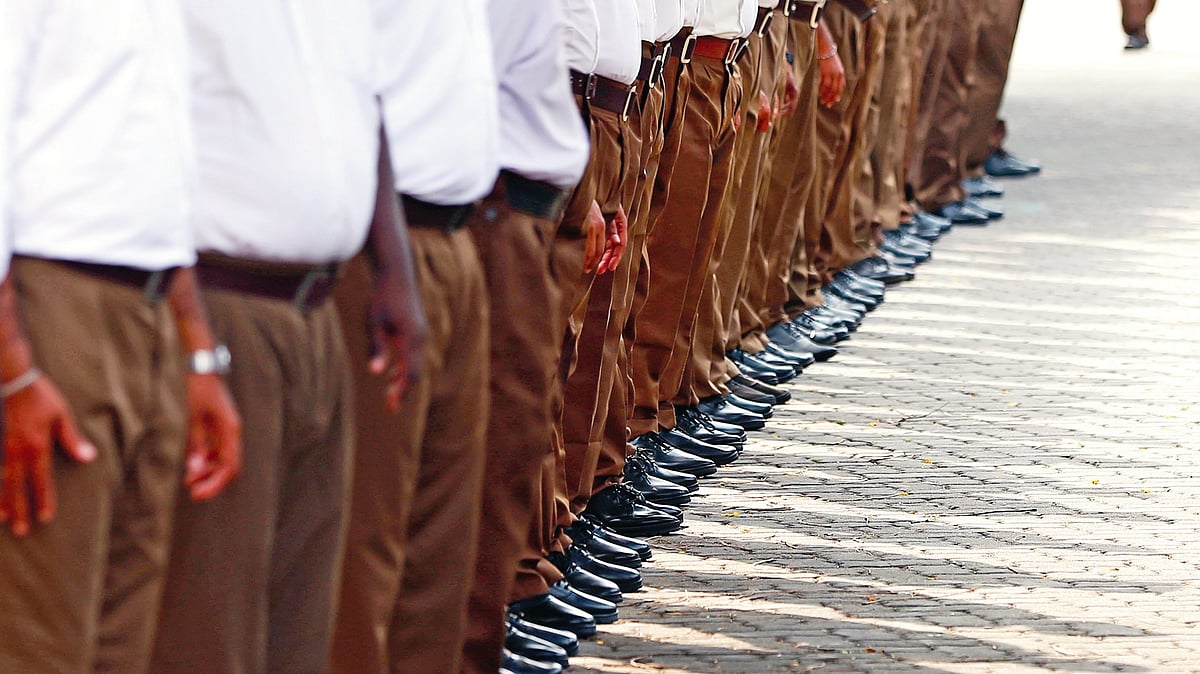
The Rashtriya Swayamsevak Sangh (RSS) concluded its centenary celebrations on Dussehra, 20 October. At home, the year-long jamboree saw a national outreach covering 4.61 lakh villages and 10 crore urban households (as claimed in its annual report 2025-26) and the release of a commemorative postage stamp and a 100-rupee coin.
Overseas bhakts were graced by RSS chief Mohan Bhagwat’s flying visits as he addressed diaspora in the US, UK and Canada on the organisation’s humanitarian non-communal agenda. The converted needed no convincing and the sceptics stayed sceptical.
Undoubtedly stronger, wealthier and politically more influential than ever before, the centenary year hasn’t been an unmitigated bed of roses for the RSS. The Gen Z protests in June as well as the countrywide protests against vote chori (theft) by the BJP in collusion with the Election Commission caught it off-guard. Speaking in Mumbai in August, Bhagwat praised the inherent patriotism of “our very own youth” protesting at Jantar Mantar. In his Vijaya Dashami speech, the same youth were described as emotional, misguided and misled by foreign powers.
Bhagwat, who not only enjoys Z-category security but was also ranked as the fourth most powerful Indian by The Indian Express in 2025, met hostile demonstrations abroad and a barrage of hard questions at home. The Congress government in Karnataka served a notice to the RSS to clarify its legal status and furnish details of membership and funding. Leader of the Opposition Rahul Gandhi sustained a no-holds-barred attack, calling the RSS ‘a bunch of jokers’ and an ‘anti-Constitutional all-male cult’.
While the jury is still out on whether the choice of Nitin Nabin as BJP’s national president was dictated by the party or the RSS, the loss of the Bankipur Assembly seat in Bihar, that too in the centenary year, has grated on both. (The seat vacated by Nabin has been a BJP stronghold since 1995.)
Bhagwat turned 75 six days before Prime Minister Modi did. Whatever happened to retirement at 75 being held up as the Hindu ideal of vanaprastha? Bhagwat now says he never asked anyone to retire at 75, and that he would step down whenever the Sangh asks him to.
The RSS continues to maintain the fiction that it is a cultural organisation, an unregistered NGO with no connection to the ruling party. Its annual report provides no information on the composition, regional identity and number of members, no details on donors, no audited account of income and expenditure.
Why has this ‘model of integrity’ not voluntarily adopted the transparency standards it expects from others? Bhagwat insists that Hindu dharma requires no registration. If every other NGO is bound to follow the rules, how does the world’s so-called largest NGO claim exemption? Saying that the RSS is a ‘body of individuals’ and hence need not furnish details about its income and expenditure is the tallest of legal tales.
While thousands of NGOs have had their registration cancelled on minor or frivolous grounds, barred from receiving donations from abroad for being in ‘violation of the rules’, the RSS continues to evade scrutiny. Small wonder that Bhagwat telling protesters to stay on the right side of the law and the Constitution drew more hoots than cheers.
Journalist and author Dhirendra K. Jha, known for his extensive research on the RSS, calls it a private anti-constitutional paramilitary organisation. The RSS imparts arms training to its cadre. Bhagwat has said on record that they can mobilise an army along India’s borders in three days flat (faster than the Indian Army). Its cadre wears a uniform and worships weapons (shastra puja) on Vijayadashami. Under which Indian law, Jha wonders, can such an outfit be registered?
At a time when people are being detained and jailed in Delhi simply for waving the national flag, the RSS is conducting route marches with its goosestepping lathi-wielding cadre. Karnataka home minister Priyank Kharge posted a screenshot of a letter in which the RSS had ‘informed’ the government of its route marches, sought ‘cooperation’ from the police and asked the government to make ‘necessary arrangements’.
Kharge wrote: ‘When lakhs of you intend to march through Karnataka’s streets on a single day at the same time, the police department has considerable preparations to make: deployment of personnel, transportation, food, traffic management, security arrangements and other logistics. All of this requires planning, manpower and public resources. So, please fill out the prescribed application form, provide the necessary details and await formal permission.’
His sarcastic tweet highlighted the absurdity of a private NGO demanding public services while steadfastly refusing the public’s right to information.
****
Bhagwat has pronounced that there will be no regime change in India. The current wave of protests was merely a “storm that had swept in from the West”, opposed to “every kind of order, every form of civility, everything auspicious… all cultural and human values… it wants to destroy, corrupt and devastate all of these things.”
Expectedly, he blamed it on the ‘foreign hand’: “Just listen to the news that has been coming in over the past few days. What is happening in France? What is happening in Albania? What happened in Bangladesh? What happened in Nepal? All of these events have been engineered and orchestrated…”
While Bhagwat’s discourse on protests came as no surprise, what was breathtaking was his shifting the responsibility of problem solving to the protesters. Agitations, he said, should aim to find solutions rather than deepen hostility or create divisions within society. The chief thinker of the RSS chose to stay oblivious of the government itself creating divisions and deepening hostility.
Not a word was uttered on what triggered the protests — by citizens, workers, youth, women, farmers, students — in the first place. Neither vote chori nor the SIR nor the government’s failures to conduct the CBSE exam nor the NEET fiasco merited Bhagwat’s attention.
Instead, he spoke of the evils of social media delivering unfiltered information to the youth, the urgency of restricting and regulating it, while staying mum on the vituperative government-funded mainstream media propaganda machine.
Some analysts read fear in his words. Author, columnist and commentator Ashutosh tweeted: ‘Mohan Bhagwat’s speech is a classic example of how scared the whole organisation is and how vulnerable they have become.’ He recalled 1975, when the RSS lent its support to JP and the then Opposition, exhorting the army and the police to disobey the orders of the government. Morarji Desai, who became prime minister in 1977, had declared that Prime Minister Indira Gandhi would be confined to her residence until she resigned. Wasn’t that an operation for regime change, asked Ashutosh.
Jha agrees that the RSS, known to be fork-tongued, may well be driven by fear. He recalls Bhagwat’s placatory annual address following the BJP’s electoral setback in the Lok Sabha polls of 2024. At the time Bhagwat had said: the Opposition has an important role; the Opposition is not the enemy. After a year-and-a-half of silence on Manipur, he had also spoken about the fire still raging in the state.
Jha believes the bogey of regime change in this year’s address could also be driven by the fact that the BJP and the RSS are unsure about how to cope with the protests.
Rattled by the fear of losing power, they are closing ranks around the handy narrative of foreign conspiracies.
Join our official telegram channel (@nationalherald) and stay updated with the latest headlines