Opinion
Rebuilding Gaza must begin with the environment
Ignoring environmental concerns for political expediency can only entrench long-term instability
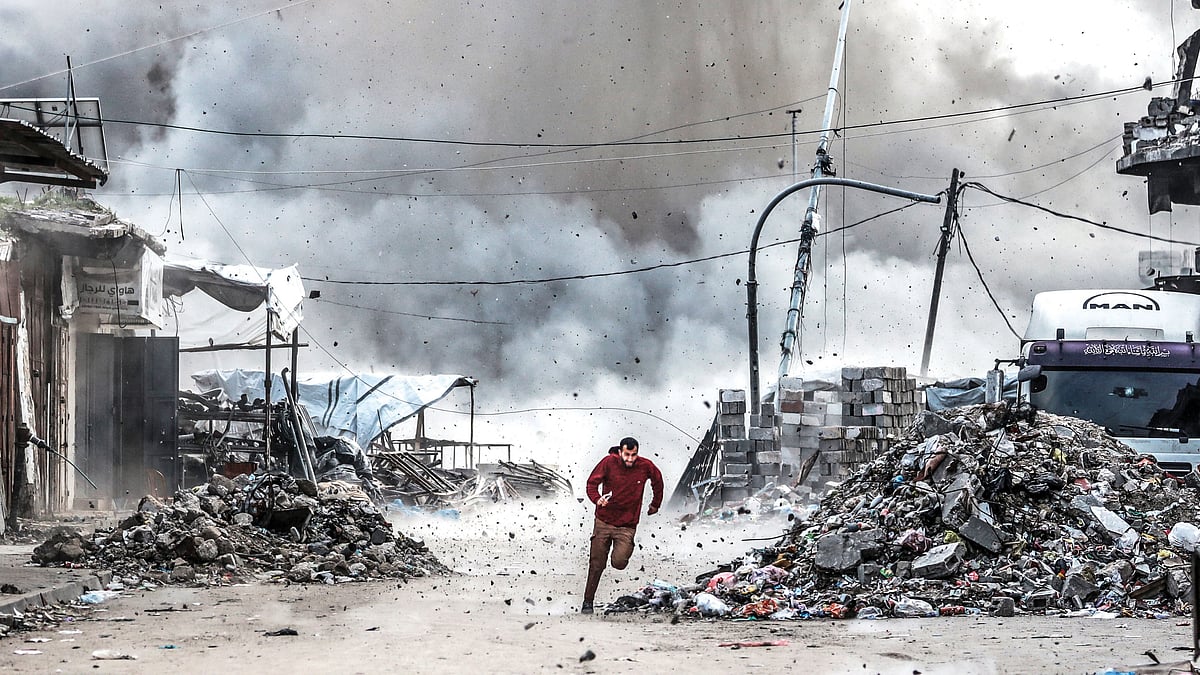
As diplomats negotiate ceasefires, donor conferences pledge billions for reconstruction and security strategists sketch out stabilisation plans, there is a danger that one of the most consequential dimensions of Gaza’s catastrophe will be overlooked. Conversations about money, governance and geopolitics may dominate headlines and policy briefs, but without confronting the environmental wreckage that underlies the territory’s shattered infrastructure under the occupation and wars, any reconstruction will be superficial and ultimately unsustainable.
Gaza’s environmental crisis is not a peripheral issue but a foundational one that affects water, soil, air, health, livelihoods, agriculture and, ultimately, the ability of communities to rebuild their lives with dignity and resilience. The scale of the environmental challenge in the Gaza Strip is immense and intertwined with the human suffering that has made daily survival extraordinarily difficult and costly. Much of Gaza has been physically destroyed, with estimates indicating tens of millions of tonnes of rubble littering cities and towns, creating an unprecedented obstacle to recovery that could take years to clear even under favourable conditions and generate significant emissions simply from debris processing and transport.
Environmental degradation in Gaza extends far beyond debris. Water and sanitation systems have been crippled by repeated attacks and prolonged electricity shortages, forcing residents to rely on limited and often unsafe sources of drinking water while untreated sewage contaminates neighbourhoods, agricultural land and coastal waters. Even before the most recent escalations, Gaza’s water infrastructure was under severe strain. Now, with damaged pipelines, destroyed pumping stations and inoperative treatment facilities, the risk of waterborne disease and long-term contamination has intensified. Agricultural land and orchards that once supported local food production have been flattened, compacted by heavy machinery or contaminated by explosive residues and waste. Air quality has deteriorated due to dust from destruction, burning debris and reliance on diesel generators and low-grade fuels for cooking and electricity. The environmental crisis is therefore multidimensional, affecting every basic system that sustains life.
Much of the current discourse on Gaza’s future assumes that rebuilding homes, schools, clinics and government buildings is the central task. But reconstruction cannot meaningfully begin until the land, water and air on which these buildings depend are restored and protected. The sheer scale of war debris forms a physical and environmental barrier that must be addressed before new infrastructure can safely take root. If rubble is treated merely as an engineering inconvenience rather than a public health and ecological risk, toxic dust and hazardous materials will continue to seep into soil and groundwater, compounding the damage. Debris is not just broken concrete. It often contains asbestos, heavy metals, fuel residues and other contaminants that pose long-term health threats if left unmanaged.
Restoring water and sanitation infrastructure must therefore be among the first pillars of any reconstruction plan. Clean water is not only essential for drinking and hygiene but also for economic recovery, agricultural viability and disease prevention.
Rehabilitating these systems means more than repairing pipes. It requires modernising treatment facilities, ensuring reliable power supply, reducing leakage and establishing transparent water quality monitoring. Homes rebuilt without safe water and sanitation are uninhabitable in any meaningful sense. If water systems fail, reconstruction efforts will quickly unravel under the weight of public health crises.
Water that is safe to drink, soil that can produce food, air that does not carry toxic dust and neighbourhoods free of hazardous debris will be the true foundations of recovery in Gaza
Agriculture presents another urgent environmental dimension. Farmland damaged by carpet bombardment and building of illegal settlements cannot simply be returned to production without systematic rehabilitation. Clearing unexploded ordnance and other war remnants is an essential first step, as fields that remain contaminated by explosive devices are inaccessible and dangerous. Free and secure access to land is equally critical. Farmers must be able to reach and cultivate their fields without restrictions or fear, otherwise land rehabilitation plans remain theoretical. Soil testing should identify contamination and salinity levels, followed by removal of toxic debris, restoration of irrigation systems and rebuilding of soil fertility through organic matter and careful management. Without addressing land and water quality, agricultural revival will be slow, deepening food insecurity and economic dependency.
The political context surrounding reconstruction adds another layer of complexity. Competing visions for Gaza’s future range from externally driven redevelopment schemes to proposals that fundamentally reshape land use and population distribution. There are growing concerns that reconstruction processes themselves could be used as instruments of political pressure or demographic engineering, where control over materials, permits and planning determines who can return, rebuild or remain. In such a context, environmental considerations risk being sidelined in favour of strategic calculations. Ignoring environmental repair for political expediency would entrench long-term instability. Environmental sustainability must be safeguarded through transparent planning, inclusive decision-making and independent oversight, ensuring that reconstruction serves the population rather than geopolitical agendas.
Waste management is one of the most urgent and visible environmental challenges. Mountains of rubble mixed with household waste and hazardous materials create immediate health risks and long term contamination pathways. A sustainable reconstruction strategy must prioritise systematic debris mapping, safe sorting and recycling where feasible, and the establishment of controlled disposal sites. Independent monitoring mechanisms should verify compliance with environmental standards. This may appear less dramatic than building new housing blocks, but it is foundational to protecting public health and restoring trust.
Energy systems also intersect with environmental sustainability. In crisis settings, reliance on diesel generators and improvised fuel sources increases air pollution and operational costs while undermining reliability. Reconstruction offers an opportunity to invest in more resilient and cleaner energy systems that can power water treatment, health facilities and homes without exacerbating environmental harm. Integrating renewable energy and energy efficient design can enhance resilience and reduce future vulnerability, especially in a territory where supply chains are frequently disrupted.
International organisations, universities and technical experts have an important role to play in supporting environmentally sustainable reconstruction. They can provide independent environmental assessments, contamination mapping and risk analysis. They can assist in designing low-cost water treatment technologies and waste recycling systems adapted to local conditions. However, external involvement must strengthen local capacity rather than replace it. Gaza’s professionals and institutions should lead long-term environmental governance, supported by training and transparent data systems. Funding mechanisms should require environmental impact assessments and resilience planning as core conditions rather than optional components.
Ultimately, reconstruction in Gaza will be judged not only by the number of buildings erected but by whether daily life becomes safer, healthier and more sustainable. Water that is safe to drink, soil that can produce food, air that does not carry toxic dust and neighbourhoods free from hazardous debris are the true foundations of recovery. Ignoring these environmental dimensions in favour of short-term political or financial gains would repeat past mistakes and lock Gaza into a cycle of repeated crisis.
Rebuilding Gaza is often framed as a diplomatic and security challenge. It is that, but it is also an environmental challenge of historic scale. If sustainability is embedded at the core of reconstruction, Gaza’s recovery can strengthen resilience and improve human security. If it is neglected, reconstruction will rest on unstable ground, vulnerable to collapse under the weight of pollution, scarcity and renewed instability. The choice is not between speed and sustainability. The choice is between rebuilding for appearance and rebuilding for sustaining life.
ASHOK SWAIN is a professor of peace and conflict research at Uppsala University, Sweden
Join our official telegram channel (@nationalherald) and stay updated with the latest headlines