Opinion
Two centuries of Hindi journalism and the making of modern India
A journey from colonial-era resistance to digital disruption, tracing how Hindi media helped build the country's public conversation
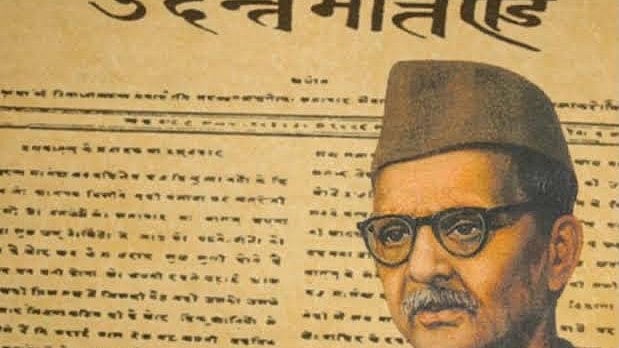
As India marks the bicentenary of Hindi journalism in 2026, the occasion deserves attention far beyond Hindi newsrooms. For anyone interested in the history of Indian journalism — whether they read in Hindi, English, or both — the story of Hindi journalism is inseparable from the story of India's modern public sphere.
Many of the debates that continue to define journalism today — about power, language, public accountability, commercial pressures, and the role of the press in a democracy — were first fought in the pages of Hindi newspapers and journals. From the modest pages of Udant Martand in colonial Calcutta to the sprawling and often chaotic digital ecosystem of today, Hindi journalism has served both as a witness to history and an active participant in shaping it.
Udant Martand and the birth of a public voice
The story began on 30 May 1826, when Pandit Jugal Kishor Shukla launched Udant Martand (the rising sun) from what was then Calcutta, making it India's first Hindi newspaper. At a time when English and Persian publications largely catered to colonial administrators and urban elites, the arrival of a Hindi newspaper marked a significant cultural intervention.
The choice of Hindi was not merely linguistic; it was political and civilisational. At a time when colonial education policies privileged English, Udant Martand sought to create a shared public vocabulary among emerging Hindi readers. Though the paper struggled financially and survived only briefly, it sparked a vernacular awakening whose influence would echo across the subcontinent.
Its legacy survives in the annual observance of Hindi Journalism Day on 30 May, a reminder that journalism in Indian languages emerged not merely as a business venture but as an instrument of public empowerment.
Journalism as cultural and political resistance
By the late 19th century, Hindi journalism had evolved into a powerful vehicle for cultural assertion and political critique. Bharatendu Harishchandra, widely regarded as the father of modern Hindi literature and journalism, used publications such as Kavi Vachan Sudha to combine literary renaissance with criticism of colonial exploitation. Through essays, satire and commentary, he nurtured an emerging nationalist consciousness without direct confrontation.
The early 20th century deepened this transformation. Madan Mohan Malaviya launched Abhyudaya in 1907 from Allahabad (now Prayagraj), turning it into an influential platform for Swadeshi ideas and nationalist debate. His later efforts also contributed to the establishment of the Hindi daily Hindustan in 1936, expanding Hindi news coverage across northern India.
Few figures embodied the fearless spirit of Hindi journalism more fully than Ganesh Shankar Vidyarthi. Through Pratap, founded in Kanpur, he championed peasants, workers and political dissenters while exposing colonial repression. His repeated imprisonment reflected the risks journalists embraced during the freedom struggle. His death in 1931 while trying to quell communal violence transformed him into a lasting symbol of moral courage and public service.
Hindi journalism during this period did more than report events; it helped shape the intellectual and emotional climate of anti-colonial resistance.
The Gandhian era and mass mobilisation
The decades between the 1920s and 1940s marked perhaps the most politically influential phase of Hindi journalism. Mahatma Gandhi understood that the freedom movement could not succeed through English-language communication alone. To reach ordinary citizens and rural India, he launched the Hindi edition of Navjivan in 1921, using it to promote Satyagraha, non-violence and social reform.
In Varanasi, Shiv Prasad Gupta's Aj emerged as a leading nationalist newspaper closely aligned with the Congress movement. Despite censorship, fines and colonial restrictions, it continued to inform and mobilise readers.
Literary journalism flourished alongside political reporting. Munshi Premchand's Hans, launched in 1930, combined literature with sharp commentary on caste, feudalism and colonial rule. Publications such as Matwala used satire and wit to challenge authority, while contributors including Suryakant Tripathi 'Nirala' sharpened Hindi journalism's critical edge.
During the Non-Cooperation, Civil Disobedience and Quit India movements, Hindi journalists often functioned as activists as much as reporters. When presses were confiscated, handwritten and cyclostyled publications circulated clandestinely. Colonial laws such as the Vernacular Press Act and later emergency regulations sought to suppress these voices, but repression often strengthened rather than silenced them.
Nation-building and the commercial turn
After Independence, Hindi journalism entered a new phase. The challenge was no longer anti-colonial resistance but democratic consolidation and nation-building. Newspapers such as Dainik Jagran, Dainik Bhaskar, Navbharat Times and Jansatta expanded into smaller towns and semi-urban India, bringing local concerns into national conversations and broadening democratic participation.
For millions beyond metropolitan centres, Hindi newspapers became the primary source of information and political engagement. They played a major role in language advocacy, electoral mobilisation and the articulation of regional aspirations.
Economic liberalisation in the 1990s, however, transformed the media landscape. Advertising overtook subscriptions as the dominant revenue model, intensifying competition and encouraging sensationalism. The rise of 24-hour television news accelerated a shift towards spectacle, where speed and ratings often competed with depth and nuance.
The result was a growing tension between journalism as a public service and journalism as a commercial enterprise.
Polarisation, 'godi media' and digital resistance
In recent years, Hindi media has faced increasing scrutiny over its relationship with political power. The term "Godi media", popularised by journalist Ravish Kumar, entered public discourse as shorthand for sections of the media perceived to be excessively deferential to the ruling establishment. Concerns over corporate concentration and editorial independence have deepened as large conglomerates expanded their influence across television and digital platforms.
Critics argue that shrinking space for dissent, tightly managed political access and pressures on independent reporting have weakened journalism's traditional watchdog role.
Yet the same period has witnessed a resurgence of independent media. Digital platforms, YouTube channels and online portals have enabled journalists such as Ravish Kumar, Ajit Anjum, Abhisar Sharma and Akash Banerjee to reach audiences directly, bypassing traditional gatekeepers. Platforms such as Satya Hindi, Public India and DB Live have cultivated large audiences for investigative reporting, long-form analysis and citizen-supported journalism.
At the same time, debates over digital regulation and broadcasting reforms continue to raise difficult questions about the balance between accountability, autonomy and state oversight.
The unfinished responsibility
The bicentenary of Hindi journalism is not merely a celebration of longevity; it is a test of relevance. Its journey mirrors India's own trajectory — from colonial subjugation to democratic assertion, from literary idealism to technological disruption.
Its greatest achievement has been the creation of a shared public sphere for millions who found their political and cultural voice through Hindi. That achievement remains invaluable in an age increasingly fragmented by algorithmic echo chambers, misinformation and ideological polarisation.
As commemorations, exhibitions and public discussions mark the bicentenary, the challenge before Hindi journalism is not simply to remember its past but to recover its foundational purpose: fearless inquiry, social responsibility, linguistic vitality and democratic accountability.
The spirit of Udant Martand still matters. Whether Hindi journalism's third century proves as consequential as its first two will depend on its ability to withstand commercial pressures, technological upheaval and political influence while remaining faithful to the ideals of truth, reform and public service that animated its beginnings.
The main editorial change I'd recommend is that this piece works best if it is framed not as "a history of Hindi journalism for Hindi readers", but as "a history of Indian journalism through the lens of Hindi journalism". That makes it relevant to a broader readership and gives the bicentenary a stronger justification.
Read this article in Hindi
Hasnain Naqvi is a former member of the history faculty at St Xavier’s College, Mumbai. More of his writing here
Join our official telegram channel (@nationalherald) and stay updated with the latest headlines