Opinion
A people’s mandate lost in the fog of SIR
In a functioning democracy, the election results of West Bengal would be audited
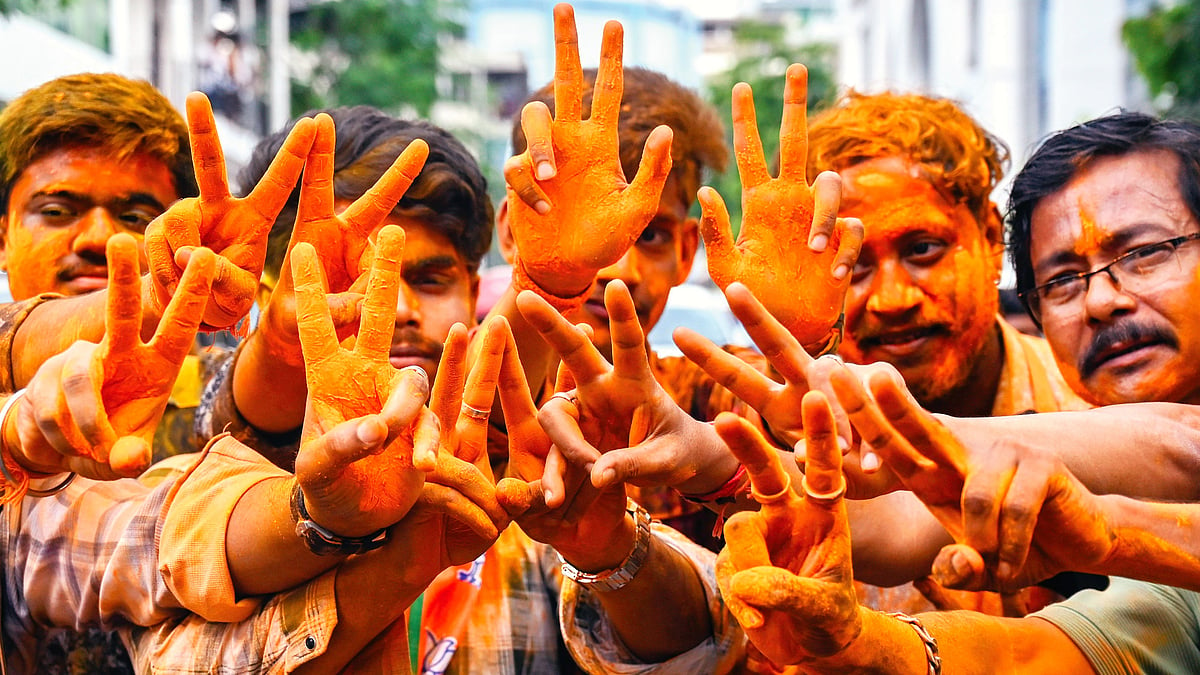
If the BJP’s triumph in the 2026 West Bengal assembly elections is remembered as a turning point in the history of the state, it won’t be simply because the party got a brute majority (207 of the 293 seats) or because it ended Mamata Banerjee’s uninterrupted reign of 15 years. There were early indications in the violence that ensued after the results, in the vulgarity of the victor’s celebrations, in the bulldozing of meat shops in the city’s iconic New Market on which way the state was headed.
The Special Intensive Revision (SIR) of voter rolls in West Bengal will also not be easily forgotten. By the time of the elections, held in two phases on 23 and 29 April, the Election Commission of India (ECI) had managed to remove ~91 lakh names from the rolls. That’s nearly 12 per cent of the state’s voter base, shrinking it from around 7.66 crore pre-SIR to 6.8 crore.
The scale and pattern of deletions are instructive: in 105 of the BJP’s winning seats, i.e., half its tally, the number of deleted voters exceeded the party’s victory margin. Of these, 86 were seats the BJP had never won before. Let’s just say these numbers do not inspire confidence in the electoral process.
But what the dubious SIR exercise has also done is to deflect attention from the very real anti-incumbency in the state and obscured its impact on the results. Years of the ‘syndicate raj’ in construction and other sectors, the lack of employment opportunities, the state’s ‘cut money’ culture of extortion and governance failures had earned the Trinamool Congress (TMC) a terrible reputation in the state — and the desire for change was palpable across communities, including large sections of disillusioned Muslims and women, who are generally seen as pro-TMC.
The BJP capitalised on this fatigue even while making its own pre-poll promises of bigger doles and ‘development’. And it’s not far-fetched to assume that the high turnout was also a reflection of the desire for change.
If it’s fair to assume the SIR went against the TMC, it’s also fair to assume that a victory of this magnitude would not have been possible without real discontent with the TMC.
A question of citizen rights
Nevertheless, the shadow of the SIR looms large over these results. It’s not easy to brush aside the improbable fact of Trinamool bastions falling so decisively. And if we are still a democracy, then a thorough, independent scrutiny of the entire electoral process is in order. It’s no trifling matter to summarily delete lakhs of voters from rolls in a country that has universal adult suffrage and whose Election Commission is mandated to ensure that ‘no one is left out’.
The right to vote is a cornerstone of our Constitution. While a periodic clean-up of voter rolls is essential, the process must prioritise inclusion of legitimate citizens over exclusion on contested grounds. Even after the Calcutta High Court and Supreme Court oversaw aspects of the SIR exercise, the implementation left massive gaps. An estimated 27 lakh appeals were still pending when the elections got over.
As mentioned earlier, in several key battlegrounds, voter deletions outnumbered victory margins. Take just one example — Bhabanipur. Outgoing chief minister Mamata Banerjee lost to incoming CM Suvendu Adhikari by ~15,000 votes and the number of voter deletions here was ~45,000. This happened to other TMC ministers as well.
What the data reveals
Whereas the voter base contracted 12 per cent overall from the pre-SIR baseline, the effects were concentrated in urban areas and minority pockets.
Analyses by different organisations show a disproportionate impact on Muslims, who comprise about 27 per cent of the state’s population (2011 Census) and accounted for roughly 34 per cent of the ~91 lakh deletions. In the 27 lakh pending cases ‘under adjudication’, estimates suggest ~17 lakh (or 63 per cent) are Muslims. In Murshidabad district, which has a Muslim concentration, the deletions are variously estimated to be between 4 lakh and 7 lakh. Malda and North 24 Parganas districts also saw heavy deletions.
According to the Kolkata-based SABAR Institute, a data analytics outfit, the skew was sharper in certain constituencies. In Nandigram, for instance, where Muslims form about 25 per cent of the population, they accounted for over 95 per cent of deletions in several supplementary lists. Similar patterns appeared in Metiabruz and other Muslim-majority areas.
Women, particularly from minority and working-class backgrounds, also featured prominently in the deletions, often reportedly due to name mismatches or documentation issues spanning years.
Through all of this, the Election Commission of India maintained that the exercise was scrupulously fair and had targeted illegals and duplicates. It also took credit for enabling ‘peaceful polls’ and said record turnouts in some high-deletion areas were a sign that genuine voters were emboldened to participate. Try wrapping your head around that!
Sayantan Ghosh is the author of two books, Battleground Bengal and The Aam Aadmi Party
Join our official telegram channel (@nationalherald) and stay updated with the latest headlines