Opinion
What’s with PM Modi’s ‘forgiveness’ charade?
In a democracy, protesters don’t owe the prime minister deference, writes Ashok Swain
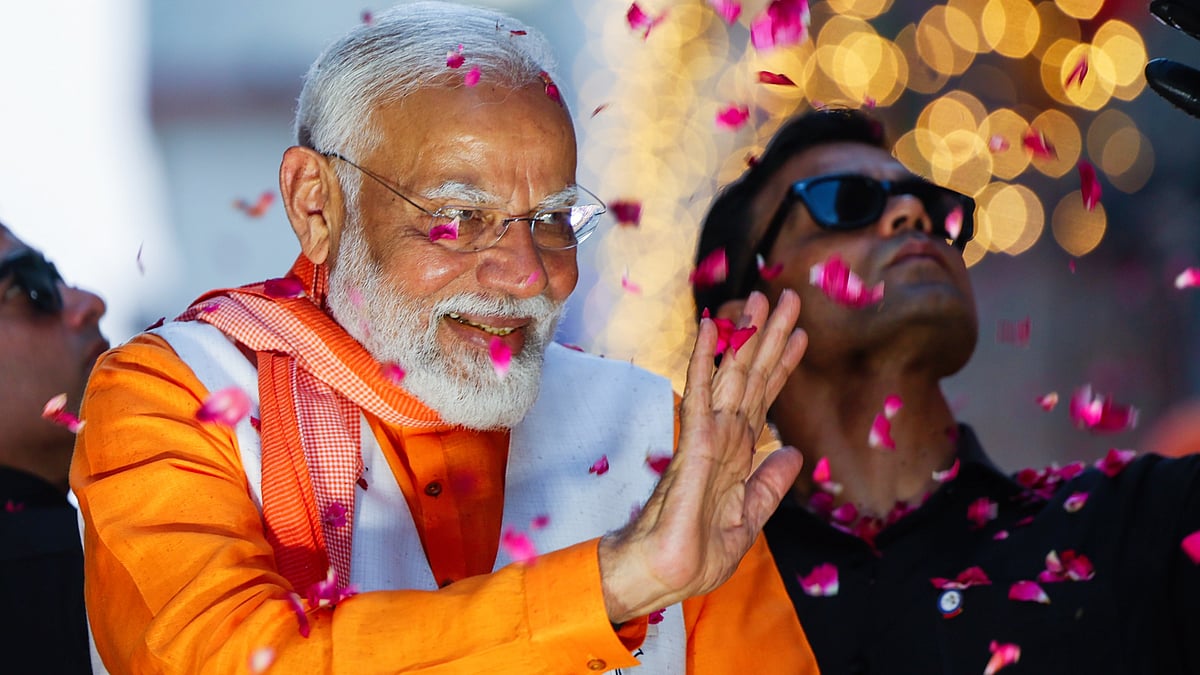
On Friday, 31 July, Prime Minister Narendra Modi posted another late-night Instagram reel in which he assumed a paternalistic air to ‘forgive’ the young protesters who had used foul language against him and his mother. The protesters were ‘misguided children’, he said, who had to be shown the right path.
But the performance elides the disturbing question: what offence in the law of a supposed democracy was he forgiving? And how about seeking forgiveness first for the misguided actions of his own government that had brought these young protesters to Jantar Mantar in their thousands from all corners of the country?
Even if we grant that the language heard in the protests was occasionally crude and offensive, when did bad taste become a criminal offence? In a democracy, citizens do not owe their prime minister affection, deference or parliamentary vocabulary. Unless words constitute a credible threat, incitement to violence or another clearly defined crime, they remain protected political expression. The state has no business punishing people because they expressed their anger impolitely.
The timing of Modi’s intervention is also revealing. He stepped in after his government had already been forced by the scale of the protests mushrooming all over the country to remove the education minister. After the protests had been called off on 23 July, following a deal with the government and assurances that all FIRs against the protesters would be withdrawn, a promise that wasn’t kept.
The protesters, especially young women, were subjected to orchestrated online vilification, doxxing and intimidation. Vigilante supporters of the government were seen intimidating protesters in busy markets even as the police stood by. When criticism of this retaliation intensified and young people threatened to return to the streets, Modi reappeared on Instagram to bestow his gift of forgiveness, turning the question of state accountability into a morality play about the wounded feelings of a powerful man.
Even his forgiveness has not stopped the rape and death threats. The doxxing continues: personal details, family information and purported addresses are being freely circulated online with no apparent consequences. Referring to the young protesters as ‘children’ who have lost their way and must be forgiven is also a calculated attempt to seize the moral high ground. These are young adult citizens, mainly all eligible voters, demanding better from their government, not dependents awaiting correction by a national patriarch. To infantilise them is to try to diminish their political agency.
There is also an essential distinction between the speech attributed to the protesters and the response directed at them. An insult, however distasteful, is not equivalent to a rape threat, a death threat or sharing personal information online, which, in the current context, is tantamount to instigating violence. At the very least, it’s an attempt to chill the targeted protesters and all those watching into a fearful silence.
That the focus of state and media outrage is on vulgar words used about Modi while threats of bodily harm directed at young women is treated as background noise shows something about the state of our democracy.
****
I speak from personal experience of this state machinery. For twelve years, Modi’s supporters have targeted me, my family, my colleagues and even my (now deceased) father with abuse and threats of violence, rape and death. Online campaigns have targeted my academic position at Uppsala University and my role as a UNESCO Chair. The purpose is plain: to raise the personal and institutional cost of criticising Modi’s policies.
No late-night messages of concern for us. No senior BJP leader has lectured the attackers on language, decency or respect for families. On the contrary, the boundary between organised political messaging and unchecked online hate campaigns is often deliberately blurred. This provides the establishment plausible deniability while its critics absorb the consequences. The leader maintains a pretence of being above the mob even as the mob unleashes violence in his name.
History shows that attempts to criminalise insults to rulers have done badly under the rule of law. In France, activist Hervé Eon was convicted for displaying a placard to President Nicolas Sarkozy bearing a vulgar phrase Sarkozy himself had once used. The European Court of Human Rights ruled that the conviction violated freedom of expression, recognising it as political satire. France subsequently abolished the 1880s law — insulting the French president was no longer a criminal offence.
Spain similarly convicted two demonstrators for burning photographs of King Juan Carlos and Queen Sofía. The European Court held that their punishment violated freedom of expression: the act was provocative political criticism, not incitement to hatred or violence. In another case in Spain, the Court rejected the conviction of Basque politician Arnaldo Otegi for insulting the king, stressing that a head of state cannot enjoy special protection that shields the institution from political challenge.
Poland prosecuted writer Jakub Żulczyk for calling President Andrzej Duda a ‘moron’, but its courts ultimately acquitted him, concluding that criminal punishment would improperly restrict political debate.
These cases do not proclaim every insult admirable. They establish something more important: democratic freedom is tested by speech that annoys, shocks and offends, not by speech everyone finds agreeable.
Leaders possess unmatched access to television, party organisations, public platforms and institutional authority. They can answer criticism without deploying criminal law. Precisely because they wield great power, they must tolerate more hostility than ordinary citizens, not demand greater protection from it.
Modi’s grand claim to forgiveness also attempts to deflect attention from the original provocation and the reasons why he was being satirised. Young Indians did not gather in great numbers because they suddenly wished to insult a prime minister. They were protesting a broken education system, the repeated paper leaks in competitive examinations, which had played havoc with their future; they were protesting failures of governance. Anger came after injury.
By placing allegedly abusive words at the centre of the story, the Modi government is asking the people to forget the scandal, the humiliating removal of the education minister and the collective action that forced it to retreat.
Its actions are proof that the government is not really interested in fixing the system; it’s only interested in somehow defusing the crisis — it first made false assurances to end the protest and is now going after the young protesters to instil fear in their minds and prevent another mobilisation. Fair enquiry in a functioning democracy would find the charges, the ‘zero FIR’ filed against one of the protesters legally untenable; the focus would shift to investigating the rape and death threats, the doxxing and intimidation with the seriousness they deserve.
Forgiveness is a private moral choice. It becomes politically sinister when a ruler claims the authority to forgive conduct that was never his to criminalise. India’s young protesters do not require paternal absolution from Narendra Modi. They need constitutional protection from the State he commands and they demand accountability from his government.
Ashok Swain is a professor of peace and conflict research at Uppsala University, Sweden. More by the author here
Join our official telegram channel (@nationalherald) and stay updated with the latest headlines