POLITICS
Bengal: BJP’s much-hyped Annapurna Bhandar sparks confusion, exclusion fears
Women who were promised a simple Rs 3,000 benefit now confront detailed paperwork and fears of exclusion
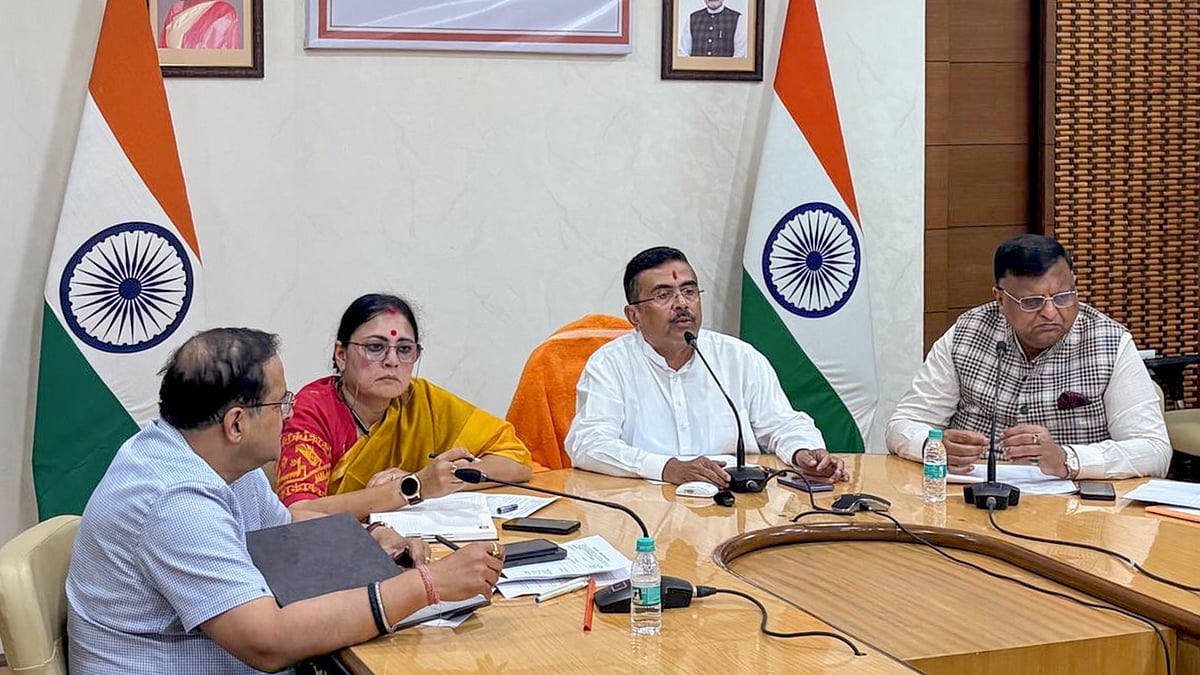
What the BJP had projected as a simple and generous replacement for the previous Trinamool Congress government's flagship Lakshmir Bhandar scheme has now become a source of confusion, anxiety and political controversy across West Bengal.
The newly launched Annapurna Bhandar scheme, under which the BJP government had promised to provide Rs 3,000 every month to women from 1 June, is facing criticism after the release of a lengthy 12-page application form that even existing Lakshmir Bhandar beneficiaries must now complete afresh.
Before coming to power, BJP leaders had repeatedly assured women that the Rs 1,500 received under Mamata Banerjee’s Lakshmir Bhandar scheme would simply be doubled to Rs 3,000 under Annapurna Bhandar. During the Assembly election campaign in March-April, BJP workers reportedly went door-to-door collecting names and distributing 'preliminary' forms while promising women that the enhanced amount would be transferred directly into their bank accounts without difficulty.
The reality, however, appears far more complicated. The government has clarified that previous Lakshmir Bhandar beneficiaries will not automatically qualify for Annapurna Bhandar. To receive the Rs 3,000 monthly allowance, applicants must be Indian citizens, economically vulnerable and successfully complete a fresh application and verification process.
Government employees, pensioners, income tax payers and individuals holding approved teaching or non-teaching government posts will be excluded. Those with unresolved citizenship-related issues may also lose eligibility, as may those whose names were struck off the voter rolls during the special intensive revision earlier this year.
The opposition has seized on the issue, accusing the BJP government of turning what was presented as a straightforward welfare expansion into a cumbersome and exclusionary exercise. Trinamool Congress spokesperson and MLA Kunal Ghosh questioned both the intent and practicality of the new process.
“When Mamata Banerjee introduced Lakshmir Bhandar, the opposition mocked it as charity and alms. Later, similar schemes were copied across the country. BJP workers earlier went door-to-door assuring people that Rs 3,000 would be given if forms were filled. Now suddenly they have produced a twelve-page form asking endless questions. What explanation are they giving now?” Ghosh said.
Questioning the extensive documentation being demanded, he added: “How necessary is all this information? Is there any guarantee that everyone filling up this form will actually receive the money?”
Ghosh argued that the government could have corrected irregularities in existing beneficiary lists instead of compelling every woman to undergo another round of verification.
“If there were mistakes earlier, those could have been corrected through scrutiny. Instead, mothers and sisters are being made to stand in queues again. Many women simply cannot provide all these details. Why should lakhs of ordinary women suffer because of government failures? If any men wrongly received benefits, remove them and punish those responsible. But why this harassment?” he asked.
The BJP government, however, has defended the new system, insisting that strict verification is necessary because large numbers of allegedly ineligible people had been receiving benefits under the previous administration. Chief Minister Suvendu Adhikari claimed that nearly 30 lakh beneficiaries under Lakshmir Bhandar were fraudulent, deceased, male or non-citizens, and said the objective of the new process was to create what he described as a “pure” beneficiary list.
State minister Dilip Ghosh also defended the verification exercise, saying the process would gradually become simpler but that stringent checks were unavoidable.
“Everything will eventually be simplified. Verification is important. Earlier, fake beneficiaries and even Bangladeshis were allegedly receiving benefits. That cannot continue,” he said.
At the centre of the controversy is the application form itself, which demands extensive personal, financial and family-related information not only from applicants but from all household members. Women are being asked to provide details of bank accounts, voter identity cards, Aadhaar numbers, PAN cards, ration cards, land ownership, vehicles, health insurance, educational qualifications, occupations, annual income and GST registration.
Applicants must also disclose whether any family member works in government service, receives a pension, pays income tax, or has held political or constitutional posts such as MLA, MP or Panchayat representative. The form additionally asks whether any family member has applied under the Citizenship Amendment Act and whether anyone’s name has been excluded from voter lists or SIR records.
The nature and volume of information being sought has alarmed many beneficiaries, particularly poor and rural women. Applicants are required to submit land deeds, mutation certificates, updated land records and details of even non-commercial four-wheelers. Questions regarding family income and health insurance premiums have further heightened fears that minor discrepancies could lead to rejection.
The form’s definition of “family” has created additional practical difficulties. It defines a family as individuals living together and eating food cooked in the same kitchen — a formulation that has raised concerns in countless Bengali households.
In many families, husbands work outside the state while wives remain in villages. Some married women still have Aadhaar or voter cards linked to their parental homes rather than their marital address. In other households, elderly parents live separately while children work elsewhere because of employment. Women fear such everyday realities could become grounds for exclusion.
Many beneficiaries who had expected a seamless transition from Lakshmir Bhandar to Annapurna Bhandar are now worried that documentation gaps or technical errors could jeopardise their eligibility. The government has stated that those who fail to submit the form within 90 days will continue receiving only Rs 1,500 under Lakshmir Bhandar until verification is completed, while the enhanced Rs 3,000 payment will be released only after successful submission and approval.
To ease the process, the government has announced special Janakalyan Shivirs and door-to-door assistance programmes. Yet concerns remain that elderly women, widows, less educated applicants and residents of remote villages may continue to struggle with the complicated paperwork.
What was promoted as a simple enhancement of an existing welfare scheme has thus become a politically charged debate over scrutiny, eligibility and exclusion. For many women who believed they would automatically receive a higher allowance from June, the reality now appears far more uncertain.
Join our official telegram channel (@nationalherald) and stay updated with the latest headlines