POLITICS
Bengal SIR: ECI seeks daily report from EROs, DEOs on document verification progress
ECI has defined the roles of special roll observers and micro-observers to strengthen oversight and ensure compliance with its guidelines
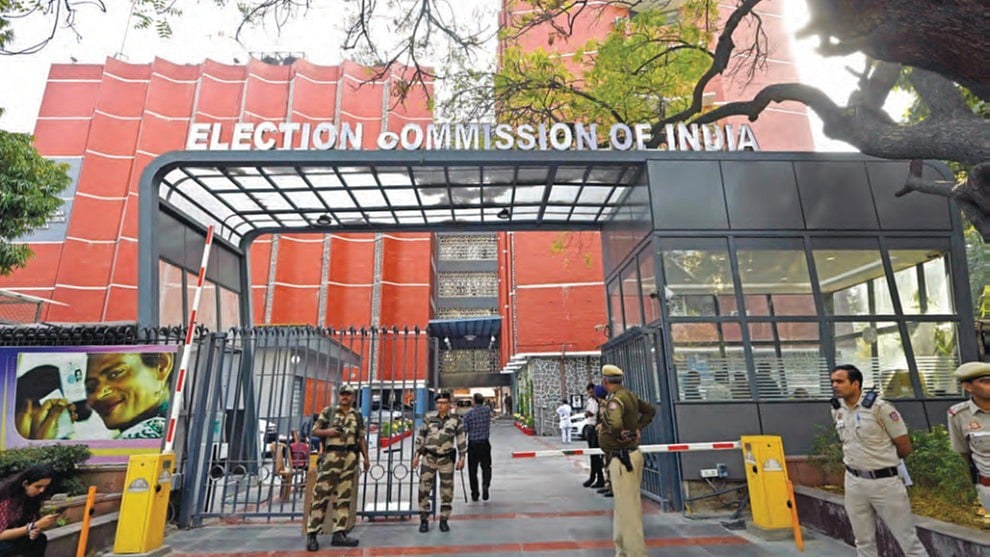
Amid mounting controversy over identity document verification during the ongoing Special Intensive Revision (SIR) of electoral rolls, the Election Commission of India (ECI) has instructed electoral registration officers (EROs) and district magistrates (DMs) — who also serve as district electoral officers (DEOs) — to submit separate daily reports on the progress of verification.
At the same time, the commission has mandated a two-stage verification process, with documents to be examined first by EROs and subsequently re-verified by DEOs, sources in the office of the chief electoral officer (CEO), West Bengal, said.
The ECI has also clearly defined the roles of special roll observers and micro-observers to strengthen oversight and ensure compliance with its guidelines.
According to CEO office sources, micro-observers stationed at hearing centres will closely monitor whether identity documents submitted by voters are being scrutinised by EROs and assistant electoral registration officers (AEROs) strictly in line with ECI norms. They have also been directed to immediately flag any major or large-scale deviations from prescribed procedures to the commission.
In parallel, special roll observers have been authorised to conduct random checks of documents that have already cleared the second stage of verification by DMs and DEOs, adding another layer of scrutiny to the process.
“The commission believes that daily, separate reporting by EROs and DEOs is essential to ensure speedy progress, especially with the final electoral roll scheduled for publication on 14 February,” a source in the CEO’s office said.
At present, hearings are underway for so-called “unmapped” voters — individuals who cannot be linked to the 2002 electoral roll of West Bengal either through self-mapping or progeny-mapping. In the next phase, voters flagged for logical discrepancies, including anomalous family-tree data detected during progeny-mapping, will be summoned for hearings.
The final voters’ list is due to be published on 14 February, after which the Election Commission is expected to announce polling dates for the high-stakes West Bengal assembly elections slated for later this year.
With IANS inputs
Join our official telegram channel (@nationalherald) and stay updated with the latest headlines