POLITICS
Citizens paying price for PM’s foreign policy ‘failures’: Congress on LPG hike
Mallikarjun Kharge accuses government of burdening citizens who are already grappling with inflation
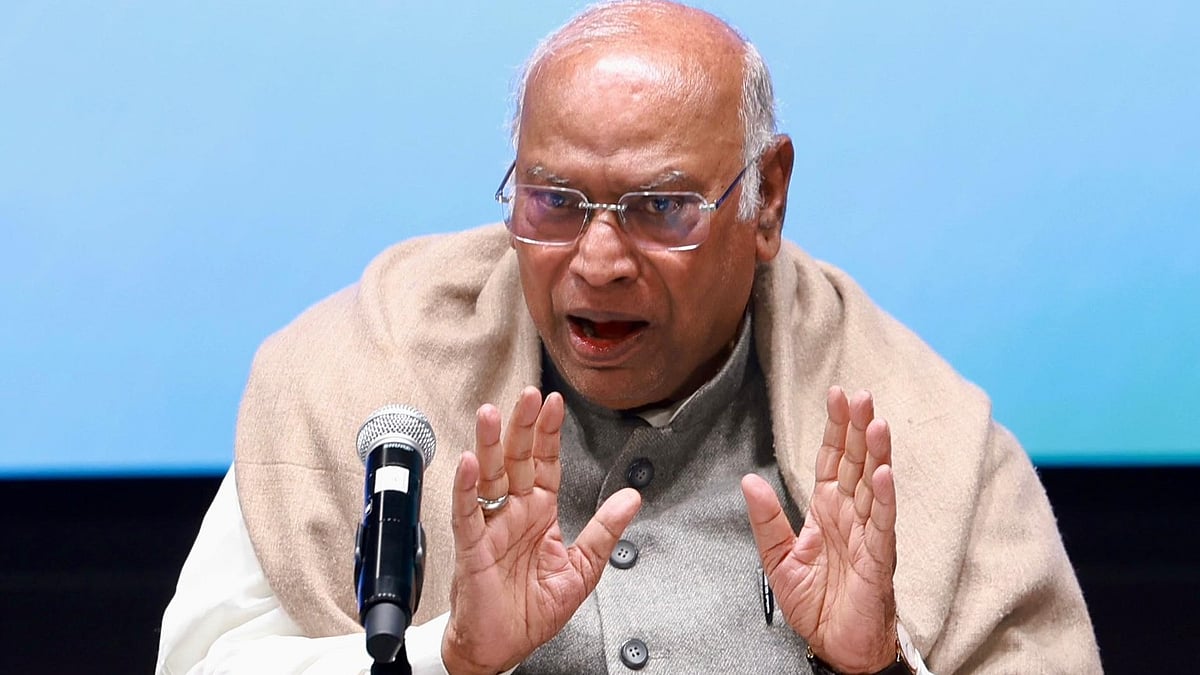
In a sharp attack on Saturday, the Congress criticised the Union government over the recent hike in domestic LPG prices, alleging that ordinary citizens are being made to bear the consequences of what it called Prime Minister Narendra Modi’s foreign policy “failures”.
The attack came after the price of domestic cooking gas was raised by Rs 60 per cylinder — the second such hike in less than a year — amid a surge in global energy prices triggered by the escalating crisis in West Asia. With the revision, the cost of a 14.2 kg non-subsidised LPG cylinder — the variant commonly used in households — has risen to Rs 913 in Delhi from the earlier price of Rs 853, according to data on the Indian Oil Corporation website.
Taking to social media platform X, Congress president Mallikarjun Kharge accused the government of burdening citizens who are already grappling with inflation. He alleged that while the government had earlier deprived the public of the benefits of falling international fuel prices, it was now forcing people to endure the strain of rising costs.
“First the benefits of lower international prices were taken away from the public. Now the people, already weighed down by inflation, are being made to sweat further,” Kharge wrote. In a pointed remark aimed at the government’s foreign policy narrative, he said the Modi government — which proclaims “sab changa si” (all is well) whenever conflicts erupt — appears helpless when it comes to ensuring adequate supplies of oil, gas and fertilisers.
Echoing the criticism, Congress spokesperson Supriya Shrinate questioned the government’s earlier assurances that India’s energy security would remain unaffected by the ongoing America-Israel-Iran conflict. She said the sudden decision to raise LPG prices contradicts those claims.
Shrinate also recalled that Leader of Opposition in the Lok Sabha Rahul Gandhi had previously warned that the unfolding war in West Asia could have deep repercussions for India. She noted that a significant portion of India’s energy supplies originates from Gulf countries, and any disruption in that region could inevitably ripple through the Indian economy.
“Our energy supply comes from the Gulf. If that is disrupted, it will adversely affect our economy. Even the finance ministry’s monthly report is saying the same,” she said, adding that the situation reflects a failure of the government’s foreign policy.
She further claimed that access to the strategically crucial Strait of Hormuz — a vital maritime corridor for global oil shipments — has reportedly remained open only for Russian and Chinese vessels, arguing that broader access for India could have mitigated the surge in domestic prices.
Warning that the impact may not end with cooking gas, Shrinate also predicted that petrol and diesel prices could rise in the future. “Why should the people of this country bear the consequences of Narendra Modi and his ministers’ failures?” she asked.
Meanwhile, members of the Mahila Congress staged a protest rally in Delhi against the LPG price hike, accusing the government of deepening the financial distress of households already struggling with rising prices of essential commodities. The women’s wing of the party demanded that the government immediately roll back what it described as an “anti-people” decision.
Despite the criticism, top government sources indicated that there are currently no plans to raise petrol and diesel prices. Officials said state-owned oil marketing companies possess sufficient financial capacity to absorb any warranted increase for the time being.
The LPG price revision comes against the backdrop of heightened volatility in global energy markets, as tensions in West Asia continue to cast a long shadow over supply chains and fuel costs worldwide — a development that could have far-reaching implications for India, the world’s third-largest energy consumer.
With PTI inputs
Join our official telegram channel (@nationalherald) and stay updated with the latest headlines