POLITICS
Did Modi govt pay to secure Trump's praise? Congress cites US filings
Congress cites US disclosures to allege paid publicity for Modi; MEA says lobbying firm only disseminated Trump’s post
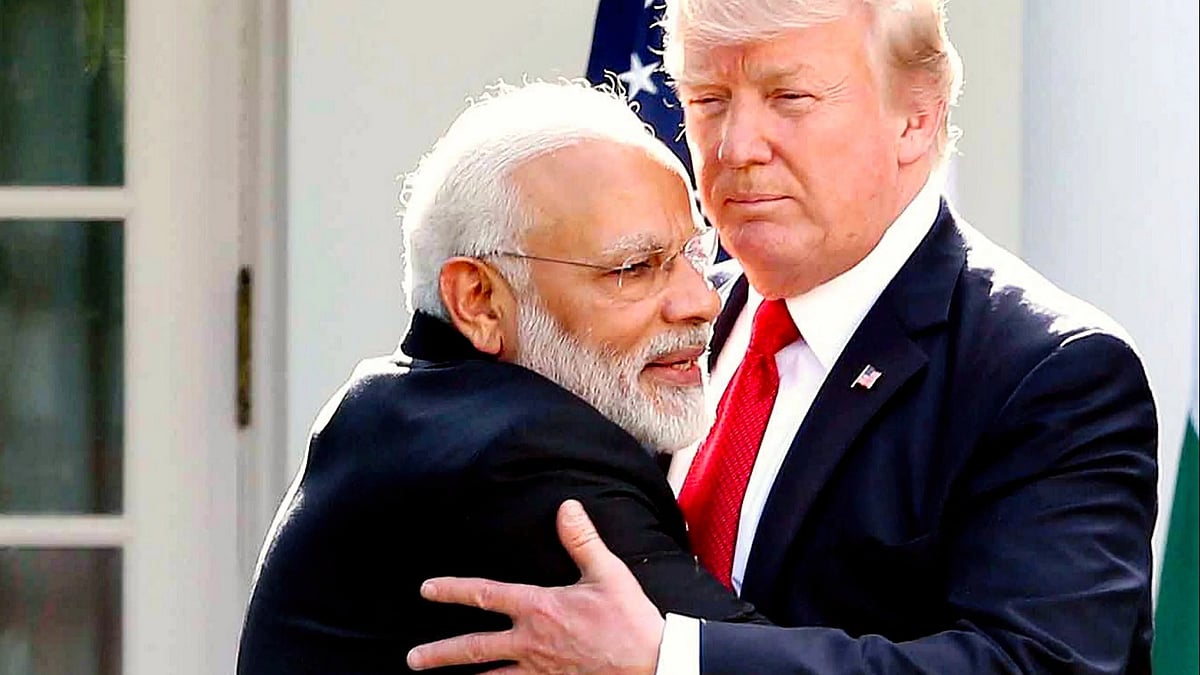
Congress alleges taxpayers' money was used to secure Trump's praise for Modi.
Mercury's FARA filing records dissemination of Trump's congratulatory post, not payment to Trump or commissioning of the message.
A second lobbying firm, SHW Partners, disclosed arranging eight calls between Indian representatives and senior US officials.
The Congress has accused the Narendra Modi government of spending taxpayers’ money to secure praise for the prime minister from US President Donald Trump, after disclosures filed by an American lobbying firm showed that it had circulated a congratulatory post by the US president on Modi.
In a post on its official X handle on Sunday, 8 November, the Congress alleged that the Modi government had paid Trump to publish a message praising the prime minister. The party also questioned the expenditure on American lobbying firms, suggesting that public money was being used for political publicity rather than addressing pressing national concerns.
The allegation follows disclosures under the US Foreign Agents Registration Act (FARA), which require individuals and organisations acting on behalf of foreign governments to report their activities, clients and financial arrangements.
According to a report by the Indian Express, Mercury Public Affairs, a US lobbying firm retained by the Indian embassy in Washington at a monthly fee of $75,000 (Rs 70.6 lakh approx.), listed Trump's June post congratulating Modi on becoming India's longest-serving prime minister among the material it had disseminated on behalf of the embassy.
The filing, however, does not establish that Mercury commissioned the original post or that Trump was paid to publish it. It records the firm's role in disseminating the message — a distinction that has become central to the political controversy.
The ministry of external affairs (MEA) rejected the allegation as misleading. In a clarification posted by its fact-check handle on 7 November, the ministry said Mercury's filing clearly stated that the firm had only disseminated Trump's post on X. It also said that hiring lobbying firms was normal practice in the US and that the Indian Embassy in Washington had engaged such firms since 1948.
Mercury's contract is part of a wider engagement by the Indian embassy with firms linked to figures in Trump's political circle. Bryan Lanza, who served as communications director for Trump's presidential transition team, is part of Mercury's core team. Susie Wiles, who later became Trump's White House chief of staff, had also been a registered lobbyist with the firm until late 2024.
The embassy had also hired SHW Partners LLC, headed by Trump aide Jason Miller, at a monthly retainer of $150,000 (Rs 1.40 crore approx.). Its FARA disclosures show that the firm arranged eight calls between Indian government representatives and senior Trump administration officials in May and June to discuss India-US relations.
The officials named in the disclosures included US treasury secretary Scott Bessent, deputy national security adviser Michael Needham, US trade representative Jamieson Greer and White House communications director Steven Cheung. The calls took place around the May visit of US secretary of state Marco Rubio to India. The filings do not specify the outcomes of these conversations.
The SHW Partners contract, first signed in April 2025 and renewed for another year in April 2026, was terminated on 23 June after Miller joined the Trump administration as a special government employee.
The two firms' retainers amounted to $225,000 a month while both engagements were in force. The disclosures have brought renewed scrutiny to India's expenditure on lobbying and public relations in Washington, even as the government maintains that such engagements are a longstanding part of diplomatic outreach.