POLITICS
Congress flags vacancies in higher education bodies, rejects VBSA Bill
Jairam Ramesh raises multiple objections to the Bill, beginning with what he terms a lack of federal consultation
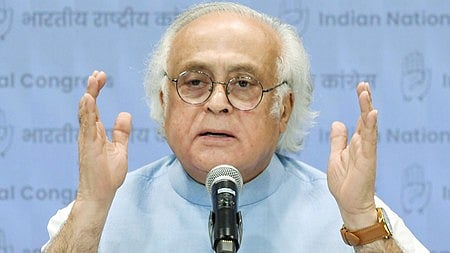
The Congress on Thursday sharpened its attack on the Centre over what it described as a “crisis of governance” in higher education, citing a “shockingly high” number of vacancies in key regulatory bodies while rejecting the proposed Viksit Bharat Shiksha Adhishthan (VBSA) Bill, 2025.
In a detailed statement, Congress general secretary (communications) Jairam Ramesh flagged findings from the latest Parliamentary Standing Committee report, arguing that institutions such as the University Grants Commission (UGC) and the All India Council for Technical Education (AICTE) are facing administrative paralysis due to large-scale vacancies. He alleged that this vacuum is being used as a pretext to push through an “excessively centralised” overhaul of the higher education framework.
Ramesh raised multiple objections to the Bill, beginning with what he termed a lack of federal consultation. He said state governments were not adequately consulted despite education being a subject on the Concurrent List and the legislation directly impacting State universities.
Invoking constitutional provisions, he argued that the Bill oversteps Parliament’s mandate under Entry 66 of the Union List, which is limited to coordination and determination of standards in higher education. He further pointed out that Entry 44 of the Union List and Entry 32 of the State List restrict the Centre’s powers over the incorporation and regulation of universities, calling the proposed law “violative of the federal structure.”
The Congress leader also flagged a departure from the framework envisioned in the National Education Policy (NEP) 2020. While the NEP proposed a Higher Education Council of India with distinct verticals — including an independent grants body — the new Bill, he said, effectively recentralises financial powers within the Ministry.
“Grant-giving authority is being shifted from autonomous, academic-led bodies like UGC and AICTE back to the Ministry, which is run by political executives,” Ramesh said, calling it a rollback of institutional autonomy.
On governance, he criticised what he described as growing bureaucratisation. The Bill envisages executive control by member secretaries — bureaucrats — rather than academics, marking a shift from the current system where scholars play a central role in administration.
Ramesh also expressed concern over the potential impact on premier Institutes of National Importance (INIs), including IITs, IIMs, NITs, IIITs and IISERs. Referring to Clause 49, which gives the proposed law overriding powers over existing statutes, he warned that these institutions could be brought under tighter regulatory control, potentially eroding their long-standing academic autonomy.
Drawing a contrast with the existing UGC Act, he said the current framework mandates consultation with universities in setting standards and conducting inspections. The proposed Bill, however, grants sweeping discretionary powers to newly created councils, allowing them to determine standards and carry out inspections with minimal institutional engagement.
In the domain of technical education, Ramesh noted that universities currently do not require AICTE approval to introduce new courses or departments. Under the proposed regime, they would need clearance from a centralised council even to establish campuses — a move he said runs counter to the NEP’s emphasis on autonomy.
“It must be remembered that NEP 2020 calls for greater institutional freedom, not tighter central control,” he added.
The Congress’ critique sets the stage for a contentious debate, as the government pushes ahead with a sweeping reconfiguration of India’s higher education regulatory architecture.
With IANS inputs
Join our official telegram channel (@nationalherald) and stay updated with the latest headlines