POLITICS
Congress links SHANTI Bill to US nuclear liability push, cites Trump-signed defence law
Opposition alleges timing of India’s nuclear reforms aligns with a US mandate for joint liability review under the 2008 civil nuclear deal
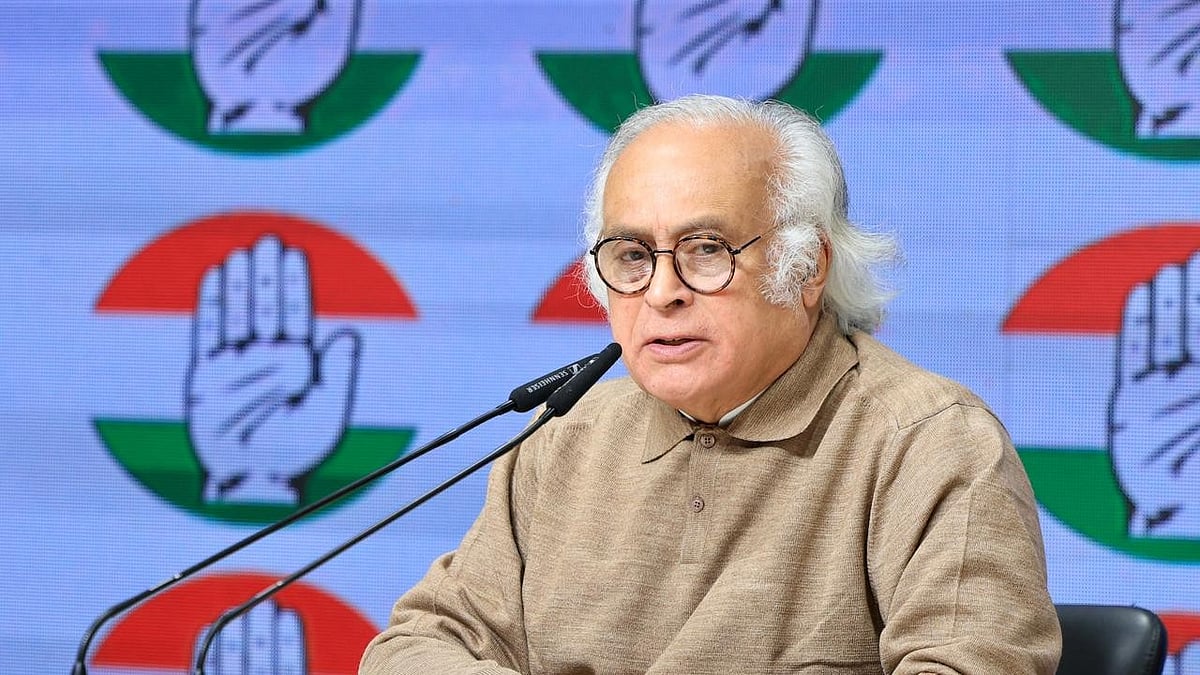
The Congress has accused the Narendra Modi government of rushing through sweeping changes to India’s nuclear liability regime to placate the United States, pointing to a provision in a newly signed US defence law that mandates a joint assessment of nuclear liability rules between the two countries.
Congress general secretary Jairam Ramesh said the passage of the Sustainable Harnessing and Advancement of Nuclear Energy for Transforming India (SHANTI) Bill, 2025, earlier this week was directly linked to the US National Defence Authorisation Act (NDAA) for Fiscal Year 2026, signed by Donald Trump on 18 December. He highlighted a section on page 1,912 of the US law that calls for a recurring US–India consultative mechanism on nuclear liability rules.
According to Ramesh, the NDAA provision is “proof” that Washington has long pressed New Delhi to dilute its stringent supplier liability framework, which had stalled US reactor projects in India since 2010. In a post on X, he claimed the government “bulldozed” the SHANTI Bill through Parliament to “restore SHANTI” with Trump, sarcastically dubbing the legislation the “TRUMP Act”.
The contested US provision directs the Secretary of State to establish a joint mechanism within the US–India Strategic Security Dialogue to assess the implementation of the 2008 civil nuclear agreement, discuss ways for India to align domestic nuclear liability rules with international norms, and develop diplomatic strategies to advance civil nuclear cooperation. US companies have long argued that India’s liability regime exposed suppliers to uninsurable risks, deterring investment.
The SHANTI Bill, passed by the Lok Sabha on 17 December and cleared by the Rajya Sabha the following day, marks the most significant overhaul of India’s nuclear framework in decades. It repeals the Atomic Energy Act, 1962, and the Civil Liability for Nuclear Damage (CLND) Act, 2010, opening the civil nuclear sector to private Indian companies, joint ventures and, for the first time, foreign participation.
The law grants statutory status to the Atomic Energy Regulatory Board, caps operator liability based on plant capacity and sharply narrows supplier liability, except in cases of contractual breach or intentional wrongdoing.
Under the 2010 CLND Act, India adopted a strict, no-fault operator liability regime, while also granting operators a statutory right of recourse against suppliers for defective equipment or services. This provision, unique among major nuclear markets, was strongly opposed by US firms such as Westinghouse and was seen as the principal obstacle to implementing the 2008 India–US civil nuclear deal.
Ramesh argued that the rollback of supplier accountability represents a “U-turn” from the position taken by senior BJP leaders in 2010, when the CLND Act was passed unanimously. Speaking in the Rajya Sabha, he also cautioned against prioritising private participation at the expense of public sector undertakings and urged the government to focus on indigenous nuclear technology rather than foreign reactors.
The government has rejected the allegations. Responding to the debate, minister of state for atomic energy Jitendra Singh said the SHANTI Bill is aimed at making India self-reliant in nuclear energy, accelerating capacity addition and reducing dependence on fossil fuels. He maintained that private participation would complement, not undermine, public sector capabilities.
With the legislation now enacted, India is set to pursue long-delayed civil nuclear projects, including new reactor technologies such as small modular reactors. However, the political controversy underscores the sensitivity around nuclear liability, foreign involvement and the balance between strategic partnerships and domestic accountability.
With PTI inputs
Join our official telegram channel (@nationalherald) and stay updated with the latest headlines