POLITICS
Hiren Joshi: The long arm of PM Modi
PMO faces questions as Joshi’s rumoured ouster coincides with Prasar Bharati chief Sehgal’s confirmed resignation
The quiet but consequential bureaucratic shake-up surrounding Hiren Joshi and Prasar Bharati CEO Navneet Sehgal has set Delhi’s political and media circles abuzz, with the rumoured exit of Modi’s most shadowy media strategist coinciding with the confirmed resignation of the powerful Prasar Bharati chief.
Their simultaneous departures — or reported departures — have fuelled intense speculation about a larger churn inside the Prime Minister’s Office (PMO) and what roles the two might play next.
The PMO and the BJP have offered no comment so far, which in itself is unsettling, given the party's tendency to get multiple ministers and leaders to issue statements at the merest hint of a crisis.
Veteran journalist Rajdeep Sardesai, in his book 2024: The Election That Surprised India, profiles Joshi as one of the most influential and least visible men in the PMO. Sardesai describes him as India’s “super editor”, a figure who, through anecdotes in the book, is shown to not just shape but effectively engineer the media ecosystem around Prime Minister Narendra Modi. According to Sardesai, Joshi dictated news priorities, decided prime-time angles, and determined the subjects on which channels would target the Opposition.
In 2022 — two years before the book’s publication — former Delhi chief minister Arvind Kejriwal had publicly accused Joshi of pressuring TV channels to limit coverage of the Aam Aadmi Party and of intimidating editors.
Joshi, long known for managing the news cycle invisibly, suddenly became the headline himself on Wednesday when, in response to a question from a journalist, Congress spokesperson Pawan Khera dropped what he dubbed an “H-bomb” — the Hiren Joshi bomb — at a press conference originally convened on the Union government's controversial Sanchar Saathi app, which the Opposition claimed threatens citizens’ privacy.
Joshi’s reputation has been summed up succinctly over the years. As a Newslaundry report notes, Open magazine once called him the “motherboard” of Modi’s media ecosystem. Former Outlook editor Krishna Prasad labelled him the “big Orwellian bhau” of India’s media. And yet, very few journalists have actually seen him. “He is a ghost — he only awakens when TV media plays something against Modi,” a TV reporter remarked.
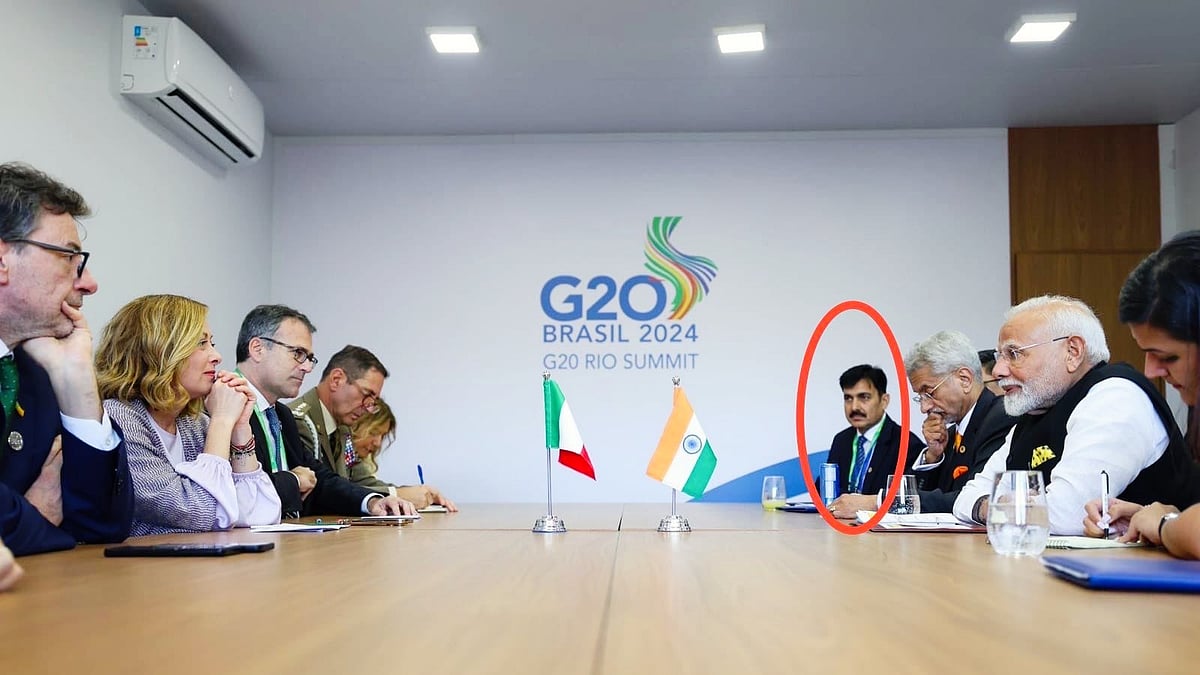
There are no official photographs of him; the earliest verified sighting was identified by journalist Paranjoy Guha Thakurta in a 2024 G20 summit photo, in which Joshi appeared alongside external affairs minister S. Jaishankar and PM Modi during a meeting with Italy’s Prime Minister Giorgia Meloni.
Khera — who Congress insiders say holds significant material — alleged that Joshi “played an important role in destroying democracy in India” and promised to soon release evidence of his alleged wrongdoing. He also raised pointed questions about Joshi’s reported overseas interests, meetings in the United States, and even suggested links to a betting app, demanding transparency from the PMO.
Meanwhile, some journalists have claimed Joshi has been removed and replaced by Union minister Ashwini Vaishnaw as PM Modi’s media strategist, while others insist he remains firmly entrenched. Much of this may be dismissed as Press Club gossip, but considering the multiple insights emanating from social media posts by several journalists, will at least some of it stick?
National Herald spoke to several journalists familiar with Joshi’s working style. One senior journalist who once indirectly reported to him said attempts had been underway for six months to oust him, but “he ultimately won the battle”, noting that Joshi “knows so much about Modi that his forceful removal could create serious problems for the government”. Another Gujarat-based former NDTV journalist said Joshi had indeed been under scrutiny but had not been removed.
Ahmedabad-based journalist Deepal Trivedi, however, offered a sharply different assessment, suggesting Joshi had been stripped of significant influence. She argued that Joshi, who began as a tech expert in Gujarat, had helped build Modi’s digital persona and “translated the PM’s dream of self-aggrandisement digitally.”
Joshi’s origin story is well known: once an engineering professor from Bhilwara, he entered Modi’s inner circle in 2008 after resolving a technology glitch at a Gujarat government event. From Gandhinagar to Delhi, he established himself as Modi’s digital architect, monitoring journalists and categorising them by compliance. By 2019, he had risen to joint secretary/ OSD (Comms & IT), a role that effectively placed him above ministers, editors and even the BJP’s social media machine.
Joshi is widely regarded as the PM’s “eyes and ears”, credited with orchestrating online campaigns targeting Pakistan, Bangladesh, Maldives, Nepal, Turkey and China, and for coining the long-suffering term vishwaguru.
His rumoured fall comes at a moment when Navneet Sehgal, a formidable bureaucratic presence, has 'resigned' from Prasar Bharati. His departure has been mentioned alongside that of Hitesh Jain, a Law Commission official reportedly close to Joshi. Joshi, Jain and Sehgal were often described as part of the same operational network.
Some allegations circulating in political circles claim Jain may have helped introduce loopholes in betting laws and gained financially, with unverified reports stating he has been asked to vacate his official bungalow.
With Sehgal now out of Prasar Bharati, speculation is rife that he could “fill the saddle” in the PMO if a reshuffle is indeed under way. The truth is expected to become clearer soon. But what is already evident is that, for the first time, serious questions about influence and opacity have landed directly at the PMO’s doorstep through Joshi. The functioning, integrity and transparency of the office itself now stand under unprecedented scrutiny.
Join our official telegram channel (@nationalherald) and stay updated with the latest headlines