POLITICS
India always hears it first from others: Ramesh on Modi’s Israel visit
Congress leader flags pattern in foreign policy messaging as PM’s trip announced by Netanyahu
“India hears of the halt to Operation Sindoor first from the US Secretary of State. India hears of the India-US trade deal first from the US President. Just now India has heard of Prime Minister Modi’s dates for his visit to Israel first from Mr. Netanyahu — who has reduced Gaza to rubble and dust and is now dispossessing and displacing more Palestinians in the occupied West Bank.”
With this sharply worded post on X, Congress MP and general-secretary (communications) Jairam Ramesh on Monday questioned both the optics and sequencing of India’s foreign policy communication under Prime Minister Narendra Modi.
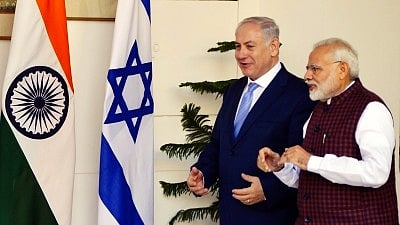
Ramesh’s comments followed Israeli Prime Minister Benjamin Netanyahu publicly announcing that Modi would visit Israel from 25 to 26 February — before any formal statement from New Delhi. Speaking at the Conference of Presidents of Major American Jewish Organisations, Netanyahu said Modi would address the Israeli Knesset during his two-day visit and described the India-Israel partnership as a “tremendous alliance”.
Sources in New Delhi subsequently confirmed that the visit is likely to take place over those dates, with the programme being finalised. Modi is expected to address the Knesset and discuss bilateral and regional issues. The trip would mark his second visit to Israel, following his landmark 2017 tour — the first ever by an Indian prime minister — which signalled a visible deepening of ties.
In his post, Ramesh suggested a broader pattern in which significant diplomatic developments appear to be communicated first by foreign capitals rather than Indian authorities. His reference to 'Operation Sindoor' pointed to the May 2025 military face-off between India and Pakistan whose halt, he argued, was first conveyed by a senior US official. He also cited the announcement of progress on the India-US trade deal being made initially by US President Donald Trump.
Ramesh’s remarks also come amid renewed attention to documents released through US court proceedings in the Jeffrey Epstein case. Among them is a 2017 email in which Epstein claimed that Modi had “danced and sang in Israel” during his previous visit — a characterisation the Indian government has dismissed as “trashy ruminations” by a convicted criminal, and stressed that the mention does not imply any interaction or wrongdoing.
The February visit takes place against the backdrop of expanding India-Israel strategic cooperation. Over the past year, there have been multiple high-level exchanges between the two sides. Israeli ministers for tourism, economy, agriculture and finance visited India, while commerce and industry minister Piyush Goyal travelled to Israel in November 2025 to advance negotiations toward a free trade agreement. The two countries signed a bilateral investment treaty and agreed on terms to move forward on the FTA framework.
Defence ties have also strengthened. In November, India and Israel signed an agreement to enhance defence, industrial and technological collaboration, including co-development and co-production of advanced systems. The annual meeting of the joint working group on defence identified areas ranging from research and development to artificial intelligence and cyber security.
Government officials have consistently defended the partnership as strategically important, citing Israel’s role as a key defence supplier and technology partner. They argue that engagement reflects pragmatic national interest and long-standing bilateral cooperation across sectors including agriculture, water management, innovation and security.
The Congress, however, has increasingly framed the debate around diplomatic signalling and political optics. Ramesh’s intervention stops short of opposing engagement with Israel itself; rather, it questions why announcements of major foreign policy moves appear to be emerging first from Washington or Jerusalem instead of New Delhi.
With PTI inputs
Join our official telegram channel (@nationalherald) and stay updated with the latest headlines