POLITICS
Is AIADMK’s heartland giving up on the party?
For the first time since his victory in the internecine feud after the death of Jayalalithaa, EPS is struggling to get a grip
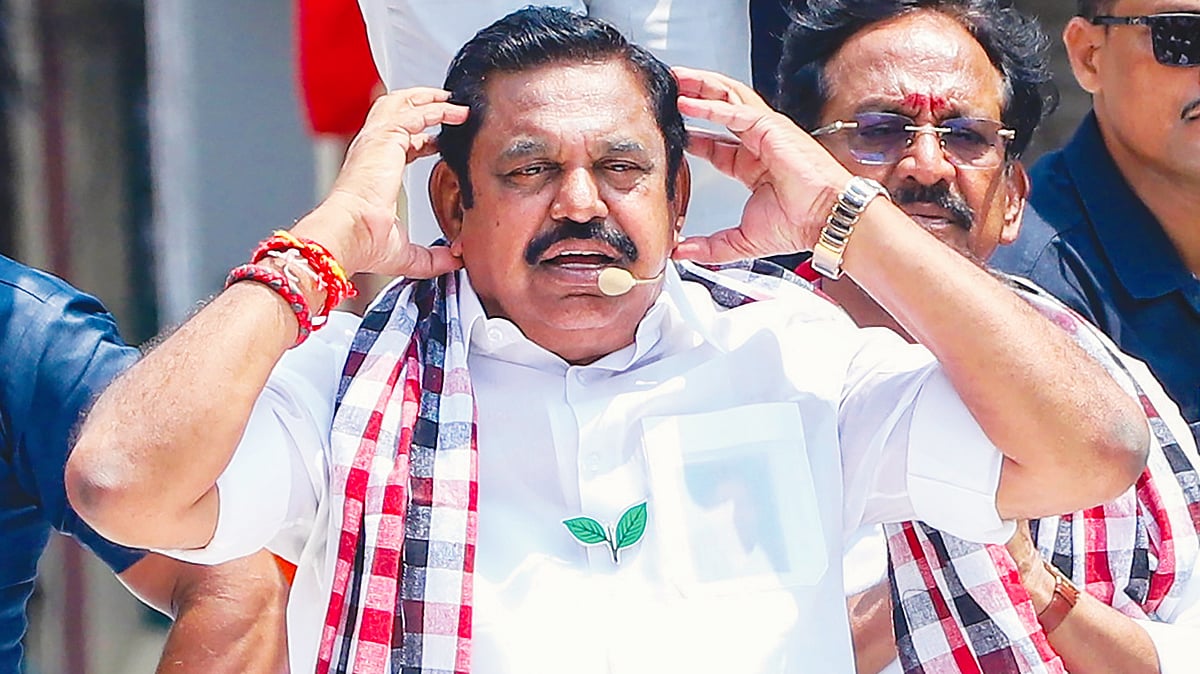
The political message Edappadi K. Palaniswami delivered in the third week of May was brief, restrained and revealing. Rebel MLAs who had defied the AIADMK leadership and aligned with the Joseph Vijay-led TVK (Tamilaga Vettri Kazhagam) government were welcome to return for talks, he said. Differences could be resolved internally; the movement mustn’t fracture.
For the first time since his victory in the internecine feud in the AIADMK after the death of Jayalalithaa, EPS, as he is popularly called, is struggling to keep a grip on the party. The revolt led by former ministers S.P. Velumani and C.V. Shanmugam has done more than fracture the party in the legislature. More dangerously for the AIADMK, the rebellion has erupted in its political stronghold of Kongu Nadu in western Tamil Nadu, the region that sustained the party after Jayalalithaa’s death and fuelled EPS’s rise.
Succession wars and party feuds have haunted the AIADMK ever since the death of its founder M.G. Ramachandran in 1987. But the party “survived earlier crises because rival factions drew their political sustenance from different political bases, different nodes of power,” says Chennai-based political observer Susithra Maheswaran. “This fracture is inside the same (west Tamil Nadu) leadership structure. That makes the conflict far more dangerous for the party.”
The immediate trigger was the Assembly trust vote following the formation of the Vijay-led TVK government. Palaniswami instructed all AIADMK legislators to oppose the government. Yet nearly half the party MLAs voted in support of Vijay, stunning the leadership and exposing the scale of internal dissent. The rebellion was proof that Palaniswami’s writ didn’t run any longer. This was the man who had successfully defanged rivals O. Panneerselvam, V.K. Sasikala and T.T.V. Dhinakaran just a few years ago.
The rebellion is not surprising, though, after the party’s disappointing performance in the Assembly election. It suffered heavy losses despite projecting Palaniswami as a stable administrator capable of taking on the DMK. Vijay’s dramatic rise, which split the anti-DMK vote, was also read as a sign that the AIADMK did not appeal to younger voters who wanted change.
The response from the EPS camp was initially aggressive. Velumani, C.V. Shanmugam and several others were stripped of their organisational responsibilities, setting up the revolt. Several dissident legislators, who voted with Vijay and were reportedly hoping for ministerial berths, are now stranded between two worlds and reassessing their options.
The TVK, too, appears divided over the nature of its engagement with the rebels. Some in the party view the dissident AIADMK legislators as useful allies, who will not only destabilise Palaniswami but also expand TVK’s influence in western Tamil Nadu. Others fear that accommodating leaders perceived to be soft on the BJP could damage TVK’s image.
The Congress, a key ally of the Vijay government, is understood to have privately urged caution. Senior Congress leaders reportedly fear that a formal embrace of the AIADMK rebels may create ideological confusion in the anti-BJP opposition space and alienate minority voters.
Velumani’s public stand is measured: “We are ready for talks,” he said recently. “It’s not personal. We need to discuss why the party has declined and how collective leadership can strengthen the movement.” The language is conciliatory, but the message is a challenge to EPS’s style of leadership.
The rebel faction accuses EPS of centralising decision-making, sidelining senior leaders and reducing the AIADMK to a tightly controlled apparatus disconnected from changing political realities. Leaders aligned with Velumani argue that alliance decisions, campaign strategies and candidate selection were concentrated in a very tight leadership circle after Palaniswami consolidated power.
Senior AIADMK leader K.P. Munusamy, who remains firmly aligned with EPS, dismisses the criticism. “A movement like the AIADMK cannot function without discipline. Decisions cannot be negotiated through public pressure.” Yet the scale of the rebellion suggests deeper anxieties. Vijay’s rise has disrupted political calculations in the AIADMK. For decades, the party monopolised the anti-DMK political space, but now it is neither in government nor the primary opposition. That makes the party’s crisis existential.
Vijay’s appeal among younger voters, sections of women and segments of the politically disillusioned middle class has created a lot of political uncertainty in the state. Many second-rung AIADMK leaders fear that the party under Palaniswami lacks the emotional momentum to survive the next political cycle. For this lot, supporting Vijay tactically is political insurance.
Sections of the rebel bloc are said to be close to the BJP leadership in Delhi, but chose to align tactically with Vijay during the trust vote. “In the old Dravidian political culture, loyalties were ideologically sharper and emotionally charged. Now politics is becoming transactional. Leaders are positioning themselves for a future where the AIADMK may no longer remain the central opposition,” says Coimbatore-based political observer K. Mohanraj.
The uncertainty surrounding veteran AIADMK figures is another measure of the fragmentation of the party. O. Panneerselvam, once projected as Jayalalithaa’s loyalist successor, now occupies a much diminished, if still symbolically important, space outside the EPS structure.
Sasikala is politically isolated, but still has an emotional hold among sections of the old AIADMK cadre and voter base. T.T.V. Dhinakaran, despite losing organisational relevance, still commands pockets of loyalty through the AMMK network. Sections in the Velumani camp are believed to favour reopening channels with Sasikala and Dhinakaran in the name of ‘AIADMK unity’; this would’ve been unthinkable at the height of EPS’s dominance.
The crossover of Kongu leader Sengottaiyan — now the state finance minister — from the AIADMK in November 2025 was an early sign of the flux in state politics, a sign that sections of the old AIADMK establishment were warily looking at the TVK’s capture of their turf.
Younger Tamilians do not have the same emotional connect to MGR and Jayalalithaa that sustained the AIADMK for decades. Vijay’s political rise has accelerated that shift dramatically. “The danger for the AIADMK is not merely organisational fragmentation,” says Susithra Maheswaran. “The larger danger is gradual political irrelevance among younger voters.”
While the BJP has still not managed to get a foothold in the state, it has played no small role in the current predicament of the AIADMK. Under Modi, the BJP has tried its luck with multiple AIADMK power centres including EPS, Panneerselvam and Sasikala to make a breakthrough in the state. The current split in the AIADMK and the emergence of Vijay has given the BJP pause, though it’ll no doubt keep an eagle eye on new possibilities.
K.A. Shaji is a South India–based journalist who has chronicled rural distress, caste and tribal realities, environmental struggles and development fault lines. More of his writing here
Join our official telegram channel (@nationalherald) and stay updated with the latest headlines