POLITICS
NTA under fire as parl. panel flags gaps, Congress demands accountability
Jairam Ramesh questions education ministry’s claim that no NTA exam paper leaks occurred between 2017 and 2025, cites nine reported leaks and irregularities
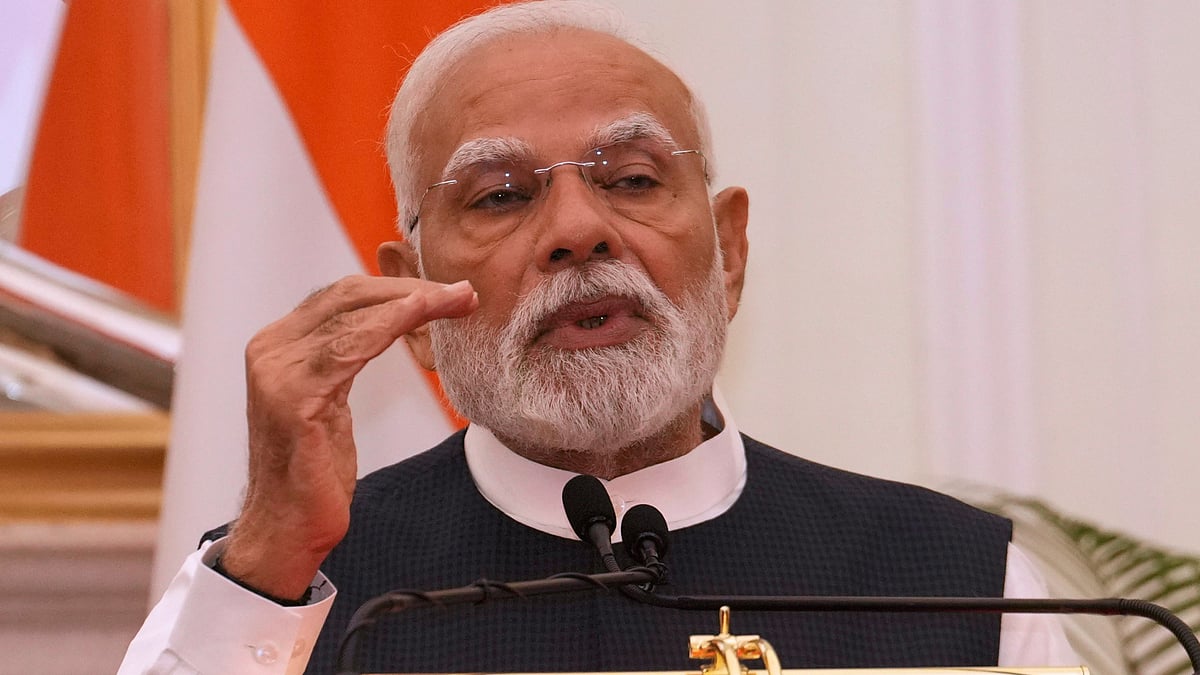
Congress cited a parliamentary panel report alleging serious lapses in the NTA’s staffing, accountability, exam security and reliance on private contractors
Jairam Ramesh questioned the education ministry’s claim that no NTA exam paper leaks occurred between 2017 and 2025, citing nine reported leaks and irregularities
The parliamentary panel called for a legislative framework to ensure the NTA’s accountability to Parliament, urging reforms to restore trust in competitive examinations
The Congress on Sunday criticised the National Testing Agency (NTA) and the Union Ministry of Education, citing a parliamentary standing committee report that flagged alleged shortcomings in the agency’s functioning, staffing, accountability and examination management. The Opposition party urged the Narendra Modi government to take the report seriously and implement reforms to restore confidence in national-level examinations.
Congress general secretary in-charge of communications Jairam Ramesh said the report of the Parliamentary Standing Committee on Education, chaired by Rajya Sabha MP Mukul Wasnik, had documented what he described as “grave incompetence and malpractice” in the NTA and the Ministry of Education.
The report, titled Reforms and Strengthening of the National Testing Agency (NTA), was submitted to the Chairman of the Rajya Sabha.
Sharing the Congress statement on X, Ramesh said the controversy surrounding the NTA had triggered protests among young people months before the current political debate over the Chief Election Commissioner.
“Gyanesh-Gate is dominating the news now but three months ago it was NTA-gate that had launched the youth protest movement,” he wrote, referring to the concerns surrounding the NTA and allegations of irregularities in competitive examinations.
One of the principal concerns raised by the Congress was the Ministry of Education’s reported claim before the parliamentary panel that no examination conducted by the NTA had suffered a paper leak between the agency’s establishment in 2017 and 2025.
Ramesh described the claim as “blatantly false and audacious”, alleging that several instances of paper leaks and examination irregularities had been reported during that period.
“There have been 9 paper leaks and irregularities in NTA-conducted exams that we know of. What hope is there for a fair investigation or accountability when the Ministry even refuses to acknowledge what went wrong in the first place?” he said.
The Congress argued that acknowledging past failures was essential to establishing accountability and preventing further disruptions to examinations that determine students’ access to higher education and professional courses.
The controversy has intensified following allegations of a paper leak and the cancellation of the National Eligibility-cum-Entrance Test (NEET-UG) 2026 examination.
The NTA cancelled the examination on 12 May after it was conducted on 3 May, amid allegations of a paper leak.
Ramesh also highlighted the NTA’s institutional structure, arguing that its status as a society registered under the Societies Registration Act, 1860, rather than a statutory body established by an Act of Parliament, limited its accountability and parliamentary oversight.
He said the parliamentary report had raised concerns about the agency’s administrative framework and its dependence on private contractors for essential examination-related functions.
According to Ramesh, the NTA has only 39 sanctioned positions, of which 23 were occupied, leaving a vacancy rate of around 41 per cent.
He argued that the shortage of permanent personnel undermined the agency’s ability to develop the expertise required to conduct examinations securely and efficiently.
The Congress leader also pointed out that all 39 sanctioned posts were filled through deputation, with officers generally serving two- to three-year tenures.
According to him, this arrangement made it difficult for the agency to build institutional knowledge and retain specialised expertise.
Ramesh said the staffing situation was particularly concerning because the NTA was expected to implement reforms recommended by the committee headed by former ISRO chief K. Radhakrishnan.
The Congress also raised concerns about the NTA’s reliance on private firms for examination-related services, including question-paper setting, printing, logistics and administration.
Ramesh said the parliamentary report had questioned the absence of a nationwide blacklist of firms with a history of failures in providing examination services.
He alleged that companies blacklisted in one state could continue to secure government contracts in other states, potentially exposing the examination system to recurring risks.
“The NTA's structure and design is not transparent and serves to enable the paper leak mafia,” Ramesh said, citing the report.
The concerns underline the need for stronger scrutiny of vendors, more rigorous procurement procedures and effective mechanisms to ensure that contractors meet security and operational standards.
The Congress also highlighted concerns about the transparency of examination results, particularly those of NEET-UG.
Ramesh said the NTA did not publish NEET-UG results in the same publicly accessible manner as the Union Public Service Commission (UPSC).
He argued that the absence of publicly accessible, test-centre-wise data made it difficult to identify unusual patterns in candidates’ performance and detect possible irregularities.
Greater transparency in examination results, the Congress maintained, would help strengthen public confidence and enable independent scrutiny of the examination process.
The party also questioned the absence of a full-time Director General at the NTA during a period marked by examination controversies and the implementation of proposed reforms.
Ramesh said the agency’s leadership positions had been held by officers serving in an additional capacity between the NEET paper-leak controversy of 2024 and the latest controversy in 2026.
He argued that the government should have appointed a full-time head to oversee the agency’s functioning and reforms.
Another issue raised by Ramesh was the NTA’s financial position.
He said the agency had accumulated a revenue surplus of Rs 590 crore, which was invested in fixed deposits to earn interest rather than being used to strengthen examination infrastructure, improve operational capacity or assist students.
The Congress questioned whether the agency’s financial priorities were aligned with its core responsibility of conducting secure and reliable examinations.
Ramesh also recalled that former Education Minister Dharmendra Pradhan had previously dismissed recommendations made by the parliamentary standing committee on NTA reforms, reportedly citing the presence of opposition members on the panel.
The Congress urged the government to set aside political differences and act on the latest report.
“The former Mantri (Dharmendra) Pradhan had dismissed this Standing Committee's previous recommendations on reforming the NTA because the Committee 'had members of the Opposition in it.' We can only hope that the Modi government sheds its arrogance for the limited time it has remaining and takes this report seriously,” Ramesh said.
The parliamentary standing committee, which examined the NTA’s functioning following concerns over NEET-UG paper leaks and cancellation, called for a legislative framework to ensure the agency’s accountability to both Houses of Parliament.
In its detailed report, the Parliamentary Committee on Education, Women, Children, Youth and Sports said confidence in examinations conducted by the NTA was a matter of social justice and national integrity.
“The education department may introduce appropriate Parliamentary framework that ensures NTA's accountability to Parliament,” the committee recommended.
While acknowledging the NTA’s efforts to improve its functioning, the panel said the cancellation of NEET-UG 2026 demonstrated that further reforms were necessary.
The report’s recommendations place renewed focus on the agency’s governance, staffing, examination security, contractor oversight and transparency.
The latest controversy has once again raised questions about the reliability of high-stakes entrance examinations in India, with millions of students depending on them for admission to universities and professional courses.
The Congress has called on the government to act on the committee’s findings, while the panel’s recommendation for a parliamentary accountability framework signals a push for more formal oversight of the NTA.
Whether the government adopts the proposed measures and how quickly reforms are implemented will be crucial to restoring confidence in the examination system.
With PTI inputs
Join our official telegram channel (@nationalherald) and stay updated with the latest headlines