POLITICS
Stop fighting the BJP with yesterday's tools: Rahul's message to INDIA bloc
In striking address to Opposition leaders, Lok Sabha LoP argues that conventional politics can no longer defeat the BJP, calls for sustained politics of resistance
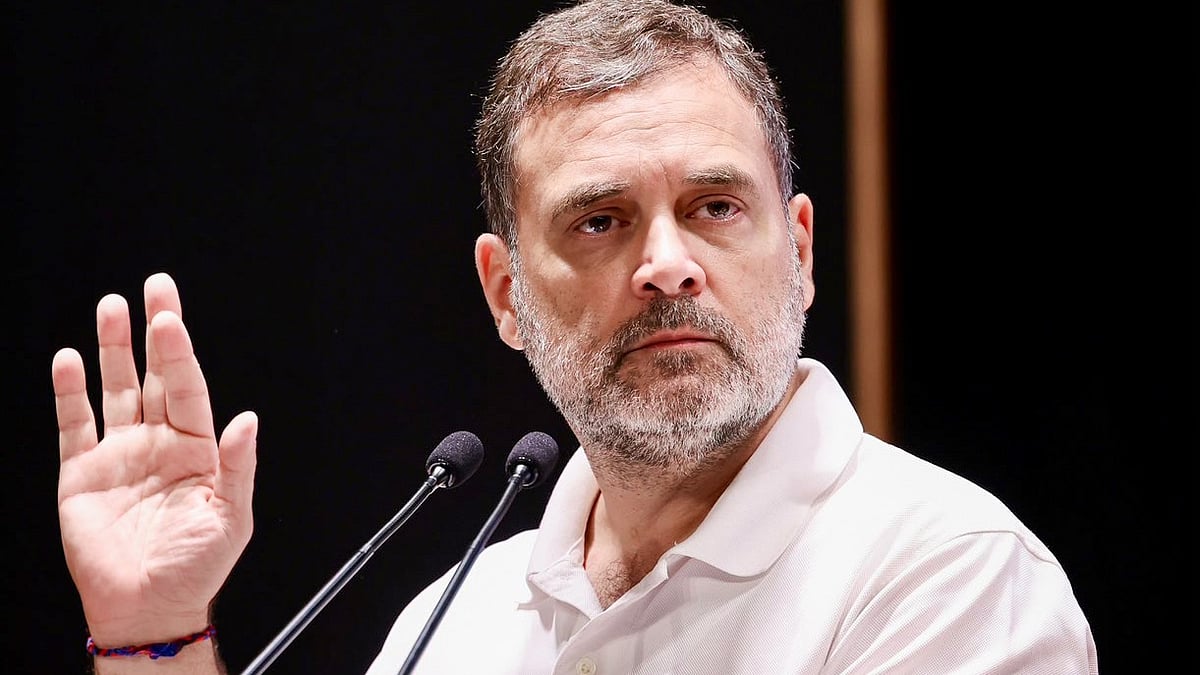
Lok Sabha Leader of Opposition Rahul Gandhi used this week's INDIA bloc meeting to deliver what may be his most consequential message to Opposition parties since the 2024 Lok Sabha elections: the BJP cannot be challenged using the same political methods that Opposition parties have relied upon for decades.
In an extraordinary speech to alliance leaders on Monday, 8 June, which he released publicly on Friday, 12 June, Gandhi argued that much of the Opposition has yet to recognise how fundamentally India's political landscape has changed. The challenge before the INDIA bloc, he suggested, is no longer simply electoral. It is existential.
Far from presenting a conventional strategy for the next election, Gandhi urged Opposition leaders to rethink the assumptions that have guided their politics for years. The central thrust of his speech was that traditional political instruments no longer function in the way they once did because the institutions that made electoral competition possible have been steadily brought under the influence of the BJP and the RSS.
"I am sorry to say that there is a confusion in this group. The confusion is that you — the SP, the TMC, the RJD, etc. — believe that the political instruments you have used so far will still work. These only worked when the Indian state provided a fair field for them to operate in. That field does not exist anymore," Gandhi said.
The remark was among the sharpest assessments he has offered of the Opposition's predicament. Rather than criticising alliance partners, Gandhi appeared to be challenging their understanding of the political moment itself. His argument was that many regional parties continue to operate as though they are contesting elections in a system that remains fundamentally neutral, even as they privately acknowledge mounting pressures from state institutions.
To illustrate the point, Gandhi referred to conversations with leaders from some of the BJP's strongest opponents. "I have many friends in the TMC. They were convinced that they were sweeping the election. I kept telling them: you are in dreamland. I have seen what happens, I have seen it in Gujarat, I have seen it in Madhya Pradesh, I have seen it in Chhattisgarh, I have seen it in Haryana and Maharashtra. And yet many of you are still not convinced," he said.
He went on to make an even more provocative claim. "Mamataji (Banerjee) is not 100 per cent sure, but she is about 90 per cent sure that her election was stolen from her. Uddhavji (Thackeray) is 40 per cent sure that his election was stolen. My brother Tejashwiji (Yadav) is 40 per cent sure. Listen — 100 per cent the elections are being stolen. Please remove doubt from your minds," Gandhi said.
Throughout the speech, Gandhi repeatedly returned to the idea that the Opposition's challenge is not a lack of public support but what he described as the capture of institutions.
He alleged that the BJP exercises influence over the legal system, bureaucracy, intelligence agencies and even the Election Commission. Whether one accepts that diagnosis or not, it formed the foundation of his larger argument: that Opposition parties must stop thinking solely in terms of electoral campaigns and begin thinking in terms of political resistance.
"If political parties can't function, what functions? Resistance functions. Resistance works. Wherever we resist, it works. I have seen it with my own eyes. I have walked 4,000 kilometres across this country — resistance works," Gandhi said.
The speech marked a notable shift in emphasis. While Opposition discussions are often dominated by seat-sharing arrangements, leadership questions and electoral arithmetic, Gandhi appeared intent on reframing the conversation around mobilisation and sustained political action.
"And so we have to go into the mode of resistance. Resistance is CBSE. Resistance is NEET. Resistance is going to Great Nicobar. Resistance is the Bharat Jodo Yatra. You get up in the morning and you say: how can I resist? And you resist. That will work," he said.
At several points, Gandhi sought to rally allies by insisting that the Opposition's internal differences were secondary to the larger challenge before them. Responding indirectly to criticism of the Congress from some alliance partners, he invoked the image of Shiva consuming poison and declared that the Congress would absorb criticism if it helped keep the coalition together.
"It is not my place to answer any of the things that were said today about the Congress Party. It is my place to — like in the Shaiva tradition — swallow everything. The idea of the blue-necked one (Neelkanth or Shiva) who drinks all the poison. Whatever more you want to say, whatever criticism you have of me or the Congress party, we will accept it, and we will accept it happily, with a smile on our face," he said.
He added: "We will try to make you happy, because our role is fundamentally different from yours. I do not say this with arrogance. Our role, as many of you have stated, is to unite all of you together with love and affection."
Yet the most striking part of the speech was Gandhi's insistence that the Opposition is misreading the scale of public anger against the BJP. "You are thinking that the challenge is winning the next election. The next election is already won. Please understand: there is so much anger among the people of India that the next election is already over. The problem is the capture of the instruments of the Indian state by the RSS. The problem is that you will not have a free and fair election to win," he said.
The speech ended on a note of defiance rather than despair. Gandhi argued that many Opposition leaders had once doubted whether the BJP could be challenged electorally at all, but said those doubts had been weakened by recent political developments.
"People think: oh my God, how will we ever beat the BJP? Let me tell you, it is easy to beat them if we stand together and resist," he said. "In the last election, nobody, nobody in this room, except me believed that we could beat the BJP. Now everybody in this room must start believing that we will defeat them. You start with that belief, and I guarantee you state after state, election after election, whether they cheat or don't cheat, they will fall."
Taken together, the speech amounted to more than a plea for Opposition unity. It was a call for a new political strategy — one built on the belief that the BJP can no longer be confronted through conventional electoral politics alone, and that only a sustained and coordinated politics of resistance can alter the balance of power.
With PTI inputs
Join our official telegram channel (@nationalherald) and stay updated with the latest headlines