POLITICS
Two videos, two responses: Ganga ‘sentiment’ vs pollution in Varanasi
Swift arrests over iftar gathering contrast with token action on cruise sewage discharge, raising questions on enforcement priorities
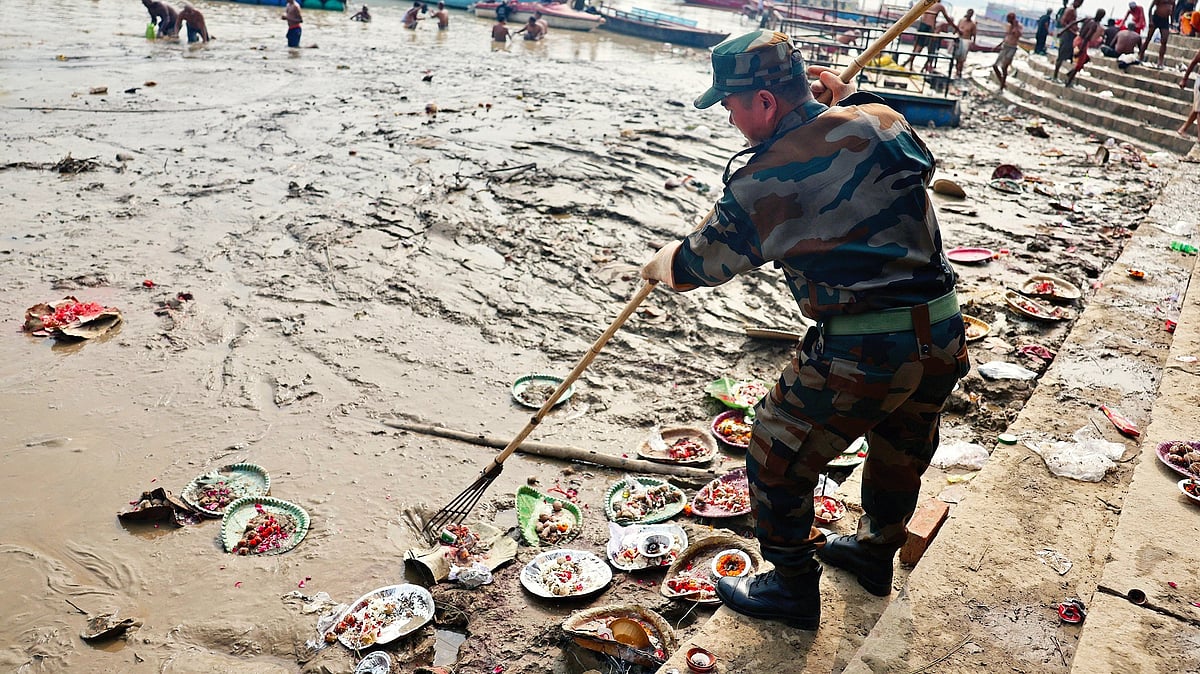
Two viral videos from Varanasi, barely months apart, have triggered sharply divergent state responses — laying bare an uncomfortable contrast in how law, sentiment and environmental accountability intersect on the banks of the Ganga.
In the latest incident, reported this week, 14 Muslim youths were arrested after a video surfaced showing them holding an iftar gathering on a boat in the river. The footage allegedly showed non-vegetarian food being consumed and leftovers, including bones, being discarded into the water.
Police moved swiftly. An FIR was registered, invoking provisions related to hurting religious sentiments, defiling a place of worship, and pollution. The arrests followed quickly after the video gained traction, with authorities framing the act not merely as littering, but as an affront to the sanctity of a river revered in Hinduism.
The message was clear: the Ganga is not just a water body, but a site of faith — and actions perceived to violate that sanctity would invite criminal consequences.
Yet, a video from January this year told a different story. It showed what appeared to be sewage being discharged directly into the Ganga from a luxury cruise operating in Varanasi. The visuals sparked outrage and prompted an official inquiry involving the district administration and pollution control authorities.
The conclusion: a “technical lapse”. According to officials, the discharge occurred during maintenance of the vessel’s septic system, when an emergency valve was open and waste flowed into the river.
The action taken was markedly different. The operator was fined Rs 5,000 and issued notices. No FIR was registered. No arrests were made. The contrast is stark — and difficult to ignore.
At one level, the divergence can be explained through legal categorisation. The iftar incident was treated as a criminal matter, combining environmental concerns with alleged injury to religious sentiments — a domain where the law permits immediate coercive action, including arrests.
The cruise case, by contrast, was handled as a regulatory violation under environmental norms, where penalties often take the form of fines and administrative proceedings.
But that explanation only goes so far. Because both incidents involve the same river, the same act of contamination — and yet, fundamentally different thresholds of state urgency.
In the iftar case, the presence of non-vegetarian food and its disposal into the river was interpreted as deliberate disrespect. The framing quickly shifted from pollution to sentiment, from environmental harm to cultural offence.
In the cruise case, the discharge of untreated sewage — objectively more hazardous in environmental terms — was treated as accidental, technical, and therefore administratively manageable.
Intent, in both cases, was not conclusively established. Yet, it was assumed differently. That difference shaped everything that followed.
The result is a pattern that raises broader questions about enforcement priorities. If the sanctity of the Ganga justifies arrests in one instance, what explains the relatively mild response in another, where the scale of pollution may be significantly higher?
Conversely, if environmental violations are to be treated as regulatory lapses, should similar restraint not apply across cases, irrespective of who is involved? These are not merely legal questions — they go to the heart of how the State balances faith, optics and environmental responsibility.
Beyond both incidents lies a more systemic issue. Varanasi continues to grapple with chronic sewage inflows into the Ganga, despite years of clean-up efforts. Against that backdrop, isolated viral videos — whether of food waste or cruise discharge — become flashpoints in a much larger, unresolved crisis.
But they also serve another function: revealing how selectively the idea of “hurt” is mobilised, and how unevenly accountability is enforced. In the end, the contrast between the two cases is less about any single act and more about the framework through which those acts are judged.
One was seen as an offence against faith. The other, as a lapse in procedure. Both, however, flowed into the same river.
Join our official telegram channel (@nationalherald) and stay updated with the latest headlines