POLITICS
Waris Punjab De’s street cred and the BJP’s solo flight
SAD chief Sukhbir Badal has trained all his guns on new kid on the block Waris Punjab De in recent rallies
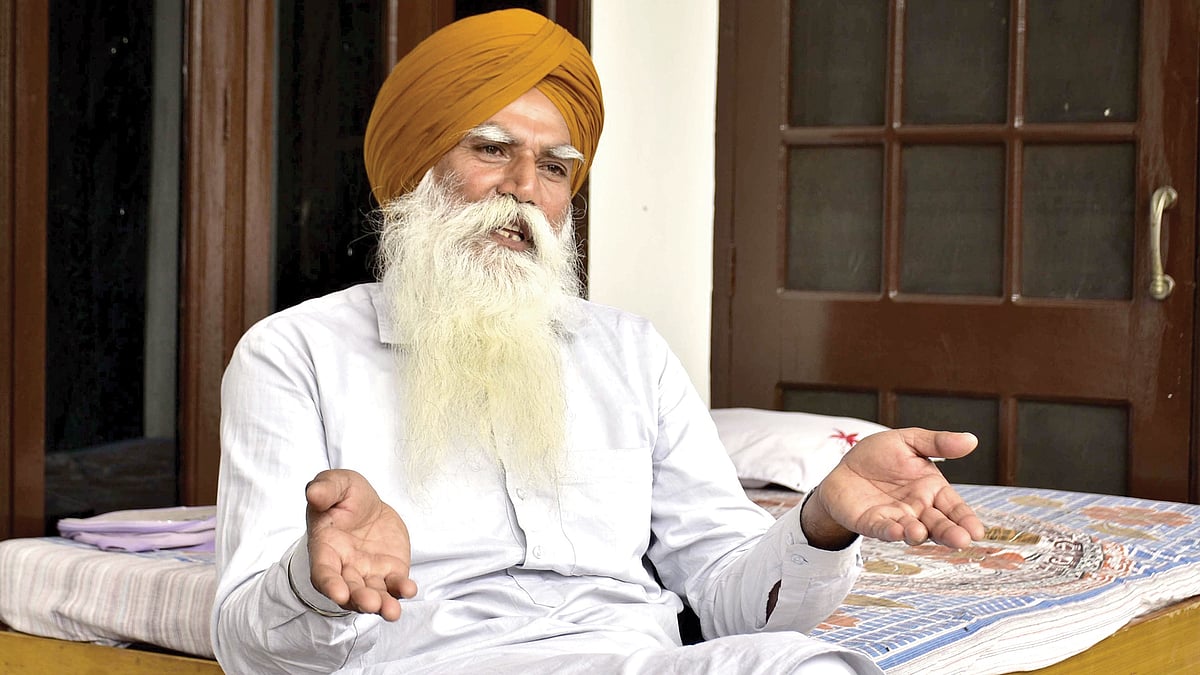
Sukhbir Singh Badal calls Waris Punjab De (heirs of Punjab) ‘virus Punjab de’. The intensity of his attacks, coming months before the Assembly election, is provoked by the new party’s claims to be the true representative of the state’s interests and the Panth.
Waris leaders say the Shiromani Akali Dal (SAD) is a sell-out — having aligned with the BJP to ensure a cabinet berth in New Delhi for itself. They also point to the Panjab University Campus Students Council polls in which the Students’ Organisation of India (SAD’s student wing) supported RSS-affiliated ABVP. Waris Punjab De is equally unsparing of the BJP, deriding its leaders for donning turbans while touring the state.
For a party whose president Amritpal Singh has not stepped outside a jail cell in Dibrugarh, that’s a lot of noise. On 29 July, Waris workers gheraoed chief minister Bhagwant Mann’s residence in Chandigarh, demanding the release of Amritpal and other ‘bandi Singhs’ (Sikhs who have completed their sentences but continue to languish in jail). By evening, scenes of water cannons and breaking barricades were travelling faster on Facebook and WhatsApp than any press release could.
The most consequential coup of the two-year-old party was a recent defection. Manpreet Ayali — the rebel Akali MLA from Dakha and one of the few SAD legislators to have actually won an election in 2022 — formally joined the outfit in June under the watchful eye of Amritpal’s father Tarsem Singh. Ayali did not need coaxing: his own panchayat and zila parishad candidates had already campaigned on Amritpal’s photograph.
Waris has been first off the block with its list of candidates. Pappalpreet Singh, Amritpal’s closest lieutenant, has been fielded from Majitha straight into Akali strongman Bikram Majithia’s backyard — more symbolic dare than serious electoral calculation. Mandeep Singh Sidhu, founder ‘martyr’ Deep Sidhu’s brother, gets Talwandi Sabo, cashing in on a surname that still galvanises crowds.
Maur has gone to Lakha Sidhana, the gangster-turned-social activist whose journey from Sidhana village to Sikh symbolism via kisan agitation and conventional politics is a mini-essay on how crime, identity and agitation keep marrying each other in rural Punjab.
Underpinning it all is a slogan crafted for a state reeling under narcotics: ‘Amritpal leyao, nashe bhajao’ (bring in Amritpal, chase out addiction). More prayer than policy, true, but in rural Punjab, prayers still poll well.
Waris’s real asset is josh — an emotional current that runs through a generation of Sikh youth who feel history has shortchanged them twice over: the defeat of militancy and the Akalis’ betrayal of everything that defeat was supposed to mean.
Amritpal has become a cult figure with millenarian appeal among sections of the rural community. His jail term has given him an aura of ‘sacrifice’ and burnished his halo of being a ‘martyr’. Add to this a flair for social media, NRI support and a solid base in rural Majha and pockets of Malwa, and you have a formation that can switch on Sikh sentiment when needed.
On the flip side, Waris Punjab De has no tested cadre and precious little beyond Tarsem Singh and a handful of associates to run day-to-day affairs. Formed in January 2024, it is yet to be registered as a party.
Charges of being yet another dynastic outfit are already doing the rounds. Its candidate list, featuring relatives of former militants and reformed gangsters, enhances its street cred while leaving drawing rooms cold. Urban Punjab and the state’s Hindu and Dalit voters remain, for now, entirely unmoved. Can a movement built on absence and grievance mature into a party capable of governing?
For all its scars — the beadabi blot, the drug charges, the steady desertion of taksali leaders to Waris Punjab De and AAP — SAD remains Punjab’s only Panthic outfit with actual experience of running the state. Its century-old organisation, Sukhbir Badal’s combative leadership and deep roots in rural Malwa give it a grounding that newbies lack. Recent by-poll and local election results suggest a slow, grinding recovery though, rather than a resurrection.
Sensing the threat to its traditional Panthic votebank, Sukhbir Badal has trained all his guns on Waris in recent rallies. The irony of Punjab’s Panthic politics in 2026 is this: the party everyone loves to declare dead keeps refusing to lie down and die, even as the party everyone is excited about is yet to prove it can get up and walk.
****
The BJP goes it alone
For the first time since 1996, the BJP has indicated it will contest the 2027 Assembly election alone. Some see the decision to contest all 117 seats as the boldest political gamble in Punjab since AAP’s 2017 debut; others as a case of ambition getting ahead of itself. Either way, Punjab’s crowded political bazaar has another new and noisy stall.
The BJP’s pitch rests on crime, corruption and chitta. Its Nasha Mukt Punjab Yatra runs from Pathankot in the Kandi belt through Fatehgarh Sahib down to Talwandi Sabo in the deep cotton-and-drugs corridor of Malwa, with Patiala thrown in for royal vibes. The route is shrewdly chosen — drugs are the one issue on which every Punjabi household, Jatt or Dalit, Sikh or Hindu, grimly concurs.
It has, however, run into rough weather, with black-flag protests in Fatehgarh Sahib, Samrala and Dinanagar; in Batala, former Union minister Ravneet Bittu’s convoy was pelted with stones.
The BJP is also highlighting the Haryana model of 9.5 per cent growth against Punjab’s relatively sluggish 6.1 per cent. Its basket of freebies has been designed to look generous without seeming imitative of the AAP: the Rs 2,100 ‘Lado Lakshmi’ scheme for women, free dialysis, LPG cylinders at Rs 500 for eligible households and MSP cover for a wider basket of crops. The message is: aa ke dekho, gawandi Haryana kinna vadhia chal reha hai (come and see how well our neighbour is doing).
Since the BJP parted ways with the Akali Dal in 2020, it has more than doubled its vote share. Modi-centric consolidation has given it a significant, if narrow, Hindu base in urban Punjab, pockets of the foothills and southwest Punjab. The Centre’s resources, a functioning (if thin) organisational machine, and the near-total collapse of the Akali Dal as a credible alternative have opened a vacuum that the BJP, almost by elimination, seems best placed to fill among Hindus and urban Dalits.
Haryana’s chief minister Nayab Singh Saini has emerged as the party’s most effective import. As an OBC farmer’s son, Saini offers something the Punjab BJP never had. He speaks to the peasantry in its own idiom, undercutting the old charge that the BJP is a ‘shehri Hindu’ party. His rallies are being projected as proof that BJP governance can work wonders for a farming state.
Punjab’s pluralism and instinctive recoil from the saffron party’s anti-Muslim, anti-Pakistan playbook make the state a tough nut to crack. Jatt-dominated rural Punjab remains largely untouched by the BJP’s appeal, however well-packaged. The wounds of the three farm laws and the year-long morcha at Delhi’s borders are still fresh. Ever since the Navjot Sidhu episode ended in acrimony, the BJP has no charismatic Sikh face.
Radical Panthic sentiment against the RSS also runs deep. Its own traditional cadre are miffed by the wholesale import of over-the-hill Congress and Akali leaders. Newly appointed state president Kewal Singh Dhillon is more of a backroom operator than a mass leader or organiser. In a state where identity may still trump ‘development’, the BJP looks like an outsider knocking on a door that was opened just a crack.
Which brings us to the obvious question — will the old jodi with SAD be revived before 2027?
Going solo will mean the BJP can test its strength and perhaps negotiate with greater leverage. But if the solo flight nosedives, expect a late rapprochement and a quiet return to the negotiating table of a desperate Akali Dal.
Harjeshwar Pal Singh teaches history in SGGS College, Chandigarh. More of his writing here
Join our official telegram channel (@nationalherald) and stay updated with the latest headlines