POLITICS
West Bengal: Is Suvendu Adhikari really an asset to the BJP?
Dual contest against Mamata Banerjee in Nandigram and Bhabanipur sharpens focus on Adhikari's polarising rhetoric
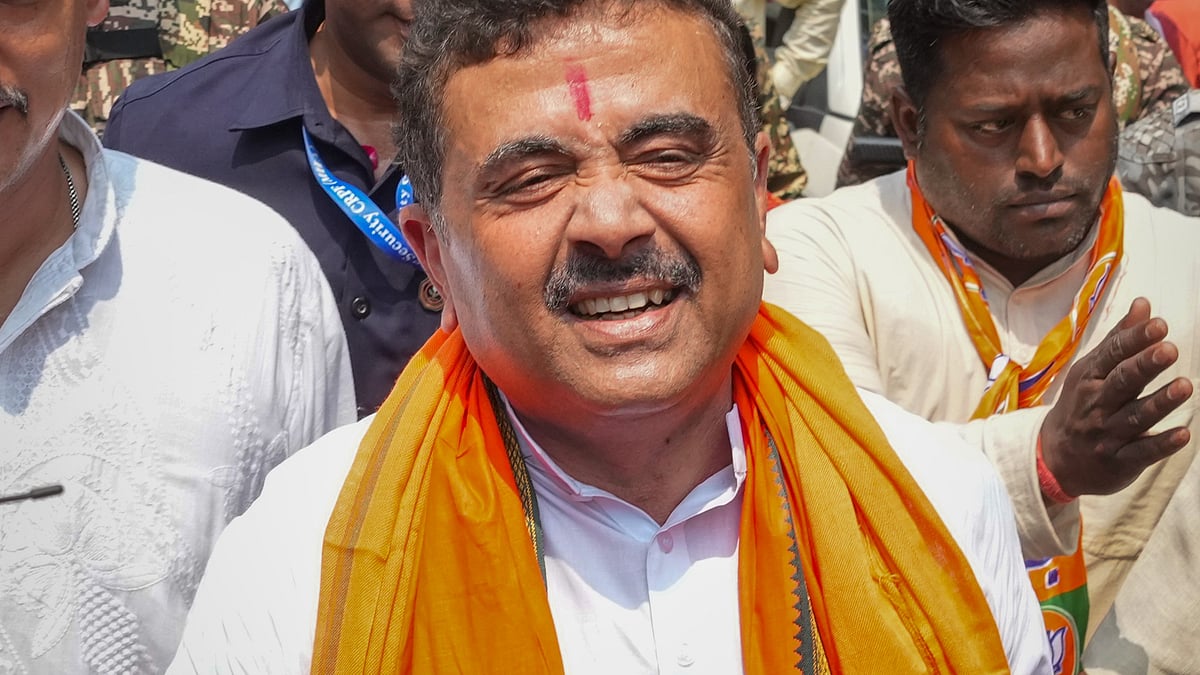
BJP leader Suvendu Adhikari, once among the most influential figures in the Trinamool Congress (TMC), has remained at the centre of West Bengal’s political churn since his dramatic switch to the saffron party ahead of the 2021 Assembly election.
Now the state's leader of opposition, Adhikari is contesting the 2026 polls from both Nandigram and Bhabanipur, directly challenging chief minister Mamata Banerjee and underscoring his central role in the BJP’s Bengal strategy.
Adhikari’s exit from the TMC in December 2020 came after months of friction with the party leadership and amid the backdrop of Central agency investigations linked to the Narada sting and Saradha chit fund cases. His defection — formalised in the presence of Union home minister Amit Shah — marked one of the most consequential political shifts in recent Bengal politics, given his organisational influence across south Bengal and his key role in the Nandigram land agitation that helped propel the TMC to power in 2011.
In the 2021 Assembly election, Adhikari defeated Banerjee in Nandigram by a slender 1,956 votes after a day marked by fluctuating leads, counting delays and technical disruptions that became the subject of sustained political controversy. TMC leaders alleged irregularities, pointing to a power outage and interruptions in counting during the final rounds, claims rejected by the Election Commission. The closely fought result cemented Adhikari’s position as the BJP’s principal face in Bengal while keeping the contest politically charged.
TMC national general-secretary Abhishek Banerjee has repeatedly targeted Adhikari over what he describes as a limited development record in Nandigram since the switch. “When he was a TMC MLA, he used to publish a report card on the work he had done. He has not published it in the past five years because he has nothing to show,” Banerjee said during a rally in the constituency.
Residents in parts of Nandigram have voiced similar concerns about the emphasis on political confrontation over local governance issues. One villager said, “He goes to Kolkata, he fights on TV, and he comes back at election time. Ordinary people here are talking about day-to-day problems, not his drama.”
Adhikari has also drawn controversy for several incendiary remarks in recent years. The TMC filed a complaint with the Election Commission in 2024 accusing him of making “inflammatory and communal remarks” at a rally in Taldangra in Purulia, alleging violations of the Model Code of Conduct. Political opponents have repeatedly accused him of framing electoral contests in sharply polarised terms, invoking themes of demographic anxiety and retaliation against Muslims.
TMC spokesperson Jayprakash Majumder, a former BJP man himself, described Adhikari as a leader whose politics is “based on fear, not on facts”. As he said, “He does not talk about schools, hospitals or irrigation. He only talks about enemies, about revenge and about the ‘other’ community. That is not the politics Bengal wants.”
As Leader of the Opposition, Adhikari’s combative style inside the assembly has also attracted criticism from ruling party legislators.
A TMC MLA said, “You can’t run Parliament on anger and noise. The leader of the opposition should be someone who can hold the government accountable with facts, not just noise. Suvendu Adhikari has failed on that front.”
Criticism has also surfaced within sections of the BJP’s state unit, with some leaders privately pointing to tensions between Adhikari and senior figures including former state president Dilip Ghosh.
Several senior bureaucrats informally attribute Adhikari’s political clout to his perceived proximity to Amit Shah, the Union home minister widely regarded as the BJP’s principal strategist.
Within sections of the BJP’s organisational base, particularly among leaders with RSS backgrounds, some have privately questioned Adhikari’s ideological grounding.
One state-level BJP functionary said, “True BJP leadership grows from the Sangh’s culture of discipline and self-sacrifice. Adhikari joined politics through Mamata’s corridors and now carries that culture into the party. He talks like a BJP leader, but his roots are not in the RSS.”
With the 2026 election positioning him against Banerjee in both Nandigram and Bhabanipur, analysts say Adhikari’s sharply polarising persona could prove both an asset and a constraint.
A senior TMC strategist summed up the critique: “Suvendu Adhikari has built a brand of anger, revenge and confrontation. In the short term, that can win headlines. In the long term, to win Bengal, he needs a record of trust, of work, of stability. Right now, that record is weak.”
Join our official telegram channel (@nationalherald) and stay updated with the latest headlines