POLITICS
Reform or retribution?
As the BJP promises sweeping probes into the TMC era, Bengal’s bureaucracy fears the rise of a new politics of loyalty
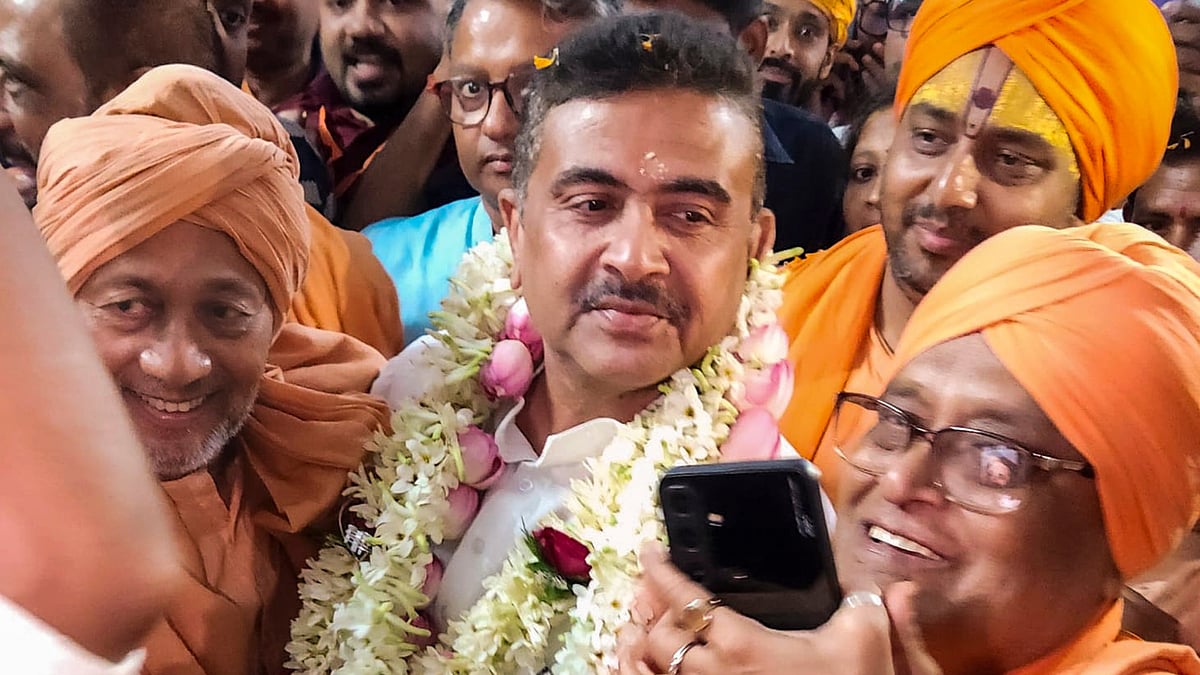
West Bengal's new BJP government, headed by chief minister Suvendu Adhikari, has launched an aggressive campaign against alleged corruption during the Trinamool Congress (TMC)'s 15-year rule. From fake caste certificates and recruitment scams to alleged misuse of public funds, the new administration has signalled sweeping scrutiny across departments.
Yet, even as many welcome the promise of 'accountability', concerns are growing within sections of the state bureaucracy over whether the exercise could also become a vehicle for political vendetta.
Khudiram Tudu, newly sworn in as tribal welfare minister, opened the offensive on Sunday, 10 May during a tribal welcome programme in Bankura. The BJP MLA from Ranibandh alleged widespread irregularities in the issuance of Scheduled Caste and Scheduled Tribe certificates during the previous regime.
"During the Trinamool Congress's tenure, numerous fake and irregular SC/ST certificates were generated," he told journalists at the Jaher Than sacred grove. "Many individuals have availed themselves of various benefits and opportunities by utilising these certificates."
Tudu, a former teacher, promised immediate corrective measures, including cancellation of fraudulent certificates, action against supervising officials and renewed focus on tribal hostels and ashram schools. "Our objective is not merely to combat corruption; the development of the tribal community will also be a primary goal," he said.
His remarks placed the Backward Classes Welfare Department among the first institutions likely to face detailed scrutiny under the new government.
The education sector, already scarred by the 2016 SSC recruitment controversy, is also under renewed focus. Courts had earlier directed the release of OMR sheets amid allegations surrounding nearly 26,000 appointments, but the TMC government maintained that original records were unavailable because they had been seized by the CBI. The sheets were finally released on Saturday, 9 May, hours after Adhikari took oath, apparently using recovered data.
Affected candidates welcomed the move. "This is true change. I filed the petition demanding the OMR sheets; back then, the government merely offered excuses," said Babita Sarkar. Another candidate, Anamika Roy, said, "Had Mamata Banerjee's government released these documents back then, we would have retained our jobs."
The new administration is now expected to widen scrutiny to recruitment bodies and senior officials associated with the process. Transport, home affairs and several other departments are also expected to come under review as the BJP government moves to investigate alleged misuse of public funds.
"Strict action will be taken against those who have misappropriated public funds," Adhikari said after taking oath, while reiterating promises to establish commissions to investigate institutional corruption, the R.G. Kar incident and the Sandeshkhali violence, commitments earlier highlighted by Amit Shah. "A commission headed by a retired judge would be established," Adhikari said.
His meetings at Nabanna on Monday, 11 May with police commissioners, district magistrates and senior administrators seem to signal that the administration intends to move quickly against officers perceived to have enabled corruption or partisan functioning during the previous regime.
The developments, however, have also triggered anxiety within sections of the bureaucracy. While many officers privately admit that corruption investigations are necessary after years of allegations against the TMC government, others fear the atmosphere could slide into administrative intimidation and political score-settling.
Critics of the BJP have often argued that the party projects anti-corruption drives as evidence of administrative transparency in states it governs, while simultaneously creating an atmosphere of fear within the bureaucracy. Opposition parties and sections of the civil service in several BJP-ruled states have accused governments of using transfers, vigilance mechanisms and investigative agencies not only for accountability but also as instruments of political control.
Opposition leaders frequently cite controversies such as the Vyapam recruitment scandal in Madhya Pradesh and allegations of a "40 per cent commission" culture in Karnataka under the previous BJP government to question the party's transparency claims.
Questions have also periodically been raised in states such as Uttar Pradesh and Gujarat over the concentration of influence within select bureaucratic and political circles despite the BJP's anti-corruption positioning.
Officials in departments such as transport, education and home affairs are already speaking quietly of possible "witch hunts", particularly among those perceived to have been close to the TMC establishment or its employee unions.
Adhikari's meetings with senior police officials, including Kolkata Police commissioner Ajay Nand and Howrah City Police commissioner Akhilesh Chaturvedi, are understood to have focused on officers accused by the BJP of partisan conduct during the TMC years, including allegations that police personnel targeted BJP workers or ignored attacks against them.
"To the thousands of BJP workers who have been wounded, persecuted, driven from their homes, or falsely implicated, I promise justice," Adhikari said.
Political observers note that the phenomenon of governments relying on trusted officers is hardly unique to West Bengal or the TMC years. Like most major political parties in power, the BJP too has often faced allegations from opponents that it relies on loyal sections of the bureaucracy and police establishment to advance administrative and political priorities.
Senior bureaucrats privately acknowledge that almost every political dispensation develops its own circle of trusted officials. Administrative loyalties, they say, often shift rapidly with changes in government, with officers adapting to new political leadership irrespective of ideology. For that reason, some officials argue that treating all officers perceived to be close to the previous regime with suspicion risks paralysing governance and turning routine administrative proximity into grounds for vendetta.
Adhikari, however, has maintained that the government's actions are aimed at fulfilling electoral promises rather than settling personal or political scores.
Even so, as vigilance intensifies across departments, the line between administrative reform and political retribution is likely to remain a subject of debate in Bengal's bureaucracy and political circles alike.
Join our official telegram channel (@nationalherald) and stay updated with the latest headlines