POLITICS
West Bengal: TMC flags timeline discrepancy in ED claims on I-PAC raid
ED seeks to implead Union home ministry and department of personnel & training in its plea before Supreme Court
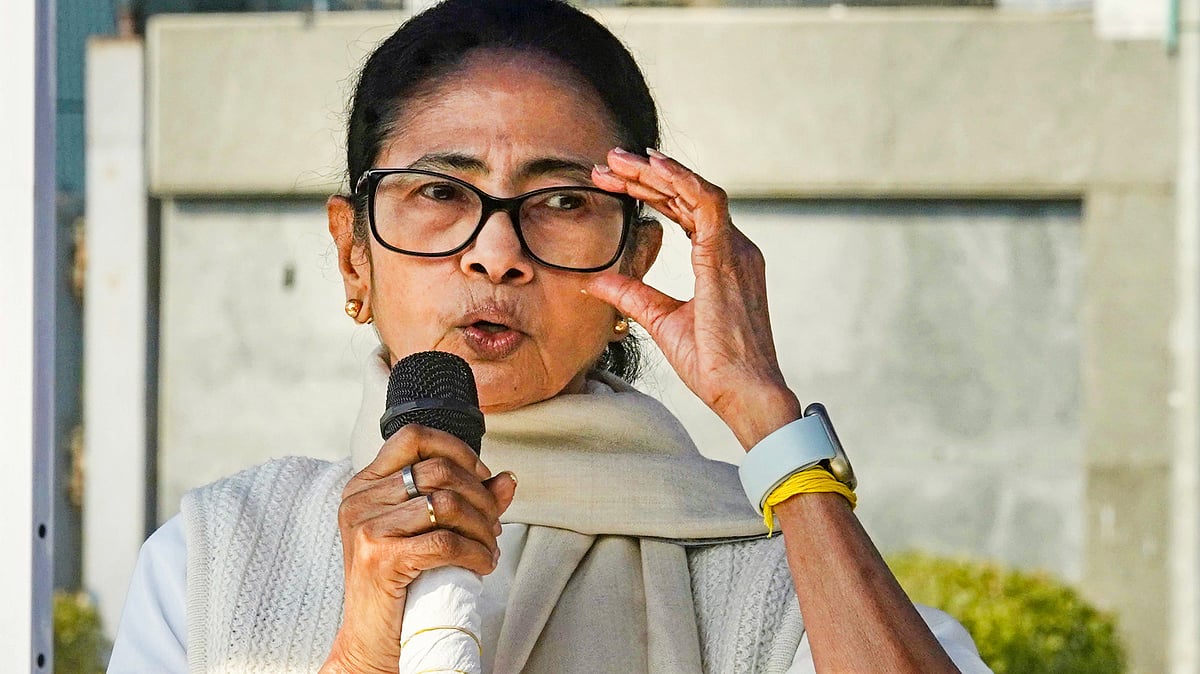
Trinamool Congress (TMC) Rajya Sabha MP Sagarika Ghose on Friday drew public attention to West Bengal's I-PAC raid controversy in an X post, pointing out an apparent discrepancy in the Enforcement Directorate’s (ED) own timeline.
Ghose's post noted that the ED began searches at the political consultancy’s Kolkata office on the morning of 8 January, yet the email notifying local police about the impending action — which solicitor-general Tushar Mehta had claimed was sent before the raids — was timestamped six hours later in the day.
Ghose also underscored that the ED had “awakened” to resume an investigation after a six-year gap, just months ahead of the 2026 West Bengal Assembly elections, and quipped that the agency seemed more like an 'Election Department' of the Central government than an independent enforcement body.
The ED asserts that on 8 January, it carried out searches at Indian Political Action Committee (I-PAC) offices in Salt Lake, Kolkata, and at the Loudon Street residence of its director Pratik Jain, in connection with a money-laundering investigation tied to an alleged coal smuggling syndicate operating in West Bengal. The ED says the operation was part of a criminal case that dates back several years and involves large-scale economic offences.
In its petition to the Supreme Court, the ED accused West Bengal chief minister Mamata Banerjee, senior police officials, and the state government of interfering with the searches. It alleges that Banerjee personally entered the premises during the raid and removed electronic devices and documents.
The agency has also sought to implead the Union home ministry and the department of personnel & training (DoPT) in its plea, arguing that possible interference by the state’s top bureaucrats — including the chief secretary — hindered its lawful investigation. ED lawyers told the court these departments are necessary parties to effectively address alleged obstruction.
The Supreme Court, hearing the ED’s petition on Thursday, 15 January, described the allegations of obstruction by state authorities as a “very serious issue” that touched upon the independence of Central investigations and rule of law.
The court issued notices to Banerjee, the West Bengal government, DGP Rajeev Kumar, and other senior officers named in the plea, and stayed FIRs filed by the state police against ED officials until the next hearing. It also directed that CCTV footage and other electronic records from the I-PAC premises and surrounding areas be preserved.
The bench, led by Justices Prashant Kumar Mishra and Vipul Pancholi, has set a further hearing for early February, underscoring the broader tension between Centre-state relations in criminal probes, especially during an election period.
Senior advocate Abhishek Manu Singhvi, representing the West Bengal government and the DGP before the Supreme Court, questioned the ED’s approach on procedural and legal grounds, criticising the agency for what he described as “forum shopping” — simultaneously filing similar pleas in the Calcutta High Court and Supreme Court — and argued that the local police were not properly informed in time before the searches, with notice to Kolkata authorities coming only after the raids had begun.
Singhvi also noted that nothing material was seized during the operations as declared by the ED itself, raising questions about their purpose.
Alongside Singhvi, senior counsel Kapil Sibal contended that Banerjee’s presence at the I-PAC site was in her capacity as TMC chairperson, not as the chief minister executing state authority. He argued that the ED’s own documentation showed no obstruction occurred, which he said undermined the agency’s case.
The controversy has amplified political tensions in West Bengal ahead of the 2026 Assembly elections. The TMC has described the ED action as politically motivated and has accused Central agencies of misusing investigative powers to influence electoral outcomes, especially by targeting political consultants like I-PAC that handle sensitive campaign and strategy data.
Conversely, the BJP has criticised Banerjee for allegedly obstructing a lawful investigation and protecting party interests, framing the incident as an example of lawlessness and undermining central enforcement efforts.
With PTI inputs
Join our official telegram channel (@nationalherald) and stay updated with the latest headlines