POLITICS
Bengal: Unprecedented multi-force meet casts shadow over poll neutrality
Massive deployment, a suicide attempt and misconduct allegations raise questions over neutrality of forces in Bengal polls
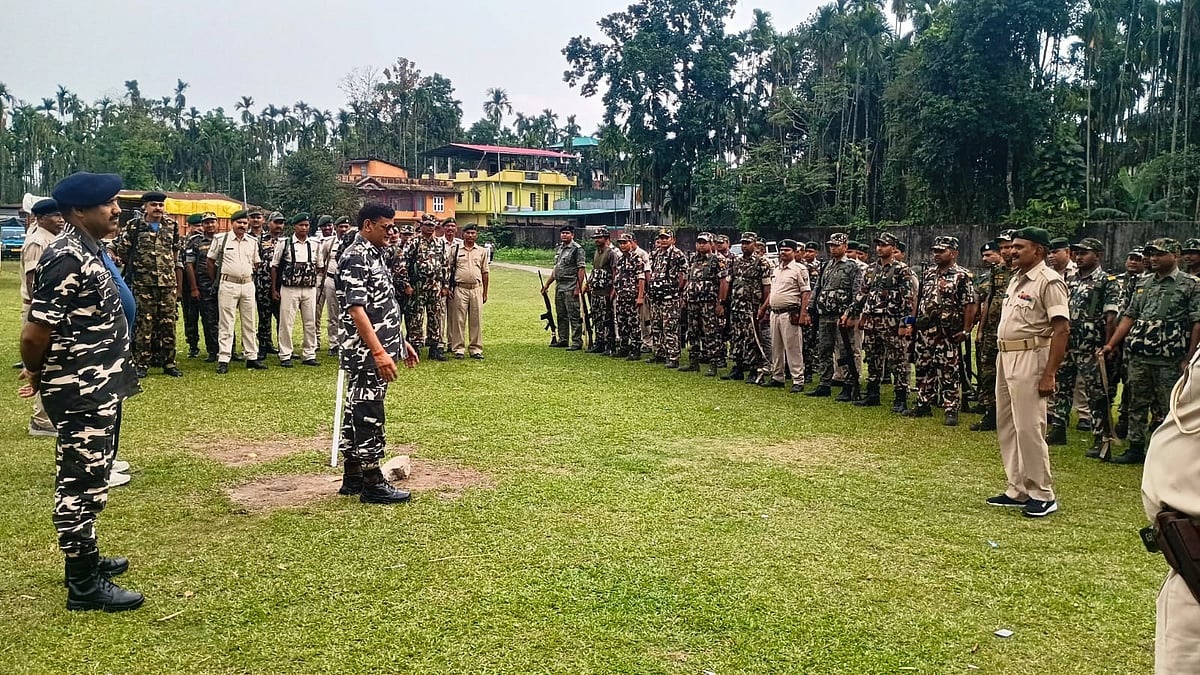
West Bengal’s election security arrangements have come under intense scrutiny amid an unprecedented show of force that has few parallels in recent electoral history.
In a rare and striking development, Kolkata hosted a high-level meeting bringing together the chiefs of the CRPF, BSF, CISF, SSB and ITBP to finalise strategy for polling on 23 April and 29 April. Such a joint gathering of the heads of multiple Central armed forces specifically for a state election is highly unusual and underscores the extraordinary scale of deployment this time.
The meeting, intended to create an integrated security grid, has also fuelled unease in parts of the state, where questions are being raised about whether such an extensive mobilisation is being implemented with sufficient sensitivity on the ground.
The scale of deployment itself is significant. Officials describe the arrangement as among the largest in recent years, with around 2,500 companies of Central forces — roughly 2 lakh personnel — stationed across West Bengal. The unusually large presence of Central forces has become a focal point of political and public debate, particularly as allegations of intimidation, overreach and politically coloured conduct emerge from multiple districts.
In Murshidabad, concern has deepened following the reported suicide attempt of a jawan deployed on election duty, drawing attention to the psychological strain faced by personnel operating in a high-pressure environment.
According to police sources, the injured head constable of the CRPF’s 142nd Battalion was found within the jurisdiction of Shaktipur police station in the Rejinagar Assembly constituency and is currently undergoing treatment at Behrampore Medical College. Doctors have said his condition is stable but he remains under observation. The incident has triggered discussion about the mental well-being of forces deployed in districts identified as highly sensitive for polling.
From Murshidabad to Malda and Sabang, the forces tasked with ensuring free and fair elections are facing allegations of intimidation and excess. In Malda, the state's ruling Trinamool Congress (TMC) leaders alleged that Central forces and police personnel visited the homes of party workers and issued threats.
Yusuf Ali, also known as Bahadur, claimed personnel went looking for him at his residence in Bhagwanpur village and allegedly intimidated his ailing mother when they failed to find him. He alleged the warning was intended to stop him from campaigning for the TMC. Similar allegations were made by other party-linked residents in neighbouring villages. Police sources, however, said the visits formed part of precautionary action against individuals with criminal records or past complaints and were not politically targeted.
The TMC has cited these incidents as evidence that the poll machinery is being used to pressure its workers, alleging selective targeting and an attempt to demoralise cadres ahead of voting. These complaints have contributed to an already polarised political climate in Bengal, where the actions of Central forces are frequently interpreted through a partisan lens.
The state BJP has rejected the allegations, describing them as attempts to deflect attention from law-and-order concerns on the ground. Nevertheless, repeated accusations risk undermining public confidence in the neutrality of the forces.
In Sabang, a separate controversy involving Central Armed Police Force personnel further intensified debate over the conduct of security forces. A video circulated on social media showed a force member slapping a TMC leader during a confrontation in an area where BJP workers alleged they had been attacked and prevented from campaigning. The administration has said the matter is under investigation, but the footage has been cited by critics as evidence of behaviour seen as heavy-handed and, at times, politically charged.
The extensive deployment has also disrupted academic schedules across the state. Several government and aided schools have had to postpone examinations because Central forces were housed on campus, with classrooms used for accommodation or training. Teachers reported difficulties conducting summative examinations as classrooms were requisitioned and staff diverted for election duty, creating inconvenience for students and parents.
Basab Mukherjee, teacher-in-charge of Park Institution in north Calcutta, said examinations could not be held as all classrooms had been taken over by CAPF personnel. "We have to hold the exams after 4 May, the day of counting. However, we do not know whether the rooms will be vacated by the CAPF even after 4 May," he said.
The political controversy has intensified as chief minister Mamata Banerjee has repeatedly accused Central agencies of acting in a partisan manner, alleging that "money, and even narcotics, are being brought into the state through BJP-linked channels with the help of Central forces".
The BJP has once again denied the allegation, maintaining that security checks and deployments follow standard election protocols. Nonetheless, such remarks have contributed to growing public suspicion regarding the role of the forces.
In a post on X, the TMC's Krishnanagar MP Mahua Moitra wrote: ‘...All Pet IPS Officers of BJP converge in Kolkata on how to meddle with elections’. She noted that the chiefs of the five forces are IPS officers rather than officers drawn from within those forces. Responses to her post included comments alleging efforts to influence the election outcome and questioning whether such actions would command public trust in Bengal.
Further criticism followed remarks by Union minister of state for education Sukanta Majumdar, who spoke of Central forces "breaking the backs" of TMC workers. The ruling party described the language as inflammatory, arguing that such statements risk reinforcing perceptions that security forces are being drawn into partisan contestation rather than remaining neutral actors.
As Bengal moves towards the first phase of polling, the Central forces remain central to the conduct of elections. Yet the emerging picture is complex: unprecedented deployment, heightened surveillance and rising public anxiety.
The Murshidabad suicide attempt, allegations of intimidation in Malda, the Sabang video controversy and disruption to school functioning have together placed the conduct, morale and neutrality of the forces under close scrutiny.
Join our official telegram channel (@nationalherald) and stay updated with the latest headlines