POLITICS
Women’s reservation is being delayed by design, not by compulsion
If empowerment is the goal, the path is simple and immediate: implement reservation now, ensure equitable distribution through sub-quotas
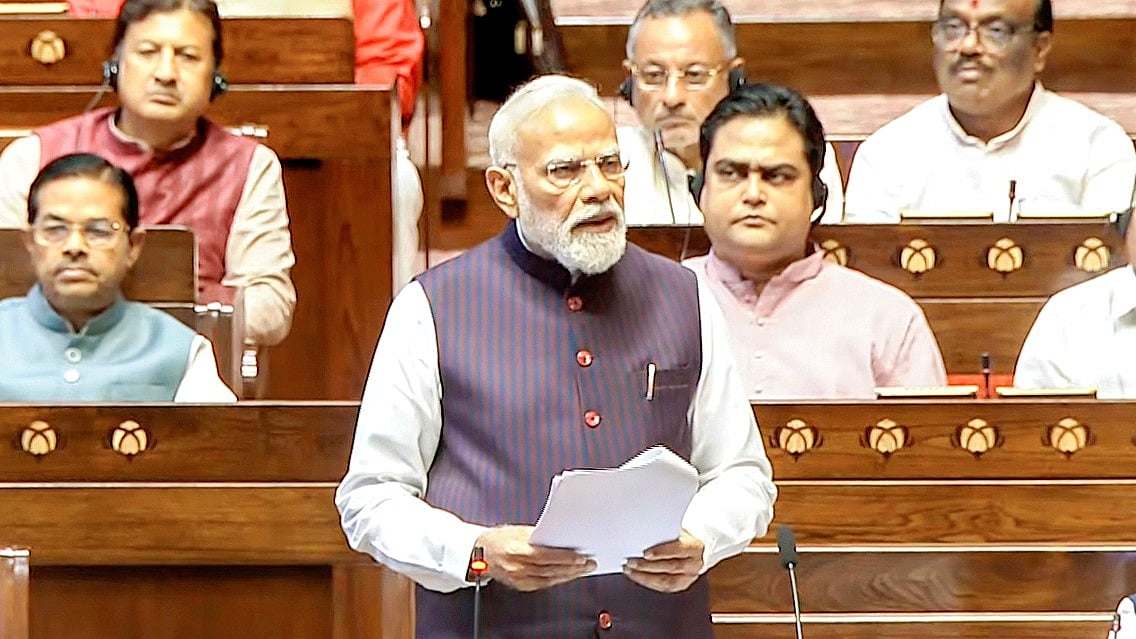
The passage of the Nari Shakti Vandan Adhiniyam in 2023, was projected as a historic step toward gender justice. In reality, it risks becoming one of the most carefully delayed reforms in recent parliamentary history.
Let us be clear: there is no constitutional compulsion that forces women’s reservation to wait for delimitation.
The decision to link its implementation with a future census and boundary redrawing is political, not procedural.
It ensures one thing with certainty — that the promise of reservation will not materialise before the next cycle of elections. What was celebrated as empowerment today has been effectively pushed into an indefinite tomorrow.
This delay is not a minor technicality; it fundamentally alters the meaning of the law. For three decades, successive governments debated women’s reservation but failed to act.
When it finally passed, it came with a built-in postponement clause. The question is obvious: if there was political will to pass the law overnight, why is there no will to implement it immediately?
Even more troubling is the silence on representation within representation. Women are not a uniform category. The reality of Indian politics is shaped by caste, class, and community.
Without a sub-quota, this law risks benefiting only a narrow, privileged segment. Where is the space for OBC women? Where is the guarantee for SC and ST women beyond what already exists? And most glaringly, where are minority women — particularly Muslim women — in this framework?
The numbers expose the gap. Women’s representation in the Lok Sabha is still around 15 per cent. Within that, marginalised women are nearly invisible. Muslim women, despite being part of a significant population, have almost no independent voice in Parliament. This is not accidental — it is structural exclusion. A reservation policy that ignores this reality does not correct inequality; it deepens it under the cover of reform.
Then comes the most contentious issue: delimitation. This is not a neutral exercise of drawing boundaries; it is a deeply political act that reshapes electoral outcomes. By tying women’s reservation to delimitation, the government has created the possibility of redesigning constituencies before implementing quotas. The timing raises a legitimate suspicion — that electoral arithmetic, not social justice, is driving the sequence of decisions.
The government must answer a straightforward question: why was immediate implementation rejected when even supporting parties and the opposition demanded it? Why introduce a reform with conditions that guarantee delay? And why avoid any commitment to sub-quotas for the most underrepresented women?
Women’s reservation was never meant to be a symbolic headline. It was meant to be a structural correction in India’s democracy. Today, it stands reduced to a deferred promise, tied to processes that conveniently align with future electoral timelines.
If empowerment is the goal, the path is simple and immediate: implement the reservation now, ensure equitable distribution through sub-quotas, and keep delimitation separate from a reform that cannot afford to be delayed any further. Anything less is not empowerment. It is political management dressed up as reform.
Mohammad Modassir Shams is a practicing lawyer and vice-president of the Bihar Pradesh Youth Congress
Join our official telegram channel (@nationalherald) and stay updated with the latest headlines