Sports
Three matches in 24 hours? Sindhu flays schedule after exit
Indian shuttlers raise expectations only to end with a men’s team bronze at Aichi Nagoya
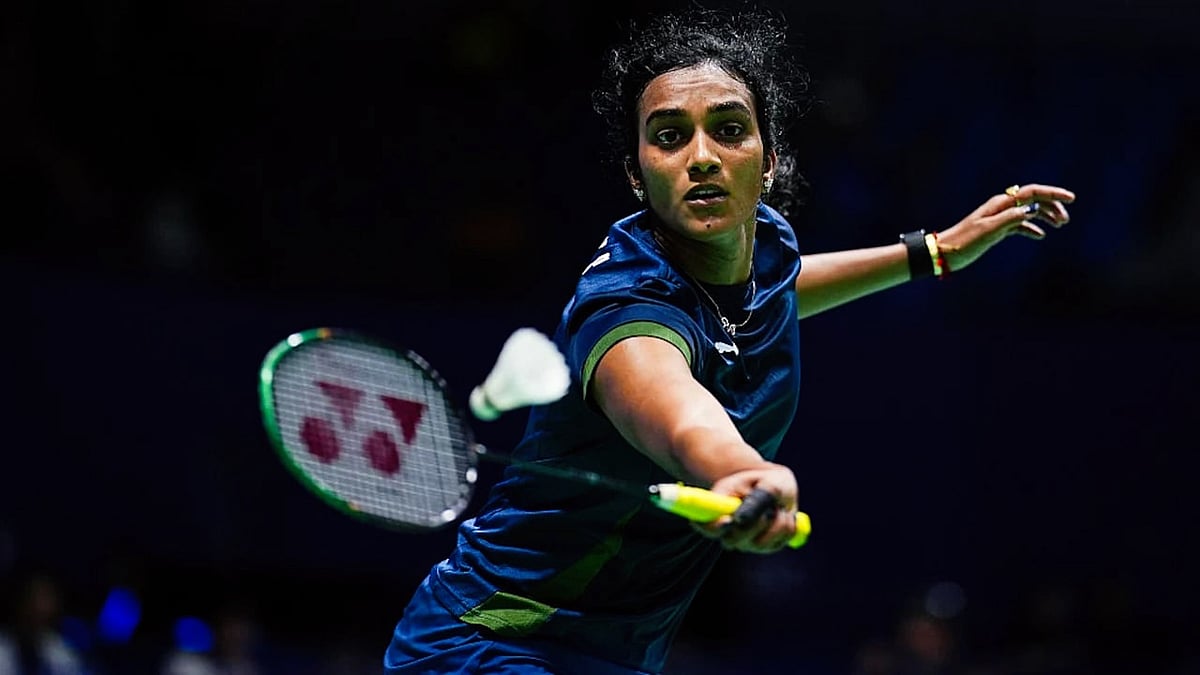
Sindhu played three singles matches in less than 24 hours, with her third-round match ending around 1.00 am before her quarterfinal against Chen Yufei at about 1.30 pm.
Sindhu and Unnati Hooda exited in the quarterfinals, leaving India with only a men’s team bronze from badminton.
Sindhu’s quarterfinal was played on court 4, where the review system was unavailable; Hawk-Eye had been installed only on courts 1 and 2.
The trolls may be out for P.V. Sindhu — India’s first woman to win two Olympic badminton medals and a talismanic figure in her sport — after she drew a blank in what was her fourth and arguably final Asian Games appearance, in Aichi-Nagoya. But her criticism of a gruelling schedule that forced her to play three matches in less than 24 hours, leaving little time for recovery, deserves more than a shrug.
India's returns from badminton at the Games have been disappointing. Despite a squad comprising medal hopefuls Sindhu, Lakshya Sen, Satwiksairaj Rankireddy-Chirag Shetty and emerging player Ayush Shetty, India had only a men’s team bronze to show for their efforts after the individual events also yielded no medals.
The post-mortem will surely begin, but Sindhu is likely to attract much of the scrutiny, having carried a considerable share of India’s expectations in badminton for much of the past decade.
But consider Sindhu’s schedule over those 24 hours. The former world champion played her second-round match on the afternoon of Saturday, 26 September before taking the court again for her third-round fixture later that day. That match ended around 1.00 am local time on Sunday, leaving her barely 12 hours to recover before her quarterfinal against China’s Chen Yufei at around 1.30 pm. Sindhu lost 21-11, 18-21, 10-21.
Asked whether she had previously played two matches at a major championship on the same day, a frustrated Sindhu said: “Not really, because the scheduling was not really well organised is what I feel. We literally slept really late and then came back in the morning, playing two matches in a day. Recovery is the most important priority.”
The travel between the Ichinomiya City Gymnasium, the badminton venue, and the team hotel also involved a considerable commute, adding to the strain on players. Other Indian shuttlers, including Rankireddy and Shetty, also spoke about the difficulties posed by the scheduling.
Sindhu said the impact of inadequate recovery becomes increasingly evident during long rallies, when physical fatigue can affect movement even if a player remains mentally prepared.
“It’s more than mentally preparing — you need to recover. Even though you think you are doing well, physically you might not be able to go there, or you might not be able to play,” she said. “When there are long rallies, definitely yes, recovery. When you had a good thing, you would automatically (go), but your legs don’t move.”
She added that the scheduling needed to improve, even as she described her overall performance against Chen as a good one.
Sindhu also raised concerns about the absence of a review system during her quarterfinal. She played on court 4 at Ichinomiya Gymnasium Hall, where Hawk-Eye was not available. The technology had been installed only on courts 1 and 2, meaning players on court 4 had no provision to challenge close line calls. Sindhu said she felt two or three shots had landed on the line.
There is, of course, no guarantee that better scheduling or Hawk-Eye would have changed the result against a former Olympic champion and world no. 4. Sindhu herself did not blame the loss entirely on the schedule. But that is precisely the point: major multi-sport events should not put athletes in a position where recovery becomes a variable they have to negotiate before a quarterfinal.
Sindhu may have drawn a blank in Aichi-Nagoya. Her questions about how the tournament was organised, however, should not be dismissed simply because she lost.
Join our official telegram channel (@nationalherald) and stay updated with the latest headlines