Sports
World T20: Can bar on Bangladesh snowball into bigger crisis in cricket?
We did not get justice from ICC, sports advisor says as BCB sticks to stance after meeting with cricketers
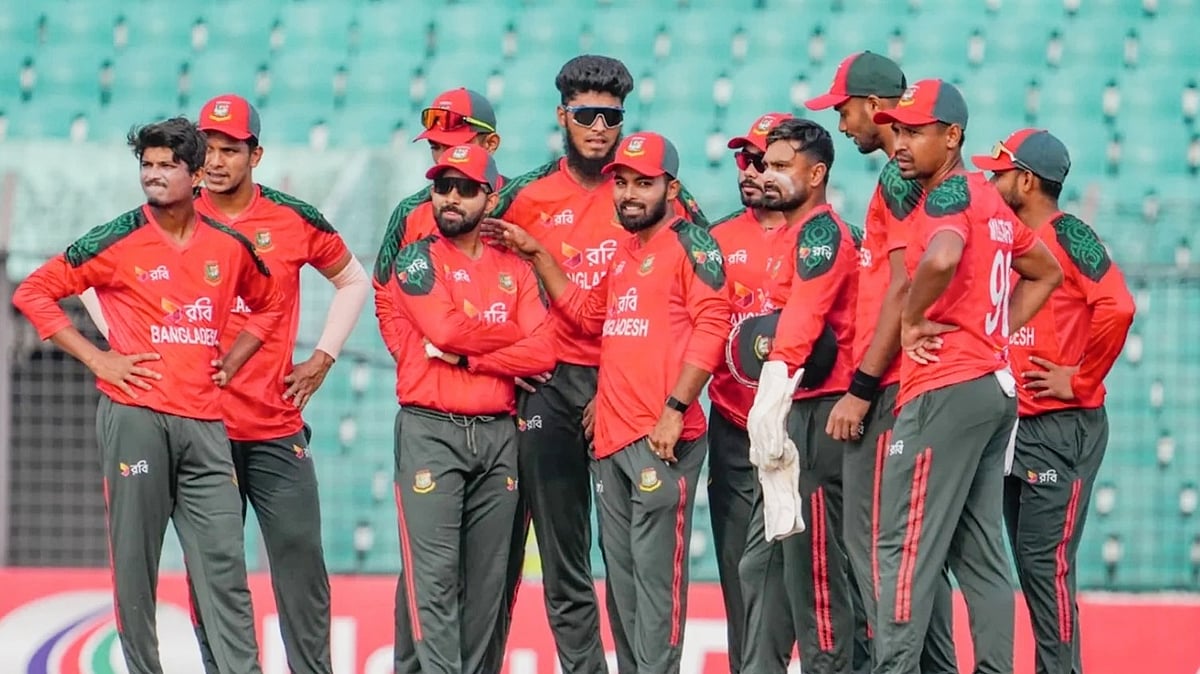
It was expected that Bangladesh — whose appeal for relocation of its T20 World Cup matches from India to Sri Lanka was massively outvoted by the ICC board on Wednesday — would not change tack at the eleventh hour. The 'Tigers', as they are known, are now set to be shunted out of the upcoming tournament, certainly not happy news for the economics of the game across the border.
However, the bigger question which now looms is whether expelling Bangladesh from the showpiece will cause irreparable damage to the future of the sport as well, given that the pie for international cricket is shrinking. The way the Bangladesh Cricket Board (BCB), backed by its caretaker government, went for broke on the issue of Mustafizur Rehman being dropped by an Indian Premier League franchise, is bound to raise questions as to whether it’s also a shadow fight against India’s undisputed authority in running the sport.
A media conference by Bangladesh’s sports advisor Asif Nazrul and BCB president Aminul Islam Bulbul following a meeting with players on Thursday sounded more tactical rather than a purely jingoistic narrative of the past. ‘’I think we did not get justice from ICC,’’ Asif told reporters. ‘’Whether we will play in the World Cup is entirely a government decision.’’
‘’I think nothing happened in India in the recent past that suggests things have changed there (security-wise),’’ he said. ‘’We hope ICC will give us justice.’’ The emphasis on cricket's world governing body denying justice raises the possibility of Bangladesh approaching the Court of Arbitration of Sport (CAS) in Lausanne, the supreme court of appeal, where it may raise precedents of what it feels has been ‘preferential treatment’ offered to India by the ICC.
Aminul, a former Bangladesh captain, recalled the example of India being allowed to play all its matches at a single venue (Dubai) during the last ICC Champions Trophy as the BCCI felt there was a threat perception on India's visit to Pakistan. It was a crisis which led to the formalisation of the ‘hybrid model’, something which Bangladesh has been insisting on in the current context but were denied.
‘’There were some shocking calls in the ICC Board meeting (on Wednesday). The Mustafizur issue is not an isolated issue. They (India) were the sole decision-makers of the issue,’’ the BCB chief said.
The other intriguing issue, according to observers, is the manner in which the Pakistan Cricket Board (PCB) has been playing its cards close to its chest. The only tangible move it has taken so far is to vote in favour of Bangladesh’s request for a relocation to Lanka, and also dashed off an email to the ICC ahead of the meeting. A possible boycott by Pakistan, of which there is an only an outside chance, can really put the ICC in a tight squeeze.
Any further move on Pakistan’s part will be directly linked to regional geopolitics, and drive a wedge through the Asian Cricket Council (ACC) and its underlying principles. While India’s TV pundits have justifiably maintained silence on the row, a former Pakistan captain has urged the PCB to boycott the T20 World Cup in solidarity with Bangladesh. ‘’If Pakistan and India don’t happen, 50 per cent of your World Cup is gone. This is a great opportunity to challenge the existing cricket order,’’ Rashid Latif said on his YouTube channel.
The last, therefore, has not been heard on the vexed issue of Bangladesh as the ICC will now go ahead with formally naming Scotland as a replacement team. The build-up to the World T20, with Bangladesh scheduled to travel to India only three days from now on 26 January for warm-up games, has been the biggest casualty in the bargain.
Join our official telegram channel (@nationalherald) and stay updated with the latest headlines