Tribute
‘Jo Meri Tarah Jiya Karte Hain Kab Marte Hain’: Sahir, Kaifi and their poetic farewell to Nehru
Sixty-two years after Nehru’s death, a look at how two progressive Urdu poets remembered the man they criticised, admired and ultimately mourned as the conscience of modern India
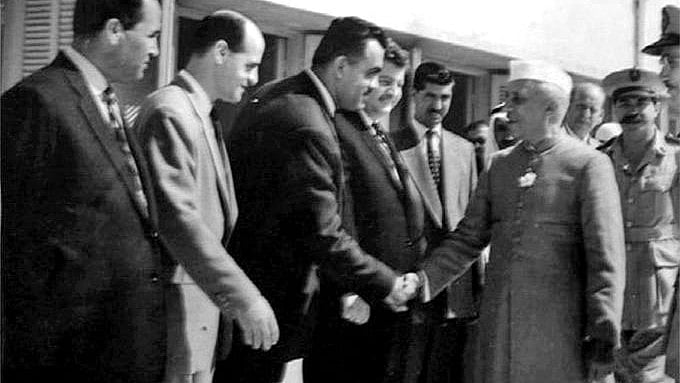
On 27 May 1964, when India awoke to the news of the death of Jawaharlal Nehru, the grief that descended upon the country transcended politics, ideology, religion and class. Millions mourned the passing of the man who had come to symbolise India’s tryst with democracy, secularism, scientific temper and modern nationhood. Yet among the countless tributes written after his death, two remain especially remarkable—not merely because of their literary brilliance, but because they came from poets who had often disagreed with Nehru during his lifetime.
Sahir Ludhianvi and Kaifi Azmi belonged to the Progressive Writers’ Movement and were deeply influenced by Left politics and Marxist thought. Both had criticised Nehru’s compromises with capitalism, his inability to radically transform class structures and aspects of his economic and foreign policies. Yet when Nehru died, ideological criticism gave way to something larger: admiration for a statesman whose moral imagination, secular humanism and democratic vision had profoundly shaped modern India.
Their elegies did not emerge from blind reverence. They emerged from intellectual honesty and historical understanding—from the recognition that Nehru represented not merely a political office, but a civilisational aspiration.
More than six decades later, these two poetic tributes remain among the finest literary memorials ever written for an Indian leader.
Sahir Ludhianvi: The skeptic who saluted a humanist
Sahir Ludhianvi rarely indulged in political romanticism. His poetry was sharp, anti-establishment, deeply conscious of class contradictions, and impatient with hypocrisy. He questioned nationalism when it turned chauvinistic, religion when it became divisive, and power when it ignored the poor. Yet in mourning Nehru, Sahir produced not merely an elegy but a philosophical defence of the Nehruvian idea itself.
The poem opens with lines that have since become immortal:
“Jism ki maut koi maut nahin hoti hai,
Jism mit jaane se insaan nahin mar jaate…”
(The death of the body is no true death;
The fading away of the flesh does not mean the human being dies)
The lines immediately elevate Nehru beyond physical mortality. Sahir insists that ideals survive the death of individuals, that history remembers those whose visions reshape society.
What follows is perhaps one of the most precise poetic articulations of Nehruvian secularism ever written:
“Vo jo har deen se munkir tha, har ik dharm se duur,
Phir bhi har deen har ik dharm ka gham-khwaar raha…”
(He who was skeptical of every faith, distant from every religion —
Yet remained the sympathiser of every faith and creed)
Sahir understood Nehru’s secularism not as hostility to religion but as ethical distance from sectarianism. Personally rationalist and agnostic, Nehru nevertheless remained fiercely committed to protecting India’s plural fabric. In the aftermath of Partition, when communal wounds were still raw, Sahir saw Nehru as the guarantor of coexistence.
The poem’s Christ-like imagery is equally striking:
“Saari qaumon ke gunahon ka kada bojh liye,
Umr bhar surat-e-Isa jo sar-e-daar raha…”
(Bearing the heavy burden of the sins of all nations,
Who throughout his life remained crucified like Christ)
Here Nehru becomes a tragic moral figure burdened by the catastrophes of his age — Partition, communal violence, war, poverty, and the impossible demands of nation-building.
Sahir particularly admired Nehru’s internationalism and commitment to equality:
“Jis ki nazron mein tha ik aalami tehzeeb ka khwaab…”
(In whose vision lay the dream of a universal civilization)
This was the Nehru who stood beside Gamal Abdel Nasser, Josip Broz Tito and Sukarno in shaping the Non-Aligned Movement; the Nehru who spoke of scientific temper, democratic institutions, and a postcolonial modernity rooted in human dignity rather than narrow nationalism.
Sahir’s concluding appeal remains hauntingly relevant:
“Daman-e-waqt pe ab khoon ke chhinte na padein,
Ek markaz ki taraf dair-o-haram le ke chalo…”
(Let no more splashes of blood stain the fabric of time;
Move temple and mosque alike toward a common centre)
These lines are no longer merely an elegy. They read today as a warning to the Republic itself.
Kaifi Azmi: Turning mourning into a message for the future
If Sahir’s tribute is philosophical and political, Kaifi Azmi’s is intimate, tender and quietly revolutionary. Written for the 1967 film Naunihal and immortalised in the mellifluous voice of Mohammed Rafi, Kaifi’s song imagines Nehru speaking gently to the nation even after death.
The opening itself carries remarkable emotional depth:
“Meri aavaaz suno, pyaar ka raaz suno…”
(Listen to my voice; listen to the secret of love)
Unlike conventional political memorials, Kaifi avoids grand rhetoric. Instead, he creates an intimate conversation between Nehru and the people he leaves behind.
Like Sahir, Kaifi insists that Nehru’s ideals cannot perish. But where Sahir frames immortality historically, Kaifi frames it emotionally and spiritually.
Kaifi’s most profound articulation of Nehru’s world view appears in these unforgettable lines:
“Meri duniya mein na poorab hai na pashchim koi,
Saare insaan simat aaye khuli baahon mein…”
(In my world there is neither East nor West;
All humanity gathers within open arms)
This is quintessential Nehruvian humanism — anti-sectarian, anti-racial, internationalist, and deeply inclusive. Kaifi recognised that Nehru imagined India not as an exclusionary nation-state, but as a democratic civilisation capable of embracing difference.
Perhaps the song’s most moving passage arrives when Kaifi turns toward the future generation:
“Naunihal aate hain, arthi ko kinaare kar lo…”
(The young ones are approaching; move the bier aside)
This is not merely poetry; it is political philosophy. Kaifi suggests that the true tribute to Nehru lies not in endless mourning, but in enabling future generations to move beyond where he himself could reach.
Then comes the astonishing declaration:
“Main koi jism nahin hoon ke jalaoge mujhe…”
(I am not merely a body that you can burn)
Nehru becomes an enduring moral presence scattered across the pathways of the nation:
“Tum jahaan khaoge thokar, vahin paaoge mujhe…”
(Wherever you stumble, you shall find me)
Few lines in modern Urdu poetry have captured political memory with such tenderness.
Why the elegies still matter
The significance of these tributes lies not merely in their literary brilliance but in what they reveal about India’s political culture at its best.
Sahir and Kaifi were not court poets. They were poets of dissent, shaped by socialist ideals and progressive critique. They criticised inequality, exploitation, communalism, and the failures of post-independence governance. Yet they also recognised that Nehru represented something rare in the post-colonial world: a democratic modernist deeply committed to pluralism, constitutionalism, and intellectual openness.
Their admiration was therefore not partisan but civilisational.
Both poets saw Nehru as flawed yet indispensable—a leader whose failures did not diminish the grandeur of his aspirations. In their eyes, Nehru embodied an India struggling toward secular democracy amidst poverty, violence and fragmentation.
At a time when public discourse often reduces historical figures to simplistic binaries of hero or villain, these poems remind us of a richer intellectual tradition—one capable of criticism without hatred and admiration without servility.
The Nehru that refuses to fade
Today, 62 years after his death, Nehru remains one of the most debated figures in Indian history. Yet beyond ideological battles, the enduring power of Sahir’s and Kaifi’s tributes something essential: Nehru continues to matter because he represented an ethical imagination larger than himself.
He believed in institutions over personalities, debate over dogma, coexistence over majoritarianism, and scientific inquiry over obscurantism. He imagined an India united not by uniformity, but by diversity.
That is why two revolutionary Urdu poets—both critics of power, both shaped by Marxist thought—ultimately mourned him not as a ruler, but as the conscience of modern India.
And perhaps no lines capture that immortality more completely than Sahir’s unforgettable refrain:
“Dhadkanein rukne se armaan nahin mar jaate…”
(The stopping of heartbeats does not kill aspirations)
Or Kaifi’s equally haunting assurance:
“Jo meri tarah jiya karte hain kab marte hain…”
(Those who have lived as I have lived—do they ever truly die?)
~Hasnain Naqvi is a former member of the history faculty at St. Xavier’s College, Mumbai
Join our official telegram channel (@nationalherald) and stay updated with the latest headlines