


From Steve Jobs to Jensen Huang: The history of corporate leadership comebacks
Huang’s dramatic return to Nvidia recalls a history of corporate comebacks marked by boardroom upheaval, business turnarounds and mixed financial fortunes
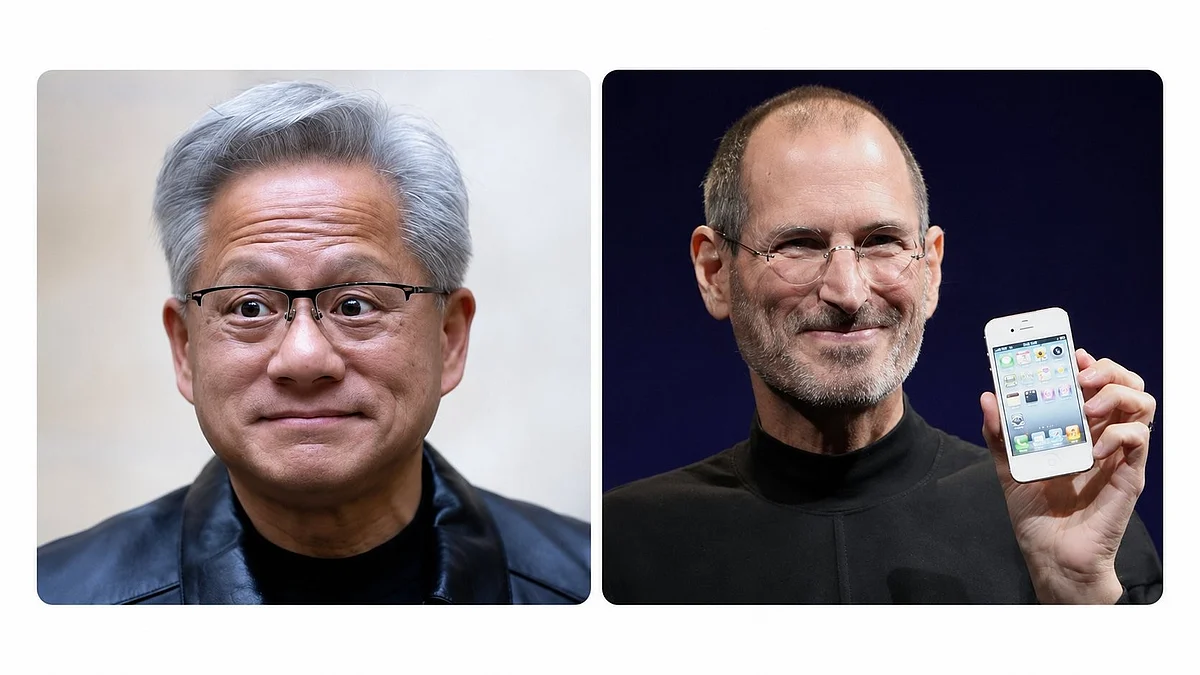


Jensen Huang’s reinstatement as Nvidia CEO triggered a surge of more than 30 per cent in the chipmaker’s shares, adding nearly $1 trillion to its market value
Corporate history offers several examples of former chief executives returning to lead companies through periods of uncertainty, financial distress or leadership turmoil
While Steve Jobs transformed Apple following his return, other corporate comebacks have delivered mixed results
Jensen Huang’s dramatic return to Nvidia has renewed interest in a recurring phenomenon in corporate history — companies turning to former leaders when confronted with uncertainty, strategic challenges or mounting shareholder pressure.
Nvidia’s board unanimously reinstated Huang as president and chief executive on 23 November, just 11 days after his resignation. The announcement sent the chipmaker’s shares soaring more than 30 per cent, adding nearly $1 trillion to its market capitalisation.
The scale of the market response underscored the confidence investors place in Huang’s leadership and his central role in the global artificial intelligence industry.
Across industries, companies have previously brought back former leaders to revive businesses, resolve boardroom disputes and restore investor confidence. Their experiences, however, offer contrasting lessons about the effectiveness of leadership comebacks.
Steve Jobs and the transformation of Apple
Perhaps the most celebrated corporate comeback remains that of Steve Jobs, who returned to Apple in 1997, more than a decade after leaving the company following an internal power struggle.
His return followed Apple’s acquisition of NeXT, the computer company he founded after his departure in 1985.
At the time, Apple was struggling financially, recording a net loss of approximately $1.05 billion in the 1997 financial year. Within a year, it returned to profitability, posting a net profit of $309 million.
Under Jobs, Apple introduced a succession of products that reshaped the global consumer technology industry, including the iPod, iPhone and iPad.
By August 2011, shortly before Jobs stepped down for health reasons, Apple had emerged as the world’s most valuable publicly traded company.
Founder-led growth at Google
Google co-founder Larry Page returned as chief executive in April 2011, a decade after handing over the position to Eric Schmidt.
His second stint coincided with Google’s expansion across digital advertising, mobile technology and other emerging businesses.
In 2015, a corporate restructuring led to the creation of Alphabet, with Page becoming its chief executive and Sundar Pichai taking charge of Google.
The broader business expanded substantially during this period, with annual revenue growing from approximately $29.3 billion in 2010 to $161.9 billion in 2019, the year Page stepped down as Alphabet CEO.
Samsung’s return to familiar leadership
South Korean electronics giant Samsung also experienced a prominent leadership comeback when Lee Kun-hee returned as chairman in March 2010.
Lee had resigned in April 2008 after being indicted in a case involving tax evasion and breach of trust. A presidential pardon in 2009 preceded his return to Samsung Electronics.
The company subsequently strengthened its position in the global electronics market, recording an operating profit of 36.8 trillion won in 2013, a record at the time.
Lee remained chairman until his hospitalisation in 2014. He died in October 2020.
OpenAI’s extraordinary boardroom crisis
One of the most striking parallels with Nvidia’s leadership turmoil emerged at OpenAI in November 2023.
The artificial intelligence company’s board abruptly removed co-founder Sam Altman as chief executive, citing a loss of confidence in his leadership.
The decision triggered widespread internal opposition, with more than 700 employees reportedly threatening to leave unless Altman was reinstated. Microsoft, a major investor in OpenAI, also offered him a leadership position in a newly proposed AI research team.
Within five days, OpenAI reached an agreement for Altman’s return. He formally resumed his responsibilities on 29 November under a reconstituted board.
The episode highlighted the influence that founders, employees and major investors can exert during corporate governance disputes, particularly in technology companies competing for specialised talent.
Mixed fortunes at Twitter and J.C. Penney
Returning leaders have also faced difficulties in translating renewed confidence into sustained financial performance.
Twitter co-founder Jack Dorsey returned as chief executive in 2015, seven years after relinquishing the position. During his second tenure, annual revenue increased from approximately $2.2 billion to $5.1 billion in 2021.
However, profitability remained a challenge, with the social media company reporting a net loss of $221.4 million in 2021.
Dorsey stepped down in November that year, and Elon Musk subsequently acquired Twitter for approximately $44 billion in October 2022.
American department store chain J.C. Penney brought back former chief executive Mike Ullman in 2013 following the unsuccessful turnaround strategy pursued by his successor, Ron Johnson.
The retailer had suffered a dramatic decline in annual sales, which fell nearly 25 per cent in its 2012 financial year.
Although Ullman helped stabilise operations during a difficult period, the company's longer-term financial challenges persisted. J.C. Penney eventually filed for bankruptcy protection in May 2020.
The risks of relying on familiar leadership
Corporate comebacks often reflect the confidence that boards, employees and shareholders place in executives with an established understanding of the business. Founder-led companies can be particularly sensitive to leadership changes because their strategic direction, organisational culture and market identity are closely associated with individuals.
Huang’s return has provided immediate reassurance to Nvidia’s investors and the wider AI industry. Its longer-term significance will depend on the company’s ability to sustain growth, strengthen corporate oversight and develop a credible succession strategy.
The history of returning executives suggests that familiarity and leadership experience can help companies navigate crises, but enduring commercial success ultimately depends on the strength of the business itself.
With agency inputs
Join our official telegram channel (@nationalherald) and stay updated with the latest headlines