


Indore’s paradox: ‘Clean’ city, dirty water
Is it crores down the drain? So it would seem when contaminated drinking water claims lives
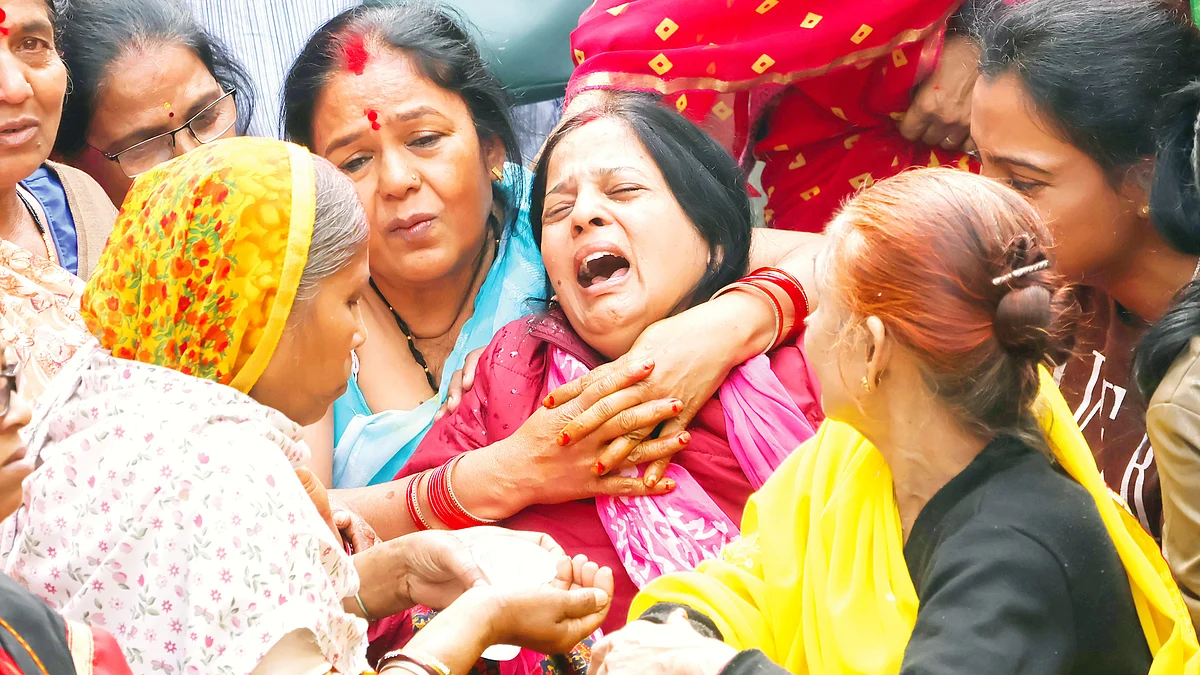


For the past four months, the residents of Bhagirathpura, a densely populated area lying cheek-by-jowl with an industrial area in Indore, had been getting foul-smelling water. They complained to the municipality — to no avail.
It took 10 deaths (14 according to locals) for the authorities to wake up and ‘discover’ that sewage from a public toilet was seeping into the water-supply pipes. Reports now suggest that the file inviting bids to replace the pipes in the area was stuck at the same table in the Indore municipal corporation office for exactly the same period of four months.
Between 3 and 7 January, over 40,000 people were tested; 2,456 of them were found to have picked up infections. More than 162 people had to be hospitalised; 26 people were so severely ill they had to be admitted to intensive care units. This, in a city that has been declared the ‘cleanest’ in the country eight times since 2016.
Indore has another ‘feather in its cap’ — eight elected legislators to the Assembly are from the BJP which controls the municipal corporation and occupies the mayoral seat. Not only is the BJP in power in the state and at the Centre, chief minister Mohan Yadav is in charge of Indore and the state’s urban development minister Kailash Vijayvargiya represents a constituency in the city.
None of this helped the people who died. The victims included Sadhna and Sunil Sahu’s six-month-old son Avyan. This child, born to the couple after 10 years, was among the first victims of the Indore water contamination crisis. He had been fed milk diluted with water from the municipal tap; on 29 December 2025, he died after a severe bout of vomiting and diarrhoea.
Indore’s ‘visionary’ mayor Pushyamitra Bhargav has been known to publicly declare that residents of his city are supplied not water but ghee. He seldom tires of pointing out that the only source of water in Indore is the Narmada, 80 km away.
A huge amount of money is spent pumping the water to a height of 1,800 feet before it can flow through the municipality pipes. The cost of pumping water to Indore is an exorbitant Rs 21–25 per litre (for most cities in the region, the cost is no more than Rs 5-6). The municipality pays Rs 25–30 crore as electricity charges every month.
While the annual cost of supplying water to Indore is estimated at Rs 350 crore, records show that 35–40 per cent of the water is either stolen or lost through leaks. This ‘unaccounted for water’ leads to further revenue loss.
Inquiries revealed that in Bhagirathpura, the water-supply pipe passed below a public toilet from where sewage seeped into the water being piped into homes and community taps. This is what led to the outbreak of gastroenteritis, typhoid and other water-borne diseases — luckily not cholera.
The situation was further aggravated by frequent digging in the area to lay cables of some kind or another. Magsaysay award-winning water conservationist Rajendra Singh called it a ‘system-created disaster’.
****
Only half a century ago, Indore was water-rich, with two rivers, over 50 lakes and tanks of varying sizes, and 650 other water bodies. With all of them swallowed up by greedy developers in the race to urbanise, the city became solely dependent on the Narmada.
Observers point out that even today there is a confluence of at least eight rivers — Chambal, Gambhir, Angrer, Sumaria, Beeram, Choral, Karam and Nekreshwari — originating from the Janapav hills around Indore. What then is the compulsion to fetch all its water from the Narmada alone?
A little digging reveals that between 2015 and 2021, Indore spent Rs 650 crore to set up new pumping stations, replace old pipelines and extend the distribution network.
When the Madhya Pradesh Pollution Control Board tested water samples drawn from 60 places in the city way back in 2017–18, a shocking 59 failed the test. The board had alerted the municipal corporation thrice — in writing — that untreated water could be a health risk. When municipal authorities failed to act on the report, the board alerted the central ground water board in Bhopal.
As recently as August 2025, the Indore municipal corporation awarded a Rs 1,073 crore contract to SPML Infra Ltd to lay pipelines and instal water tanks. Whatever happened to this huge investment? That’s what the people of Indore want to know.
Considerable sums have also been spent on ‘smart city’ schemes. (In 2023, Indore won the ‘Best Smart City’ award along with Surat.) Has all the money gone down the drain?
Only a comprehensive audit might reveal the answer. While senior officials have been transferred, junior officials suspended and an inquiry committee set up, who will explain why the cardinal principle of keeping sewage lines distinct and distant from water-supply lines was not followed?
Ironically, Bhagirathpura’s corporator Kamal Baghela was declared the ‘best corporator’ by the mayor for his ‘commendable work’ in setting right the roads and drainage in the area. Initial reports of deaths in Bhagirathpura were dismissed by Vijayvargiya. A video went viral in which he was heard telling a reporter that the latter knew ghanta (i.e. zilch) about the facts.
As public outrage at the deaths and the minister’s snub grew, the government went into damage-control mode. Sponsored TV clips and videos showed Vijayvargiya spending the night ‘supervising’ emergency rescue and relief operations in the area. In one video, we were told the minister hasn’t slept a wink, or even stopped to drink a cup of tea. In another PR video, residents were heard blaming the Congress for the tragedy, and objecting to demonstrations with a ghanta (which also means a bell).
Subdivisional magistrate Anand Malviya — who had granted permission for the protest — was suspended. The tragedy turned farcical when he was pulled up by the government for quoting, in his official order, the language used in the Congress party’s application for permission to demonstrate, with, what else — a ghanta!
Reports suggest the problem of contaminated water is not confined to the ‘cleanest city’ in India. Bhopal, Ratlam and even Ujjain, chief minister Mohan Yadav’s home turf, are afflicted. In November 2025, after a jaundice outbreak, students at the Vellore Institute of Technology campus near Bhopal went on a prolonged protest to draw attention to the supply of contaminated drinking water.
The powers that be seem to have forgotten a basic fact: access to clean water is not a privilege, it is a fundamental human right.
Join our official telegram channel (@nationalherald) and stay updated with the latest headlines