


The right to be a rogue (until you’re caught)
Nikhil Gupta’s guilty plea in the Pannun assassination attempt case is by no means the end of the story, writes Ashis Ray
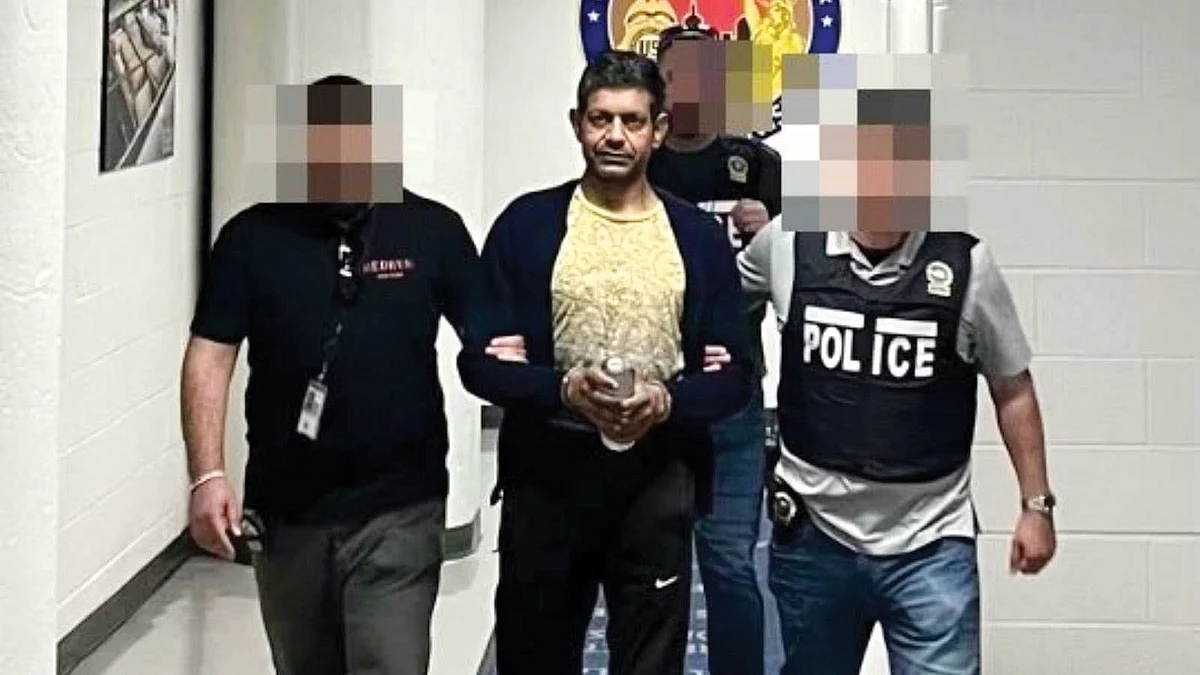


Indian businessman and alleged drug trafficker Nikhil Gupta (54) — arrested in 2023 and presently in detention in New York — has pleaded guilty before a United States magistrate judge on three counts: ‘murder-for-hire, conspiracy to commit murder-for-hire and conspiracy to commit money laundering’.
This in connection with the attempted assassination of Gurpatwant Singh Pannun, a New York-based American citizen who is general counsel for ‘Sikhs for Justice’, a body that demands that an independent state of ‘Khalistan’ be carved out of India.
The Indian government denied any connection to Gupta or Vikash Yadav, a former employee of the external intelligence agency R&AW, who allegedly supplied the target and the funds to hire an assassin in the US.
Gupta’s family struggled to fund his defence; had he not pleaded guilty, he would have faced a criminal trial which would have meant being cross-examined and confronting evidence.
The sub-title of a press note circulated by the US Attorney’s Office after Gupta’s admission reads, in bold, ‘Nikhil Gupta worked at the Direction of an Indian Government Employee to Arrange the Murder of US-based Leader of Sikh Separatist Movement.’
That and the contents of the document rattled the nerve centre of India’s espionage establishment.
The FBI’s assistant director in charge, James Barnacle, Jr. is quoted as saying: ‘At the direction and coordination of an Indian government employee, Nikhil Gupta plotted to assassinate a United States citizen on American soil.’
The note named ‘VIKASH YADAV’ as that Indian government employee and a ‘co-defendant’ in the case, describing him as being ‘at relevant times an Indian government employee, to plot the assassination of an attorney and political activist (Pannun)’.
It further specified: ‘YADAV was employed by the Government of India’s Cabinet Secretariat, which houses India’s foreign intelligence service, the Research and Analysis Wing (R&AW).’
It continued: ‘In or about June 2023, YADAV recruited GUPTA to orchestrate the assassination of the Victim (Pannun) in the United States. At YADAV’s direction, GUPTA contacted an individual whom GUPTA believed to be a criminal associate, but who was in fact a confidential source working with the DEA (Drug Enforcement Administration) [the ‘CS’ or the confidential source], for assistance in contacting a hitman to murder the Victim in New York City.’
It detailed: ‘YADAV subsequently agreed, in dealings brokered by GUPTA, to pay the UC [undercover officer] $100,000 to murder the Victim. On or about June 9, 2023, YADAV and GUPTA arranged for an associate to deliver $15,000 in cash to the UC as an advance payment for the murder.’
It also stated: ‘In or about June 2023, in furtherance of the assassination plot, YADAV provided GUPTA with personal information about the Victim, including the Victim’s home address in New York City, phone numbers associated with the Victim, and details about the Victim’s day-to-day conduct, which GUPTA passed to the UC. GUPTA thereafter provided YADAV with regular updates on the assassination plot, including surveillance photographs of the Victim.’
Pannun reacted by saying, ‘The [Narendra] Modi government’s claim that [the] murder-for-hire conspiracy was the act of a “rogue agent” collapses under the weight of the evidence presented in federal court.’
On 16 February, the Economic Times reported, ‘Indian officials reiterated their position that New Delhi wasn’t involved in the alleged plot…’ It did not identify who those officials were.
Gupta pleading guilty is by no means the end of the story. Yadav remains a co-accused, and prosecutors are clearly pointing to a department of the Indian government that directly operates under Modi and national security adviser Ajit Doval.
The extrajudicial, extraterritorial adventure illustrated by the apparent assassination attempt could only have been authorised at the highest level. While Samant Goel headed R&AW at the time, the orders would undoubtedly have come from the top. Since its creation in 1968, R&AW has been a reasonably competent external intelligence outfit, not known for Rambo-style forays — at least until 2014.
After a rather short six-month stint as director of India’s Intelligence Bureau, Doval espoused what the gullible swallowed as the ‘defensive-offensive’ doctrine. His harebrained ideas drew on Mossad’s playbook and dovetailed with Modi’s fanciful ‘muscular foreign policy’. The result was Indian intelligence officers being declared persona non grata in North America, Britain and Australia — a significant handicap for India.
Yadav was indicted on the same three counts as Gupta. US authorities issued an arrest warrant in October 2024, and he remains on the FBI’s ‘most wanted’ list, with an Interpol Red Corner Notice hanging over his head. It is unknown how much Gupta has revealed — or will reveal — with the hope of reducing a potential 20-year prison sentence. (In the US, defendants can plea bargain by admitting guilt, typically spilling the beans about co-accused in lieu of a lighter sentence.)
Now that Gupta stands convicted by admission, the US could renew its interest in Yadav with a formal extradition request. New Delhi will likely stall on this, if not refuse altogether. Yadav has either been sacked or quit his government post by mutual agreement.
A cunning move by the Modi dispensation would be to prosecute him for the Pannun case or some other offence. (Delhi Police has reportedly registered an extortion case against him.) If he is taken into judicial custody, South Block could invoke the 1997 US-India Extradition Treaty to avoid extraditing him. After all, Yadav may have too much to say about who ordered Pannun’s assassination.
Intelligence agencies have a history of striking quid pro quo deals with suspects, accused or convicted criminals, hiring them for dirty jobs, while maintaining plausible deniability. The Indian government could have distanced itself from Gupta, but the evidence of his apparent links to Yadav seem to be undeniable, which puts the Modi regime in a tight corner.
The statement issued by the US Attorney’s Office also cites the killing of Sikh separatist Hardeep Singh Nijjar outside a gurdwara on the outskirts of Vancouver in June 2023. At the time, Canadian prime minister Justin Trudeau said there were “credible allegations” that agents of the Indian government were involved.
The Modi apparatus dismissed the allegation as “absurd”. The economic damage inflicted on Canada by US President Donald Trump in the past year has, however, compelled the Canadian government — under new Prime Minister Mark Carney — to temporarily put the Nijjar issue on the backburner. A former governor of the Bank of England, Carney has prioritised consolidating commercial ties with the non-US world, including India.
Much of the evidence in the Nijjar case — including alleged intercepts of communications between Indian officials — was gathered by the US and shared with Canada, not to mention the other ‘Five Eyes’ countries: Britain, Australia and New Zealand. Trump’s unreliability and a relative lack of confidence in the current heads of US intelligence outfits — Tulsi Gabbard, director of National Intelligence and Kash Patel, director of FBI — has made Canadian intelligence agencies cautious.
A murderous approach to Khalistanis abroad is, arguably, overkill. With minimal secessionist sentiment in Punjab, such an attitude not only amounts to killing a fly with a sledgehammer, but also runs the risk of reviving a dying movement. Over-emphasising Pannun’s importance has made him a Sikh hero.
Offensive counter-espionage only works if you don’t get caught.
Ashis Ray was formerly editor-at-large of CNN. He is the author of The Trial that Shook Britain. More of his writing can be found here
Join our official telegram channel (@nationalherald) and stay updated with the latest headlines