Art and Culture
Memories of ‘Sankar’, the novelist and chronicler of Bengal and Bengalis
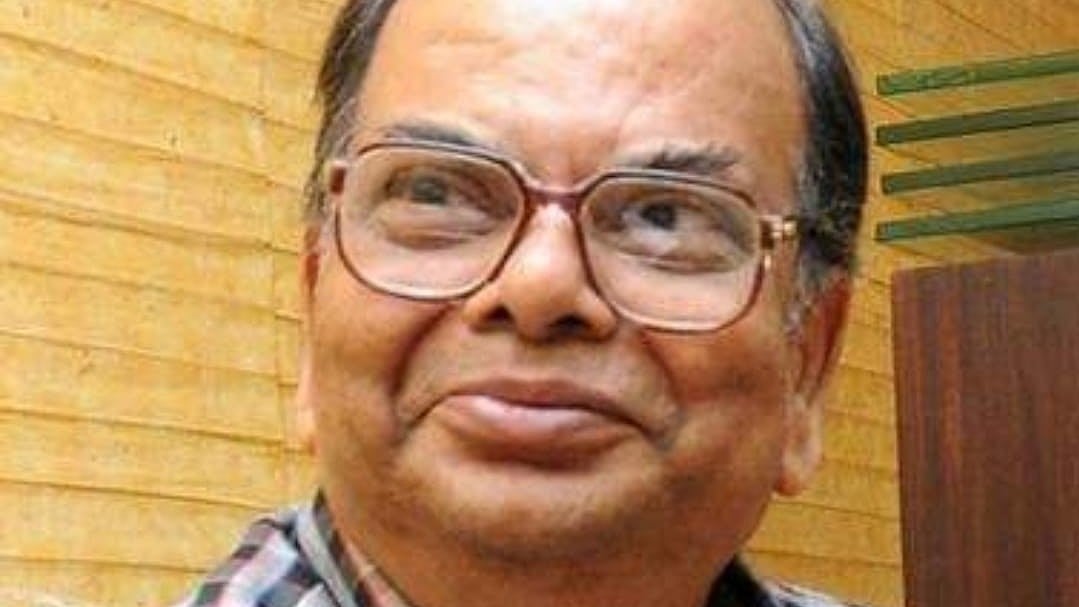
Mani Shankar Mukherjee passed away at 92 on 20 Feb. Much has been said about the Kolkata novelist, but he was far more than just his books
The Times of India office in Patna was at a walking distance from Maurya Hotel, where ‘Sankar’ had checked in. He had accompanied industrialist R.P. Goenka on a high-profile visit. It was the first and the last time that ‘Rama Prasad Ji’, as Sankar called him, possibly visited Patna on business. He called on the chief minister, addressed a press meet, announced his intention to invest thousands of crores in the state and a cancer hospital in the state capital. I was intrigued.
It was the time in the mid-1990s when industry was fleeing the state. Law and order was getting worse; carjacking and kidnappings for ransom were growing; infrastructure and electricity supply were poor and the bureaucracy a law unto themselves. Industries were actually closing down and there was fear in the air. So, what was R.P. Goenka up to in Bihar? His plans made no sense and nobody knew the business that had brought him to Patna.
It was in desperation that I turned to ‘Sankar’. On a whim I called him up and enquired what he was doing. RPG was at an event but his corporate communications advisor was cooling his heels in his hotel room, seemingly with nothing to do. When I suggested we get away for a while to have lunch at Chanakya, another hotel with better restaurants, he readily agreed. He was of course a celebrity author then and a veteran voice in the fledgeling world of corporate world.
At lunch, he evaded my probing questions. What had brought RPG to Bihar? Could he be serious about what he was saying? What prompted him to look at the state as an investment opportunity? ‘Sankar’ was noncommittal. You will have to ask Rama Prasad Ji, he told me with an air of finality. It was while having coffee that he made a casual remark that has not left me till this day though.
Any industrialist planning to invest in a place, he told me, would of course like to be assured of natural resources, infrastructure and political stability. He would also worry about educational opportunities for the children of employees, employment opportunities for their spouses, recreational and leisure activities, weekend get-aways. How would this place evolve in 20 years, he would ask, the celebrated writer told me, amused at me gaping at him. So, go, figure it out, he seemed to be suggesting. I knew then that RP Goenka would not invest in Bihar because the place exuded no hope and made people indescribably uncomfortable. RPG was up to something else.
I called it the ‘Sankar Test’ when Subroto Roy ‘Sahara’ made similar claims in West Bengal. At a meeting with the Bengal Chamber of Commerce, where I was invited by an unsuspecting Amiya Gooptu, Roy was at his eloquent best. He had grand plans for the Sundarban, he told his admiring audience. He would build up four islands as a global tourist and fisheries hub. Tourists would be flown in a helicopter to the city centre and transported to steamers and motor boats that will take them to the islands. While one of the islands would be developed as an export hub for fish, others would be developed as centres of water sports and night entertainment. They were not amused when I wrote a tongue-in-cheek report and carried it as a front page anchor in the Kolkata edition of TOI.
Sankar was vastly amused and invited me over to Victoria House, the CESC headquarters, to have Cha and Muri (puffed rice). He had been commissioned to write an authorised biography of Subroto Roy, he revealed and wanted to hear me speak about him. I had come to Kolkata after a stint with the TOI in Lucknow and knew more about Roy and Sahara than most people in Kolkata those days. We chatted merrily enough. Sankar was flown by Roy to Amby Valley where he would talk to Sankar for hours at night, telling him about his struggles and how he made his money. The biography did come out and Sankar told me that one of Roy’s regrets was that despite being one of the most successful and self-made ‘Bengali businessman’, Bengalis never took him seriously.
Sankar was of course a chronicler of Bengal and Bengalis. Our ‘cha and muri’ sessions became more frequent when I moved back to The Telegraph. The ABP office on Chittaranjan Avenue was again walking distance to Victoria House and Sankar knew that I had little work. I used to joke that Aveek Sarkar was paying me a pension and Sankar would call the ‘pensioner’ and ask if he had time for tea. One day as I arrived, he was on the phone and the conversation went on for a long time. It was ‘Shombit’ from Paris, he informed and went on to tell me of the incredible story of another Bengali.
A student of fine art, Shombit Sengupta had grown up in a refugee colony and in abject poverty. At the age of 19 he sailed for France with just eight dollars for company, continued his apprenticeship there before setting up his own industrial design consultancy. He used art for corporate and product branding and his firm is credited with rebranding 2,500 corporate bodies in different continents. Shining Consultancy headquartered in Paris was his creation.
The design guru had called him out of the blue, recalled Sankar, and sent an air ticket and an open invitation to Paris. He did travel to Paris and was hosted by the founder of Shining Consultancy. Sankar was clearly fond of him and recalled affectionately that sometimes the design guru would call and chat for an hour so that he could speak in Bangla.
My last conversation with Sankar was, unfortunately, not so pleasant. When I was at Outlook magazine in New Delhi, it was decided to bring out a special Puja annual in Bengali. We brought out only two such issues and Sankar was the guest editor the second time round. He would approve the content after reading each piece, some of them translated from English, and would sometimes suggest changes. I was coordinating with him over the phone and for some time we spoke several times a day.
I was surprised to learn that he had turned down a poignant piece written by a young, Muslim scholar about his experience of searching for a house on rent. In ‘enlightened’ Kolkata he found it hard to get accommodation, the landlords developing cold feet when they learnt he was a Muslim. The piece was in parts funny, angry and a brutally honest account of people and prejudices. What could Sankar have against it?
I called him up to understand his point of view. It turned into an intense conversation as I reminded him that he of all people knew that the account was honest and factual. The more I insisted that he review his decision, the more adamantly he would say not on his watch, telling me finally that if we were so keen to publish the piece, his name as guest editor be dropped. Exasperated, I asked what he was afraid of. I was not prepared for his reply.
Mamata Banerjee, he had said. What if she sent a few hundred hoodlums to hound him, he asked. He had sensed the direction of politics and at the age of 82 then, had no appetite for a fight. I understood or did I? Was he confused between Modi and Mamata? Or did he believe that both were on the same page?
Join our official telegram channel (@nationalherald) and stay updated with the latest headlines