Art and Culture
When the flute called across faiths: Krishna in Urdu poetry
Centuries of Muslim poets found divine love and unity in Krishna’s bansuri, illustrating India’s syncretic and spiritual heritage
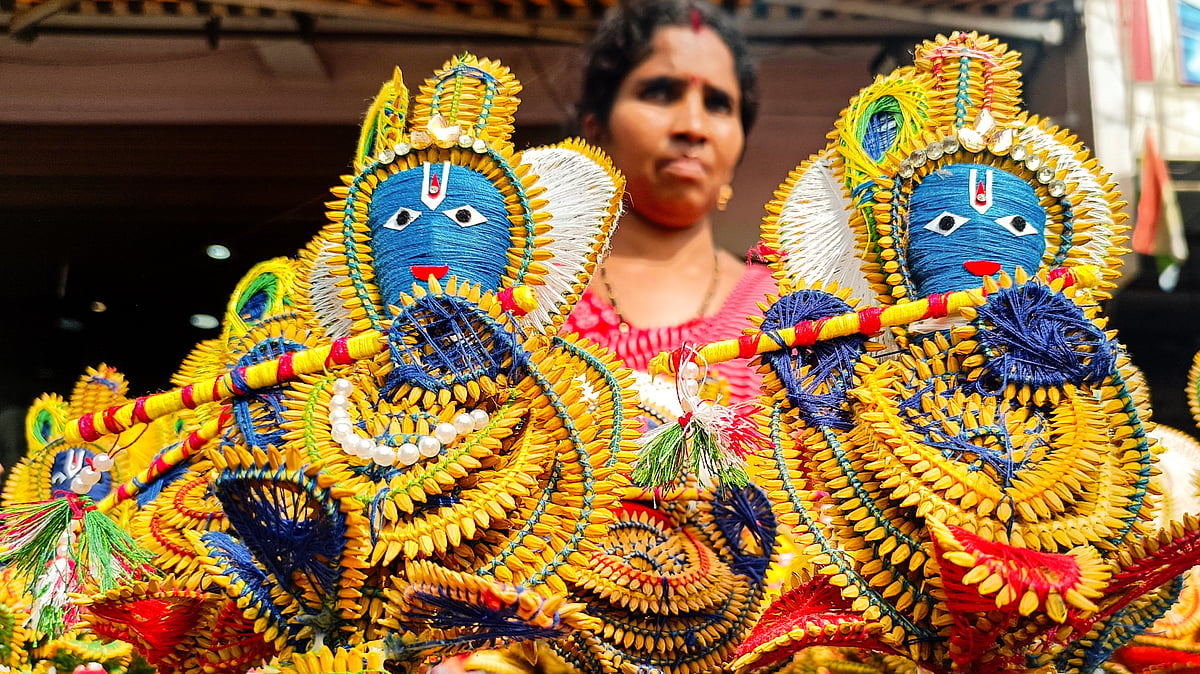
In India’s rich cultural history, few figures have inspired devotion transcending faith as profoundly as Lord Krishna. The flute-playing cowherd of Vrindavan, philosopher of the Bhagavad Gita, and embodiment of divine love has captivated not only Hindu bhakti poets but generations of Urdu writers, many practising Muslims. On Janmashtami, their verses testify to a syncretic tradition in which Krishna’s bansuri was heard equally in Mathura’s fields and the mushairas of Agra, Lucknow and Lahore.
This tradition is neither anomaly nor modern invention. From the 18th century, Urdu poets treated Krishna as an archetype of beauty, love and moral courage, weaving him into a universe that also celebrated the Prophet and Sufi saints. Their work reflects the Ganga-Jamuni tehzeeb — a shared cultural memory that allowed devotion to flow freely across religious lines.
Nazeer Akbarabadi: The people’s poet of Braj
Among the earliest voices was Nazeer Akbarabadi (1735–1830), contemporary of Mir Taqi Mir and often called the father of the Urdu nazm. Living in Agra near Braj, he wrote extensively on Holi, Diwali and Krishna’s leelas. His poem Kanhaiyya Ji Ki Baansuri captures the divine flute’s power:
Mohan ki baansuri kya kya kahun jatan
Lai us ki man ki mohini, dhun us ki chit-haran
(What shall I say of Mohan’s flute, try as I might?
It steals the mind with its enchanting melody, captivating the heart.)
The refrain:
Sub sun-ne vaale kah uthe jai jai Hari Hari
Aisi bajaaii Kishan Kanhaiyya ne baansuri
(All who heard cried out, 'Victory to Hari, Hari!'
Such was the flute played by Kishan Kanhaiyya)
Nazeer saw no contradiction in affirming Islamic faith, writing that angels and demons alike recite Muhammad’s kalima. His Krishna poetry expressed a society where festivals and folk devotion were shared cultural property.
Hasrat Mohani: Maulana who pilgrimed to Mathura
Syed Fazlul Hasan Hasrat Mohani (1875–1951) most strikingly embodies this syncretism. A freedom fighter who coined the iconic slogan 'Inquilab Zindabad', a member of the Congress and Muslim League, a socialist and a devout Muslim who performed Hajj multiple times, he also pilgrimed repeatedly to Mathura and Nandgaon, and addressed Krishna as Hazrat Shri Krishna Alaihi-Rahma.
In a celebrated ghazal:
Kucch hum ko bhi ata ho ke aye hazrat-e Krishn
Iqleem-e ishq aap ke zer-e qadam hai khaas
Hasrat ki bhi qubool ho Mathura men haazeri
Sunte hain aashiqaun pe tumhaara karam hai khaas
(O Revered Krishna, grant something to me too,
For the special realm of love lies under your feet.
May Hasrat’s presence in Mathura also be accepted;
We hear you bestow special grace upon lovers.)
He declared Gokul beloved when he recited the kalima of love in Krishna’s name. Writing polished ghazals and Awadhi-style bhajans, Hasrat moved easily between Prophet and flute-player, rooted in the Sufi understanding that true divine love transcends formal boundaries.
When the flute is a symbol of unity and resistance
Seemab Akbarabadi (1882–1951) used Krishna’s broken flute as a metaphor for a fractured nation, vowing to reassemble it and play songs of universal love:
Unhen maiN jod ke phir baansuri banaauN ga
Jo naGhme gaaye gaye the vo maiN bhi gaauN ga
MaiN us se az-sar-e-nau hind ko jagaauN ga
MaiN aag un se mohabbat ki phir lagaauN ga
(I will join them together into that flute again.
I will play the same songs of universal love that were played then.
With those songs and that flute I will wake up India all over again.
With those songs I will set the fire of love alight.)
Josh Malihabadi evoked the magical murali filling the heart with benevolence:
Ye kin ne bajaaii muralia
Hirdai meN badri chhaaii
Gokul bun meN barsa raNg
Baja har ghaT meN mardaNg
(Who is it that plays this magical flute?
Clouds of benevolence rain down my heart.
Joyful colour spreads in the garden of Gokul.
Every pot rings out with the sound of drums.)
Bekal Utsahi prayed to Kanhai for a mirror revealing shortcomings and a pen like the divine flute:
Aisa darpan mujhe Kanhai de
Jis men meri kami dikhaaii de
De qalam apni baansuri jaisa
Apni rangat ki raushnaaii de
(O Kanhai, grant me a mirror
In which I can see my own shortcomings.
Grant me a pen like your flute,
Grant me ink the colour of your skin.)
Sahir Ludhianvi turned Krishna’s promised return into modern allegory in a nazm for Krishan Chandar:
Krishn ne vaada kiya tha ke vo phir aayeN ge
Jab bhi dharti pe gunaahauN ka andhera chhaaya
Jab kabhi zulm aur shaqaavat ka alam lahraaya
Krishn ne vaada kiya tha ke vo phir aayen ge
(Krishn had promised that he would come again
Whenever the earth was darkened by evil.
Whenever oppression and misery raise their flag
Krishn had promised that he would come.)
The flute, Sahir suggested, was reborn as the writer’s pen sounding against injustice.
Nida Fazli gave the tradition its most inclusive expression:
Brindaban ke Krishn Kanhaiya Allah hu
Bansi Radha Gita gayya Allah hu
MaulviyoN ka sajda panDit ki puja
MazdoorauN ki haiyyaa haiyyaa, Allah hu
(The Krishna Kanhaiyya of Brindavan is a form of Allah’s praise.
The flute, Radha, the Gita, the cow — all point to the Creator.
The maulvi’s prostration, the pandit’s worship,
The labourers’ rhythmic cries of effort — all are worship of the same divinity.)
Hafiz Jalandhari (1900–82), composer of Pakistan’s national anthem, in Krishn Kanhaiyya moved from mystical wonder to political plea under colonial rule, calling for Krishna’s return:
HaaN teri judaaii
Mathura ko na bhaaii
Tu aaye to shaan aaye
Tu aaye to jaan aaye
Aana na akele
Hon saath vo mele
Sakhiyaun ke jhamele
(Your long absence does not become Mathura.
If you come, glory will return; if you come, life will be restored.
But do not come alone—bring with you those festivals,
The playful gatherings of the sakhis.)
From page to screen
The spirit entered popular culture through Bollywood. Shakeel Badayuni’s 'Mohe Panghat Pe Nandlal Chhed Gayo Re' from Mughal-e-Azam (1960) brought Krishna’s teasing of the gopis into the Mughal court during Janmashtami, becoming a cherished classical number. Javed Akhtar’s 'Radha Kaise Na Jale' from Lagaan (2001) reimagined the Krishna-Radha-gopis triangle with wit and tenderness.
These poets wrote as inheritors of a shared civilisational inheritance in which Krishna’s flute was the call of pure love — ishq that Sufis and bhaktas recognised as the path to the divine. Their verses remind us that the deepest expressions of faith flourish in the fertile spaces where cultures meet.
As India celebrates Janmashtami, the voices of Nazeer, Hasrat, Seemab, Josh, Bekal, Sahir, Nida, Hafiz and popular lyricists continue to echo. They invite us to listen again to the bansuri — not as the property of any single community, but as a melody that once, and can again, draw the entire land into an inclusive dance of devotion.
Hasnain Naqvi is a former member of the history faculty at St Xavier’s College, Mumbai. More of his writing here
Join our official telegram channel (@nationalherald) and stay updated with the latest headlines