Business
India-UK trade agreement comes into force, expanding market access and lowering tariffs
Nearly all Indian exports gain duty-free entry into the UK, while phased tariff cuts make several British products cheaper in India
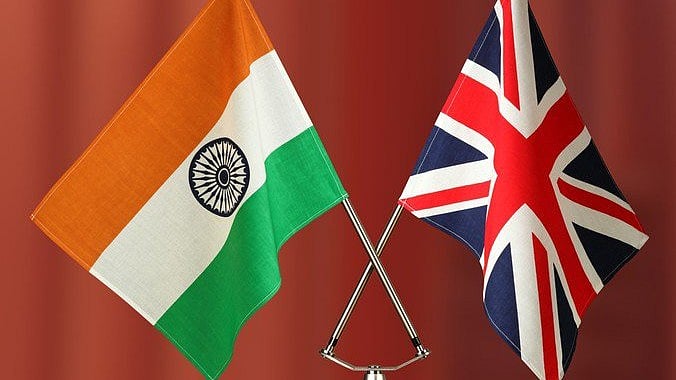
The India-United Kingdom Comprehensive Economic and Trade Agreement (CETA) came into force on Tuesday, marking a major milestone in bilateral economic ties by granting duty-free access to almost all Indian exports to the UK while progressively lowering tariffs on a range of British goods entering India.
The agreement, signed in London on 24 July 2025, by Commerce and Industry Minister Piyush Goyal and UK Business and Trade Secretary Jonathan Reynolds in the presence of Prime Minister Narendra Modi and UK Prime Minister Keir Starmer, is expected to significantly boost trade, investment and services between the two countries.
Describing the pact as a "triumph of economic statecraft", Goyal said the agreement removes long-standing tariff barriers and provides immediate duty-free access to 99 per cent of India's tariff lines in the UK market.
He said the deal would strengthen the competitiveness of Indian exports across sectors including textiles, leather, marine products, engineering goods and processed food.
The agreement also ushers in phased tariff reductions on selected British imports into India. Import duty on Scotch whisky has been cut from 150 per cent to 75 per cent with immediate effect and will decline further to 40 per cent over the next decade. Tariffs on British gin have also been lowered.
Premium British automobiles, including luxury brands such as Rolls-Royce, Aston Martin, McLaren and Land Rover, will become more affordable as import duties on fully built vehicles are gradually reduced from as high as 110 per cent to 10 per cent over 10 years under a quota-based system. Similar phased access has been provided for British electric and hybrid vehicles.
Other British consumer products expected to become cheaper include chocolates, biscuits, soft drinks, cosmetics and selected premium retail goods.
On the export front, Indian manufacturers will benefit from the elimination of UK import duties across several sectors. Tariffs of up to 70 per cent on processed food, 21.5 per cent on marine products, 18 per cent on engineering goods and auto components, 16 per cent on leather and footwear, 12 per cent on textiles and apparel, and 8 per cent on chemicals and pharmaceutical products have been removed.
The Commerce Ministry said the agreement would improve the global competitiveness of Indian products, strengthen participation in international value chains and create opportunities for farmers, fishermen, workers, MSMEs and manufacturers.
The government expects agricultural and processed food exports to the UK to rise by more than 50 per cent over the next three years, benefiting states such as Maharashtra, Gujarat, Kerala and those in the Northeast.
Duty-free access is also expected to improve export prospects for value-added coffee, tea and spice products, while marine exporters are likely to benefit from stronger demand for shrimp, tuna, processed seafood and fishmeal.
India's textiles and apparel sector is expected to gain from the removal of the earlier 12 per cent UK duty, helping domestic exporters compete more effectively against countries such as Bangladesh, Pakistan and Cambodia, which previously enjoyed preferential access.
The pharmaceutical sector is also expected to benefit as zero-duty access improves the competitiveness of Indian generic medicines and medical devices in one of Europe's largest healthcare markets.
Similarly, India's leather and footwear industry is expected to expand its presence in the UK, with exports projected to grow substantially following the removal of duties of up to 16 per cent.
Beyond merchandise trade, the agreement provides one of the UK's most extensive commitments on services, covering sectors including information technology, financial services, healthcare, education, engineering, telecommunications and consultancy.
The pact also introduces dedicated mobility provisions for business visitors, intra-company transferees, independent professionals, contractual service suppliers and investors. In a first, it creates annual mobility opportunities for 1,800 Indian chefs, yoga instructors and classical musicians.
An accompanying Social Security Agreement exempts Indian professionals on temporary assignments in the UK from making dual social security contributions for up to five years, compared with the earlier three-year limit. The government estimates that more than 75,000 Indian professionals and over 900 companies will benefit, resulting in savings exceeding Rs 4,000 crore.
While opening 89.5 per cent of its tariff lines to British goods, India has retained protection for several sensitive sectors, including dairy products, cereals, millets, pulses, edible oils, apples, gold, jewellery, smartphones, optical fibre, critical energy products and marine vessels. Tariff reductions for sectors linked to the Make in India and Production-Linked Incentive (PLI) schemes will be implemented gradually over periods of five to 10 years.
Bilateral trade between India and the UK currently stands at around $56 billion, with both governments aiming to double the figure by 2030.
With agency inputs
Join our official telegram channel (@nationalherald) and stay updated with the latest headlines