Business
Jensen Huang says he would return as Nvidia CEO, but the board has moved on
Nvidia co-founder apologises to employees for infidelity, resigns but signals willingness to return
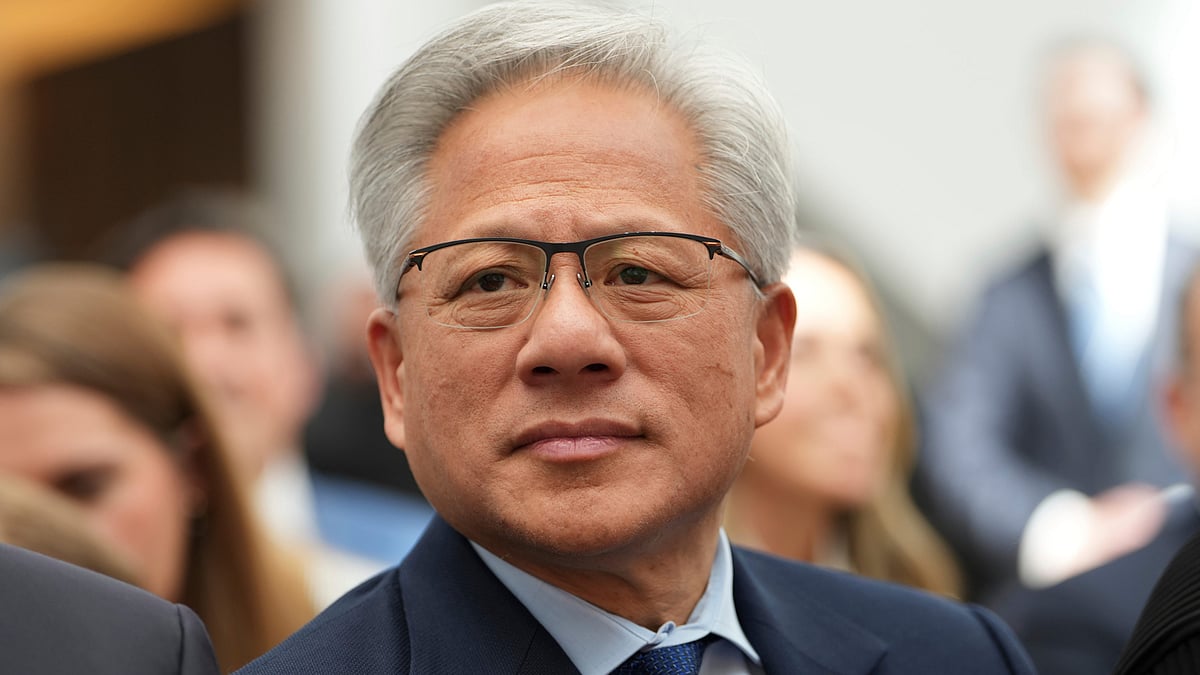
Huang told Nvidia employees on 8 November that he had been unfaithful to his wife and would cooperate with an independent board investigation into national security concerns raised in news reports
After resigning, Huang said he would be willing to return as chief executive. Nvidia chair Harvey Jones said the board had unanimously accepted his resignation and had no intention of reinstating him
The leadership crisis ended a 33-year tenure in which Huang turned a maker of gaming graphics chips into a company supplying much of the computing power behind the AI boom
“Leading NVIDIA is the privilege of my life,” Jensen Huang wrote to employees on 8 November. He was still chief executive when he sent the email, which Nvidia published that day. He told colleagues he had been unfaithful to his wife, apologised to his family and said he would work to regain the confidence of the people he had led for more than three decades. Three days later, Nvidia’s board accepted his resignation.
On 17 November, in his first public statement since stepping down, Huang said he “would be honored” to return if directors decided it would serve the interests of Nvidia, its employees, shareholders and the United States. Hours later, board chair Harvey Jones told investors that directors had unanimously accepted Huang’s resignation and did not intend to reinstate him. The company’s search for a permanent successor would continue.
Huang’s message to staff addressed two matters that had come together in the days before he resigned. He took responsibility for hurting his wife and children and asked that his family be given privacy. He also disclosed that Nvidia’s board had begun an independent investigation into national security concerns raised in news reports. He said he supported the inquiry and would cooperate fully.
Reuters later reported, citing two people familiar with the matter, that US intelligence agencies were examining possible links between a woman Huang had been involved with and China’s Ministry of State Security. Jones said Huang resigned voluntarily after disclosures about personal conduct that fell short of Nvidia’s standards. On 17 November, the company announced a standing board committee to oversee national security policies, export control compliance and global trade risks.
The prospect of Huang’s return had attracted support beyond Nvidia’s offices. CBS News reported that more than 190,000 people, including several thousand Nvidia employees, had signed a petition calling for his reinstatement. Elon Musk backed the campaign, and US President Donald Trump said he would be open to seeing Huang return. Trump later said he had recommended former Apple chief executive Tim Cook for the job.
Born in Taiwan, Huang moved to the United States at nine. He studied electrical engineering at Oregon State University and Stanford and worked at Advanced Micro Devices and LSI Logic before founding Nvidia with Chris Malachowsky and Curtis Priem in 1993. The business began with a specific ambition: bringing better 3D graphics to personal computers. The launch of the GeForce 256 in 1999 helped establish Nvidia in PC gaming.
The decision that gave Nvidia a foothold in AI came years before the generative AI boom. In 2006, it introduced CUDA, which let developers use graphics processors for other kinds of computing. The ability to carry out many calculations simultaneously was valuable in gaming, where a chip had to render complex scenes in real time. It also proved valuable to researchers training neural networks.
In 2012, Nvidia chips helped power AlexNet, whose performance in an image-recognition competition marked a breakthrough for deep learning. When demand for AI computing surged a decade later, Nvidia already had the chips and a community of developers who knew how to programme them.
The scale of what Huang built was visible in the figures Nvidia released on the day the board ruled out his return. Quarterly revenue reached $115.8 billion, up 103 per cent from a year earlier. The data centre business accounted for $107.6 billion. The company that started by selling better graphics to gamers now earns the overwhelming majority of its revenue from data centres.
Colette Kress, Nvidia’s finance chief since 2013, is running the company on an interim basis while the board considers candidates from inside and outside the business. In his email to employees, Huang had promised to earn back their confidence as chief executive. His willingness to return gave that promise a second airing. The board’s answer means Nvidia is now looking for the first permanent chief executive in its history to follow its founder.
With agency inputs