Business
Huang’s resignation throws Nvidia into leadership turmoil
AI chipmaker begins search for permanent chief as investigations continue and Trump backs Tim Cook for the role
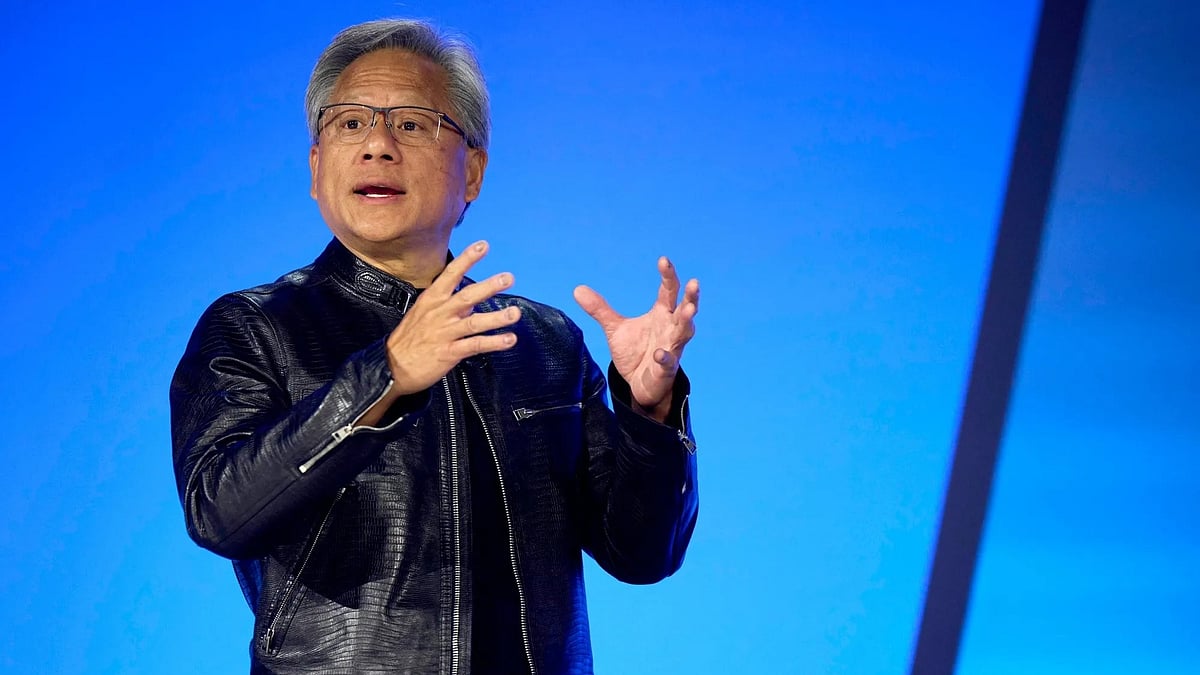
Jensen Huang has resigned as Nvidia chief executive following reports of extramarital affairs, including one involving a businesswoman suspected by US intelligence of spying for China
Chief financial officer Colette Kress has taken interim charge while the board searches for a permanent successor
The departure leaves Nvidia facing leadership and security questions, with its shares closing more than 4 per cent lower on Thursday
Jensen Huang has resigned as Nvidia’s chief executive following reports of extramarital affairs, including a relationship with a businesswoman suspected by US intelligence of spying for China, bringing an abrupt end to his three-decade leadership of the chipmaker.
Nvidia announced his departure on Thursday, effective immediately, and appointed chief financial officer and executive vice president Colette Kress as interim CEO. The board said it would consider candidates from within and outside the company for the permanent position.
The resignation places one of the world’s most valuable companies at a sensitive crossroads. Nvidia’s advanced chips have become central to the development of artificial intelligence, while Huang has emerged as an influential advocate for the industry in Washington.
Kress, who joined Nvidia in 2013 after working at Cisco, Microsoft and Texas Instruments, pledged to build on the company’s existing strengths and maintain its direction. The board also appointed Harvey C. Jones as its first chairman.
Huang co-founded Nvidia with Chris Malachowsky and Curtis Priem in 1993 and had led it ever since. His departure leaves the company searching for a successor to an executive closely identified with its technology, strategy and public standing.
Pressure on Huang intensified after reports of his relationship with Alice Huang, a former executive at Singapore-based Megaspeed International who also uses the name Huang Le. The two are not related.
The New York Times reported that US intelligence agencies believed she had supplied information to Beijing. China has rejected the espionage accusations.
On Sunday, Huang apologised to his wife, children and employees, acknowledging that he had been unfaithful. Neither he nor Nvidia identified the person involved in that statement.
The company initially said Huang would remain chief executive while it investigated whether he had been targeted by a foreign intelligence operation. Reports subsequently emerged of a separate relationship with an Nvidia executive who reported directly to him, adding to calls for his departure.
Reuters later reported, citing unidentified sources, that Huang had also had an intimate relationship with another employee.
Nvidia did not address the relationships in its announcement of the leadership change.
The company’s internal review remains unresolved. When it announced the inquiry on Sunday, Nvidia said it had no reason to believe that company secrets or US national security had been compromised, while committing to examine the available information.
President Donald Trump has said the FBI is investigating Huang’s relationship with Alice Huang, although the scope and progress of that inquiry remain unclear. Lawmakers from both major US parties have called for further investigation.
Scrutiny has also fallen on Nvidia’s connections with Megaspeed, which has promoted its partnership with the chipmaker. The Singapore-based company faced accusations last year of illegally shipping advanced Nvidia chips to China. It subsequently said there was no evidence of such exports.
On Thursday, Megaspeed said it took its obligations under US export-control laws seriously and would cooperate transparently with American authorities.
Singaporean authorities said they questioned Alice Huang and confiscated her passport during an investigation into Megaspeed last year. They found insufficient evidence that she had committed a crime but suspected she had supplied inaccurate information to minimise her role at the company.
Malaysia said on Friday that it was investigating whether chips imported by Megaspeed or its Malaysian affiliate, Speedmatrix, had been re-exported to another country.
Beijing, meanwhile, denied attempting to entrap Jensen Huang, with its foreign ministry describing the spying accusations as unsupported and politically motivated.
Trump continued to praise Huang after his resignation. The two have maintained close ties during the president’s second term, with Huang lobbying for lighter AI regulation and fewer restrictions on chip sales to China.
The president also publicly proposed former Apple chief executive Tim Cook as Nvidia’s next leader. His intervention drew criticism from House Democratic leader Hakeem Jeffries, who questioned Trump’s involvement in corporate leadership decisions.
Nvidia shares closed more than 4 per cent lower on Thursday after a sharper fall earlier in the session.
The upheaval has broadened concerns about governance and security at companies driving the AI expansion. Some analysts expect the intelligence accusations to strengthen demands for tighter controls on advanced chip exports to China.
Forrester group research director Stephanie Balaouras said Nvidia’s ability to stabilise under new leadership would also test confidence in the wider AI investment boom. A swift recovery would demonstrate resilience, she said, while sustained pressure on its shares, financing relationships or commercial commitments would deepen concerns about the sector’s vulnerability.
With PTI inputs
Join our official telegram channel (@nationalherald) and stay updated with the latest headlines