Business
NVIDIA reinstates Jensen Huang as AI bubble fears deepen; stock rises sharply
Eases leadership uncertainty after bruising sell-off, but investors remain wary of AI spending, valuations and returns
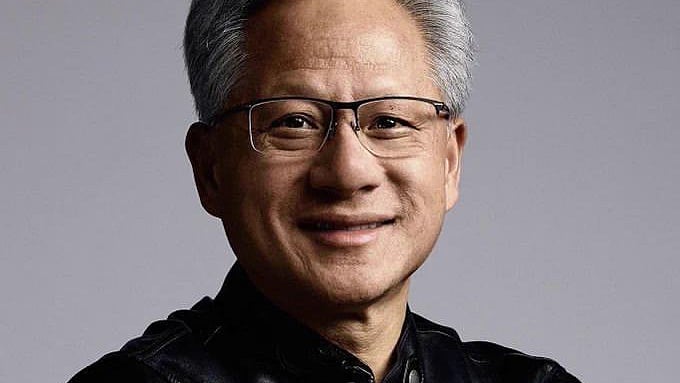
NVIDIA reinstates co-founder Jensen Huang as president, CEO and board director, reversing his resignation amid investor concerns; shares rebound sharply.
Huang's return restores leadership stability but does little to ease fears over AI valuations, massive infrastructure spending and uncertain returns.
Investors remain wary of potential AI bubble, questioning whether the billions poured into chips and data centres will translate into sustainable profits.
NVIDIA reinstated co-founder Jensen Huang as president, chief executive and board director on Monday, 23 November, reversing its decision to accept his resignation less than two weeks ago after a revelation that he was in a relationship with a woman who may have been working as a Chinese spy, as the chipmaker seeks to steady investor confidence amid a deepening sell-off in artificial intelligence-linked stocks and fears of an AI bubble.
The board voted unanimously to bring Huang back with immediate effect following discussions with him, saying it was satisfied with his candour and ability to lead the company. It also said it had consulted senior US government officials and was confident his reinstatement posed no national security risk.
NVIDIA shares surged nearly 30 per cent in pre-market trading on Monday following the announcement, recovering some losses after a bruising sell-off that had seen the stock hit an 18-month low. The broader technology sector also rebounded, with US stock futures climbing as investors returned to battered AI-linked shares.
Huang's return removes an immediate leadership uncertainty at a company central to the global AI infrastructure boom. But it does little to resolve the bigger question weighing on markets — whether the enormous sums being poured into AI chips, data centres and computing infrastructure will ultimately generate returns sufficient to justify the investment.
Huang's exit deepened an already growing crisis
NVIDIA's stock had been under pressure well before Huang's resignation on 12 November, as investors questioned the sustainability of the AI-driven rally, the scale of capital expenditure by technology companies and the increasingly complex financing arrangements underpinning the infrastructure build-out.
The leadership crisis deepened the concerns. Huang's departure unsettled investors at a company that has become the backbone of the AI ecosystem, supplying advanced processors while also investing in cloud infrastructure providers, startups and other companies expanding capacity to meet demand for AI computing.
The board had initially rejected Huang's offer to return, saying it would move ahead with a search for a permanent successor. Board chair Harvey Jones had publicly ruled out reinstatement, making Monday's reversal particularly striking.
Huang's return was also backed by US President Donald Trump, who publicly urged NVIDIA's board to bring him back. The reversal now removes the immediate succession uncertainty, reassuring investors that the company's strategy and leadership will remain under the control of its co-founder, who has been central to its expansion and relationships with customers, suppliers and policymakers.
NVIDIA said its independent investigation into reports surrounding Huang and a suspected foreign intelligence effort would continue. The company is also strengthening oversight of national security and export-control compliance.
The bigger fear: Is the AI boom becoming a bubble?
The sell-off across AI-linked stocks reflects growing unease that the industry's spending boom may be running ahead of the revenue and profits it can realistically generate.
Technology giants are committing hundreds of billions of dollars to data centres, GPUs, networking equipment, energy infrastructure and other computing capacity. While demand for NVIDIA's chips remains strong, investors are increasingly questioning how quickly companies investing in AI will monetise those investments — and whether the eventual returns will justify the extraordinary expenditure.
The concerns intensified last week despite NVIDIA reporting strong quarterly results and an upbeat revenue outlook. Investors appeared less willing to overlook the risks surrounding the AI trade, with the company's leadership turmoil adding to uncertainty about the industry's most influential chipmaker.
A reprieve for NVIDIA, not an all-clear for AI
The return of Huang is likely to be welcomed by investors who view him as indispensable to NVIDIA's technological and commercial leadership. His reinstatement restores continuity at a moment when the company's fortunes are closely tied to confidence in the wider AI infrastructure build-out.
But the market's relief should not be mistaken for a resolution of the AI bubble debate. NVIDIA's ability to sustain its growth will depend not only on continued demand for its chips but also on whether the companies building AI infrastructure can turn their spending into durable, profitable businesses.