Business
RBI opts for capital inflows over rate hikes as global risks mount
The RBI has chosen to focus on attracting foreign capital, underscoring a strategic shift in how it seeks to navigate an increasingly uncertain global environment
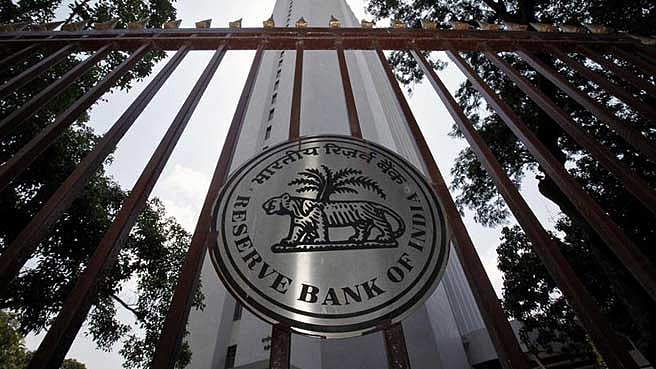
The Reserve Bank of India (RBI) may have left interest rates unchanged, but its latest monetary policy signalled a broader strategic shift towards strengthening the country’s external financing position rather than relying on higher borrowing costs to tackle emerging economic risks.
Defying expectations in sections of the market that had begun pricing in a possible rate increase, the Monetary Policy Committee (MPC) kept the repo rate unchanged at 5.25 per cent and retained its neutral policy stance. However, economists and market participants believe the real significance of the June policy lies in a package of measures designed to attract foreign capital and bolster India's external sector.
The decision comes against a backdrop of heightened uncertainty triggered by the prolonged conflict in West Asia, which has pushed up crude oil prices, disrupted global supply chains and increased volatility across financial markets.
For India, the fallout is being felt through renewed pressure on the rupee, rising imported inflation risks and concerns over the country's current account balance.
Reflecting these challenges, the RBI revised its economic projections. Consumer price inflation for FY27 has been raised to 5.1 per cent from an earlier estimate of 4.6 per cent, while core inflation is now projected at 4.7 per cent. The central bank also highlighted the possibility of second-round inflationary effects from elevated fuel and commodity prices.
At the same time, growth expectations have been lowered. The RBI now expects the economy to expand by 6.6 per cent in FY27, down from its earlier forecast of 6.9 per cent, citing higher energy costs, supply-side disruptions and the risk of a weaker monsoon.
Faced with the twin challenge of rising inflationary pressures and slowing growth, policymakers chose to hold rates steady rather than tighten monetary conditions. While a rate hike could have strengthened anti-inflation credentials and offered limited support to the rupee, the MPC appeared to conclude that the current environment required greater flexibility until the durability of global shocks becomes clearer.
More significantly, the RBI announced a series of measures aimed at encouraging capital inflows and easing pressure on the external account.
These include a concessional swap facility for public sector undertaking external borrowings, support for hedging costs on Foreign Currency Non-Resident Bank [FCNR(B)] deposits, an extension of export realisation timelines and further liberalisation of foreign investment limits in government securities.
The measures were accompanied by government initiatives to remove capital gains tax and interest withholding tax on foreign portfolio investments in select government bonds, further enhancing India's appeal to global investors.
Analysts quoted by Moneycontrol say the coordinated package indicates that policymakers are seeking to attract foreign capital rather than rely on higher interest rates as the primary tool to defend the currency and manage external vulnerabilities.
The strategy reflects concerns that elevated crude oil prices could widen the current account deficit at a time when foreign portfolio inflows remain subdued, particularly in equity markets. By creating multiple channels for capital inflows, authorities hope to secure a more stable source of foreign exchange and reduce pressure on domestic liquidity conditions.
Market reaction suggested investors welcomed the approach. Government bond yields declined across maturities, particularly at the shorter end of the curve, while overnight indexed swap rates softened as expectations of future rate increases diminished. The rupee also strengthened in early trading following the announcement.
Looking ahead, the RBI has maintained room for policy action should inflationary pressures intensify. With inflation projected to move closer to the upper end of the central bank’s tolerance band and core inflation showing signs of firming up, policymakers have kept the option of future rate increases open.
For now, however, the June policy signals a distinct preference for using capital account measures to reinforce economic stability. Rather than responding to external pressures with tighter monetary policy, the RBI has chosen to focus on attracting foreign capital, underscoring a strategic shift in how it seeks to navigate an increasingly uncertain global environment.
Join our official telegram channel (@nationalherald) and stay updated with the latest headlines