Business
Sensex crashes 1,313 points as Modi’s austerity plea, oil surge spook investors
Markets tumble for third straight session amid fears over fuel costs, forex pressure and economic fallout from West Asia crisis
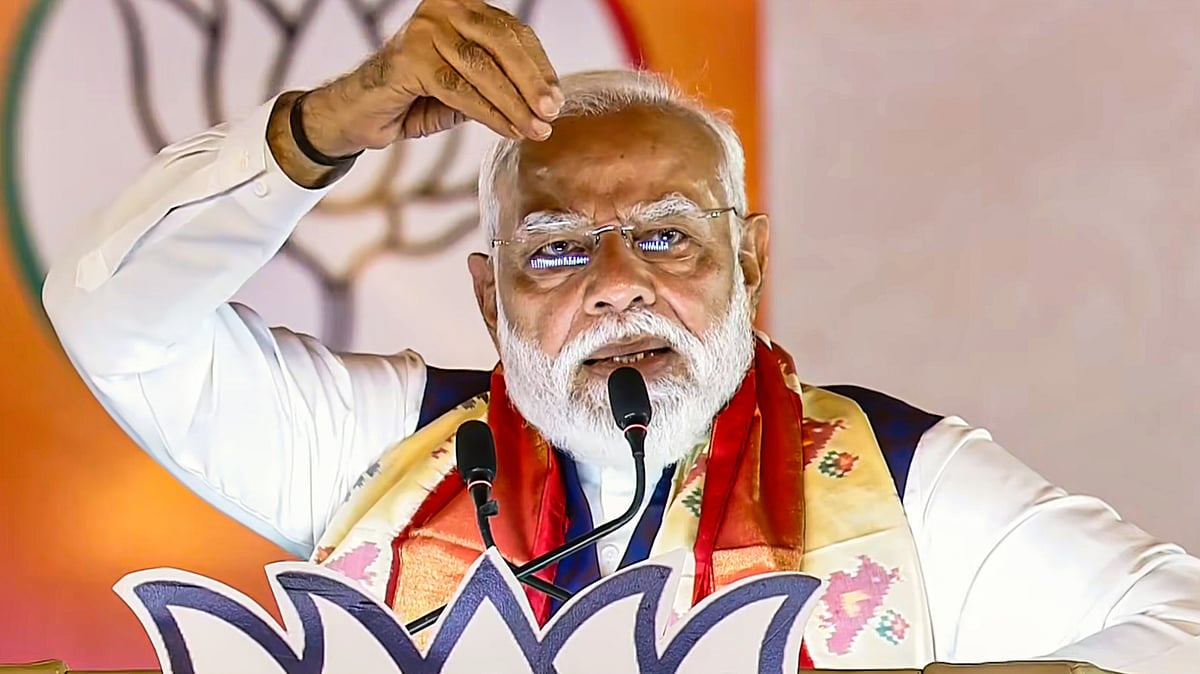
Stock markets extended their losing streak for a third straight session on Monday, 11 May, with benchmark indices plunging sharply as Prime Minister Narendra Modi’s call for austerity measures amid the West Asia crisis amplified investor concerns over inflation, fuel costs and pressure on India’s economy.
The 30-share BSE Sensex tanked 1,312.91 points, or 1.70 per cent, to settle at 76,015.28. During intra-day trade, it had fallen as much as 1,370.79 points, or 1.77 per cent, to 75,957.40.
The NSE Nifty also slumped 360.30 points, or 1.49 per cent, to close at 23,815.85. Over the last three sessions since Thursday, the Nifty has dropped more than 515 points, or over 2 per cent, while the Sensex has shed nearly 1,950 points, or 2.5 per cent.
Analysts said Monday’s sharp sell-off was driven not only by escalating geopolitical tensions in West Asia and rising crude oil prices, but also by fears triggered by Modi’s remarks on conserving foreign exchange.
Addressing a BJP rally in Hyderabad on Sunday, Modi urged people to reduce petrol and diesel consumption, postpone gold purchases and defer foreign travel for a year in view of the ongoing crisis in West Asia.
The prime minister also advocated greater use of Metro rail services, electric vehicles, carpooling, railway freight movement and work-from-home arrangements to cut fuel consumption and save foreign exchange reserves. “We have to save foreign exchange by any means,” Modi had said, while warning that the conflict in West Asia had significantly increased petrol and fertiliser prices.
Market experts said the appeal was interpreted as a sign of mounting macroeconomic stress. “The immediate trigger for today’s weakness came after PM Narendra Modi’s speech on 10 May, which the market interpreted as a sign of mounting macroeconomic stress,” said Hariprasad K., research analyst and founder of Livelong Wealth.
“While global uncertainty surrounding the US-Iran conflict and surging crude oil prices had already weakened sentiment, the prime minister’s appeal for austerity measures amplified investor concerns around India’s forex reserves, fuel costs and consumption outlook,” he added.
Investor sentiment was further hit after US President Donald Trump dismissed Iran’s response to the latest peace proposal as “totally unacceptable”, dimming hopes of an immediate diplomatic breakthrough to end the conflict in West Asia.
Brent crude, the global oil benchmark, rose 2.23 per cent to USD 103.5 per barrel. “Brent crude emerged as the key market trigger, surging 4 per cent to around USD 105.7 per barrel, intensifying concerns around imported inflation and India’s external balances,” said Siddhartha Khemka, head of research, wealth management, at Motilal Oswal Financial Services.
Titan emerged as the biggest loser among Sensex stocks, tumbling nearly 7 per cent amid intense selling in jewellery counters after Modi’s remarks on postponing gold purchases.
Jewellery stocks came under broad pressure, with Sky Gold and Senco Gold falling more than 12 per cent during intra-day trade before trimming some losses. Senco Gold eventually closed 7.8 per cent lower after hitting a 10 per cent decline earlier in the session.
Other major laggards included InterGlobe Aviation, State Bank of India, Bharti Airtel, Eternal and Reliance Industries. Among the gainers were Sun Pharma, Hindustan Unilever, Adani Ports, Kotak Mahindra Bank, Axis Bank and ICICI Bank.
“The benchmark index slipped below the 24,000 mark as renewed Gulf tensions, following Trump’s rejection of Iran’s peace proposal, weighed on investor sentiment,” said Vinod Nair, head of research at Geojit Investments Ltd.
“The cautious mood deepened after the PM’s appeal to conserve energy and avoid non-essential foreign travel, prompting investors to reassess the economic impact of higher crude prices, rupee weakness and pressure on the current account deficit,” he added.
Broader markets also ended lower, with the BSE MidCap Select index falling 1.09 per cent and the BSE SmallCap Select index declining 0.44 per cent.
Among sectoral indices, Consumer Durables tumbled 3.76 per cent, Realty fell 2.74 per cent, PSU Banks declined 2.28 per cent and Consumer Discretionary stocks dropped 2.14 per cent. Healthcare and hospital stocks bucked the trend and ended higher.
A total of 2,892 stocks declined on the BSE, while 1,457 advanced and 189 remained unchanged.
In Asian markets, Japan’s Nikkei ended lower, while South Korea’s Kospi, Shanghai’s SSE Composite and Hong Kong’s Hang Seng settled with gains. Most European markets were trading lower, while US markets had ended higher on Friday.
Foreign Institutional Investors offloaded equities worth Rs 4,110.60 crore on Friday, according to exchange data. On Friday, the Sensex had tanked 516.33 points, or 0.66 per cent, to settle at 77,328.19, while the Nifty dropped 150.50 points, or 0.62 per cent, to close at 24,176.15.
With PTI inputs
Join our official telegram channel (@nationalherald) and stay updated with the latest headlines