Business
US lowers forced labour tariff on Indian imports to 10% after policy change
Washington reduces proposed levy from 12.5 per cent after New Delhi amends its foreign trade policy to ban imports of goods produced using forced labour
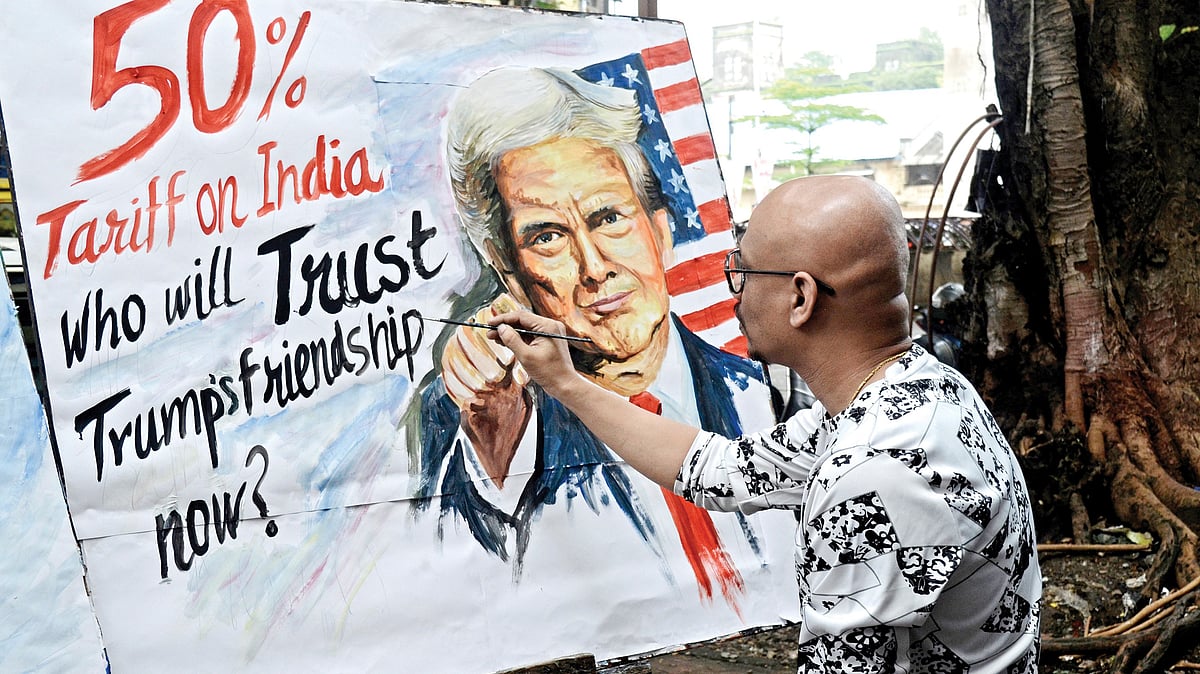
The United States has imposed a 10 per cent tariff on imports from India under a new trade measure targeting goods linked to forced labour, after New Delhi amended its foreign trade policy to prohibit the import of products made using such practices.
The tariff, announced by the Office of the US Trade Representative (USTR) on Thursday, takes effect from 12.01 am Friday. It forms part of a wider action against 60 economies that Washington says have failed to prohibit or effectively enforce restrictions on goods produced with forced labour.
India had initially been slated to face a 12.5 per cent tariff when the USTR unveiled its proposal on 3 June under Section 301 of the US Trade Act of 1974. However, the US reduced the levy after India amended its foreign trade policy on 14 July to ban the import of goods produced using forced labour.
In a memorandum issued on Thursday, US President Donald Trump said the decision reflected steps taken by certain countries to strengthen their trade policies.
“As a result of these actions, the Trade Representative has advised me that the goods of these economies should be tariffed at the 10 per cent rate to further encourage these economies to effectively enforce such prohibitions,” Trump said.
US Trade Representative Jamieson Greer said the action had been taken at the President's direction under Section 301 of the Trade Act after investigations concluded that several economies had failed to adequately restrict imports produced using forced labour.
“The action will begin to correct what is both a human rights abuse and a distortive trade practice to improve the welfare of workers everywhere,” Greer said.
Of the 60 economies covered by the new measure, 17 — including India, Canada, Bangladesh, Pakistan and the United Kingdom — will face a 10 per cent tariff. The remaining 43 economies, including countries that do not have laws prohibiting imports made with forced labour such as China and Japan, will be subject to a 12.5 per cent tariff.
The new tariffs will not apply to certain categories of imports, including raw materials that are critical to domestic supply, products whose absence could cause economy-wide disruptions, or goods that cannot be produced in sufficient quantities within the United States.
The latest measure replaces a temporary 10 per cent tariff imposed on imports from all countries for 150 days from 24 February. That interim levy followed a US Supreme Court ruling in February which struck down the Trump administration's earlier reciprocal tariffs — including a proposed 25 per cent tariff on Indian goods — after finding that the emergency powers used to impose them were unlawful.
A Federal Register notice accompanying Thursday's announcement specifically acknowledged India's policy amendment banning imports made using forced labour, describing it as a factor behind the reduction in the proposed tariff rate.
Despite the lower levy, India has continued to contest the USTR investigations, maintaining that concerns over labour standards and trade practices should be addressed through the ongoing bilateral trade agreement negotiations rather than through unilateral tariff measures.
Trade experts said the reduction, though modest, carries broader diplomatic significance.
“A reduction in the tariff from 12.5 per cent to 10 per cent is modest in percentage points but significant in signalling. It suggests that Washington is willing to calibrate enforcement while preserving the strategic trajectory of the India–US economic partnership,” said Abhik Sengupta, a programme officer with an industry body in Washington.
The US remains India's second-largest trading partner and its largest export market. Bilateral goods trade stood at nearly USD 141 billion in 2025, with India's exports valued at USD 87.3 billion, according to data from India's commerce department.
Meanwhile, the Trump administration is expected to unveil another round of trade measures in the coming weeks targeting imports from countries accused of subsidising excess manufacturing capacity. According to The Washington Post, the proposed tariffs are aimed at addressing what US officials describe as artificially low-priced exports that undermine American manufacturers.
With IANS inputs
Join our official telegram channel (@nationalherald) and stay updated with the latest headlines