Cricket
India women reclaim Asia Cup in emphatic fashion
“We set high standards for ourselves and match them every day. I’m happy with how we come together,” says Harmanpreet Kaur
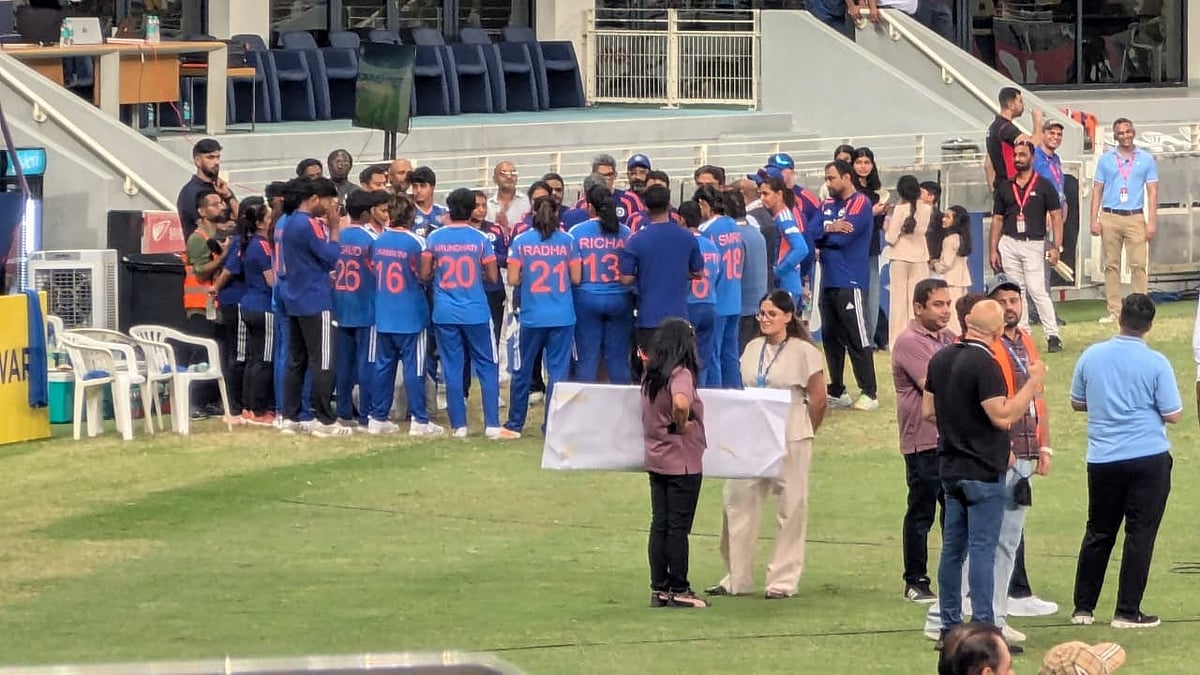
India’s women once again climbed to the summit of Asian cricket, their eighth Women’s Asia Cup title secured in emphatic fashion as Harmanpreet Kaur’s side swept aside Sri Lanka by 72 runs in a one-sided final on Sunday.
It was a victory built on authority and consistency — the very qualities India’s captain said the team had demanded of itself throughout the tournament. Having suffered a painful defeat to Sri Lanka in the previous edition’s final, India returned the favour in commanding style, producing a performance that left little doubt about who ruled the continental roost.
“We set some really high standards for us, and we had to match them every day, and I'm pretty happy with the way we all came up together,” Harmanpreet said after the triumph.
India’s batting laid the foundation for the celebration. The opening pair of Shafali Verma and Smriti Mandhana lit up the final with contrasting yet beautifully complementary half-centuries. Shafali’s explosive 68 came with the familiar aggression that has made her one of the most dangerous hitters in the women’s game, while Mandhana’s elegant 59 provided the perfect counterpoint.
Together, they propelled India towards a formidable 183 for five, leaving Sri Lanka with a daunting chase.
“We know how much potential we have, and we have a great team. I think we played to our standards because that's what we discussed when we came here. We have certain standards, and we have to keep matching them every day,” Harmanpreet said.
The captain was particularly pleased with the way her opening combination shouldered responsibility on the biggest stage.
“We all knew it's not that easy to come back, but I think our openers did an absolutely great job for us, the way they both batted, Smriti and Shafali,” she said. “I think Shafali had a very great tournament, and it's good to see somebody like Shafali taking responsibility and doing the job with bat and ball.”
If the batters built the fortress, India’s bowlers slammed the gates shut. Led by Shree Charani’s incisive spell of four for 20, the Indian attack strangled Sri Lanka’s chase, exploiting a surface that became increasingly slow and difficult to negotiate.
Head coach Amol Muzumdar praised the collective effort, particularly the strength of India’s spin department.
“Really proud of all the players and support staff. It was a fantastic pitch today and we came up good. Our batting was very strong. We started really nicely,” he said.
With the pitch offering increasing assistance to spin, India’s strategy was clear: post a substantial total and unleash their trio of quality spinners.
“If you see throughout the fortnight, the pitch is a bit on the slower side and it turned quite a bit. So putting on a big score and defending it... we had three quality spinners, so that was the tactic,” Muzumdar said.
He also highlighted the distinct qualities of India’s opening duo. Shafali’s power and attacking intent forced Sri Lanka onto the back foot, while Mandhana’s stroke-making elegance provided balance.
“Shafali has got her own style, the power, the charisma, she puts the opposition on the back foot. Smriti has got that flair, they complement each other really well,” he said.
India’s preparation, Muzumdar revealed, had also involved revisiting lessons from their five-match series against Sri Lanka in December. The plan to neutralise Chamari Athapaththu, one of Sri Lanka’s most influential batters, was revisited — and Deepti Sharma executed it with precision.
“We went back to the five-match series against Sri Lanka in December and how we dismissed Chamari, who is an important player for them. That was the plan and glad Deepti executed it,” Muzumdar said.
For 18-year-old G. Kamalini, the triumph was almost surreal. Her brief but sparkling cameo — a four and a six in a five-ball 15 — added valuable late momentum to India’s imposing total. Yet for the teenager, the greater reward came from sharing a dressing room with some of the most experienced players in the game.
“It’s a different feeling. I still can’t digest it. I’m an 18-year-old kid. There’s lot of seniors here,” Kamalini said.
She said observing the composure of India’s senior players had been an education in itself.
“I learned a lot from them, mind-wise. I think the mindset the seniors have, that whether they get out on 100 or 0, they have the same mindset, so I learned that from them,” she added.
For Nandani Sharma, appearing in her first major tournament for India, the title was another step in what promises to be an exciting international journey. The medium-pacer credited the team’s meticulous preparation and the confidence coursing through the squad.
“This is my first major tournament with India so it feels very good. I feel the credit goes to my team-mates and staff. They had made clear plans. Everyone's confidence is very high and we'll focus on our practice and hope to win the Asian Games as well,” she said.
Nandani also spoke of Deepti Sharma’s knack for producing breakthroughs precisely when India need them most.
“She delivers wickets where we need it the most. So we knew she'll handle it. We just wanted to give a good start to the team,” she said.
Wicketkeeper-batter Richa Ghosh, meanwhile, reserved praise for the fans who transformed the final into a memorable spectacle. The crowd’s energy, she said, gave India an additional lift as the team tightened its grip on the contest.
“The atmosphere has been really great how the fans came out and cheered for us,” Richa said.
She explained how India sensed the game turning their way once the surface began to slow and the first breakthroughs arrived.
“At the start the ball was coming on nicely and then it started to get slower. Our batters played really well and we knew if we got a couple of wickets, we'll be able to stop them,” she said.
The eighth Asia Cup title thus belonged to India not merely through individual brilliance but through a performance stitched together by every department — explosive opening batting, calculated finishing, disciplined bowling and sharp tactical planning.
For Harmanpreet and her team, it was also a measure of redemption. The defeat to Sri Lanka in the previous final had left a lingering wound; this time, India responded with the kind of clinical cricket that turns disappointment into determination and ambition into silverware.
And as the celebrations began, the message from the Indian camp was unmistakable: the standards have been set high, and the champions intend to keep meeting them.
With agency inputs
Join our official telegram channel (@nationalherald) and stay updated with the latest headlines