Environment
Millions of lives at risk unless climate crisis declared health emergency: WHO-linked report
International commission warns millions more could die without coordinated global action on climate and health
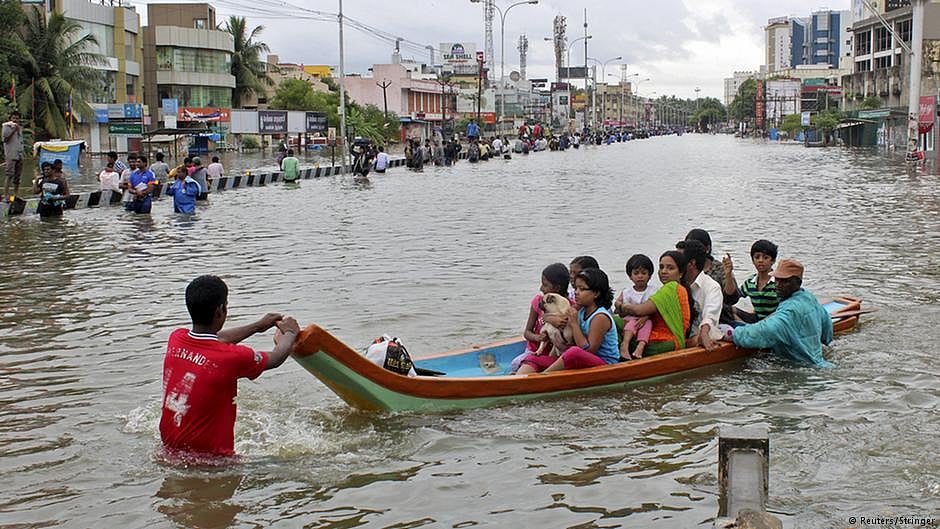
An international commission convened by the World Health Organization has recommended that the climate crisis be declared a global public health emergency, warning that millions more people could die unnecessarily if governments fail to act urgently.
The independent pan-European commission on climate and health said the scale of health risks linked to climate change now warranted classification as a “public health emergency of international concern” (PHEIC) — the WHO’s highest alert category previously used for crises such as Covid-19 and Mpox.
The commission said rising cases of vector-borne diseases such as dengue and chikungunya, along with extreme weather events, air pollution, food insecurity and heat-related illnesses, had transformed climate change into an immediate global health threat.
Former Iceland prime minister Katrín Jakobsdóttir, who chaired the commission, said the climate crisis was threatening humanity’s “health and survival”.
“The climate crisis may not be a pandemic, but it’s still a public health emergency,” she said, warning that without faster and more comprehensive action “many millions more people could die or face life-changing illness”.
Fossil fuel subsidies under fire
The report sharply criticised continued government subsidies for fossil fuels, saying oil and gas production was directly responsible for around 600,000 premature deaths annually in Europe alone.
According to the commission, European countries spend nearly €444 billion annually subsidising fossil fuels. In several countries, such subsidies exceeded national healthcare expenditure.
“This is not a sustainable energy policy. It’s really more of a public health failure,” Jakobsdóttir said, cautioning that expanding fossil fuel production amid global conflicts would be “catastrophic for health”.
Hospitals vulnerable to climate shocks
The report also warned that healthcare systems themselves were poorly prepared for climate shocks.
Andrew Haines, the commission’s chief scientific adviser, said hospitals in many countries remained vulnerable to floods and extreme heat because they were designed before climate risks intensified.
He noted that the healthcare sector itself accounts for roughly five per cent of global greenhouse gas emissions, making adaptation and emissions reduction within health systems increasingly urgent.
WHO Europe backs stronger action
Responding to the recommendations, WHO Europe regional director Hans Kluge said climate change was simultaneously a health, economic and security crisis.
“The decisions taken by governments today will determine the disease burden carried by people who are currently in primary school,” Kluge said, pledging to ensure climate change was treated as a health emergency across WHO’s European member states.
Climate scientists also backed the recommendation, arguing that mounting evidence linking planetary warming with worsening public health risks justified a formal global emergency declaration.
Join our official telegram channel (@nationalherald) and stay updated with the latest headlines