Environment
Brazil: Lula’s re-election raises hopes for Amazon protection, but a divided legislature poses challenge
Environmentalists and Indigenous groups welcome Brazilian president’s victory, while warning that a right-leaning Congress could weaken climate action
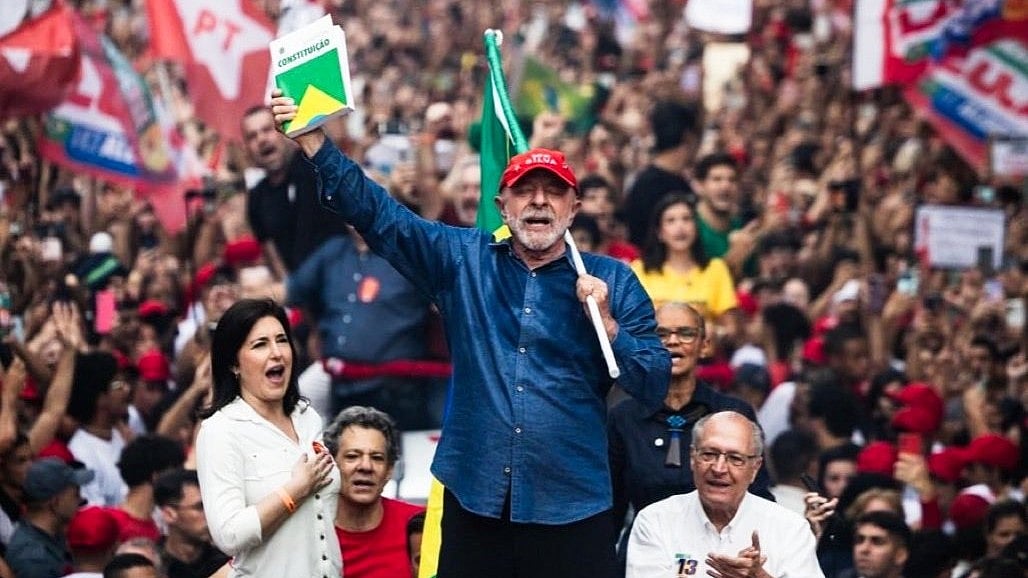
Environmentalists, Indigenous groups and climate scientists have welcomed Brazilian President Luiz Inácio Lula da Silva’s re-election, hoping it will sustain efforts to curb illegal deforestation in the Amazon rainforest. However, they have warned that a Congress increasingly dominated by right-wing lawmakers and agribusiness interests could undermine environmental protections.
Lula defeated Senator Flávio Bolsonaro, son of former far-right president Jair Bolsonaro, in Sunday’s run-off, securing 51.78% of the vote against his rival’s 48.21%. After trailing in the first round, Lula won by a margin of 4.4 million votes.
“The Amazon can breathe a sigh of relief!” said Brazilian scientist David Lapola, lead author of a chapter on climate tipping points in an upcoming United Nations report.
Scientists have warned that the Amazon could reach a threshold beyond which its humid rainforest ecosystem shifts towards a drier environment, with potentially irreversible consequences for biodiversity and the climate. The forest absorbs vast quantities of carbon dioxide, a greenhouse gas driving global warming. About 60% of the Amazon lies in Brazil.
Environmentalists welcome victory but warn of obstacles
Lula is expected to continue efforts to reduce deforestation and finance a sustainable economy through international donations and public and private funding. His government recently announced the lowest rate of Amazon deforestation on record.
However, his support for oil exploration in offshore waters near the Amazon has drawn criticism from environmentalists.
Flávio Bolsonaro, who had pledged to follow policies similar to those of his father, denied climate change while presenting himself as an environmental defender. He called for modernising environmental laws and giving Amazon landowners greater decision-making powers, proposals that environmentalists warned could weaken safeguards and accelerate deforestation.
Brazil’s Climate Observatory, a coalition of 172 organisations, welcomed Lula’s victory but warned that seven in 10 incoming lawmakers oppose its climate and environmental agenda. It cited recent measures weakening pesticide rules, Indigenous land rights and environmental licensing, and urged Lula to build broader political alliances.
“The goal of ending deforestation across Brazil’s biomes must be pursued relentlessly,” the coalition said.
Amazon Watch, an organisation focused on environmental protection and Indigenous rights, also welcomed the result while warning that the new Congress could obstruct efforts to protect forests.
“A Congress strengthened by forces seeking to open Indigenous lands to mining and weaken environmental protections remains a serious threat,” said Ana Alfinito, a legal adviser to the organisation.
WWF Brazil said the country’s biodiversity and its share of the Amazon gave it a strategic role in tackling climate change. It credited Lula with strengthening Brazil’s international environmental leadership and said continued engagement was essential to translating global agreements into action.
Indigenous mobilisation and election challenge
Indigenous communities and advocacy groups mobilised voters in the Amazon region. Following court rulings last week, they also helped secure transport for voters living in remote areas.
The Articulation of Indigenous Peoples of Brazil (APIB), which went to court to secure Indigenous voters’ access to polling stations, said Lula’s victory reflected the “strength of grassroots mobilisation in defence of democracy, life and Indigenous peoples’ rights”.
Flávio Bolsonaro refused to concede defeat on Monday and said he would ask the electoral court to annul the result. He faces the challenge of presenting sufficient evidence of fraud to overturn Lula’s winning margin before the results are certified on 18 December.
Early indications from Brazilian institutions and regional leaders suggest the result will be accepted domestically and internationally.
Dutch pledge boosts forest fund
Lula’s victory has also been followed by fresh funding for forest protection. The Netherlands pledged $500 million on Monday to the Tropical Forest Forever Facility (TFFF), a Brazil-backed initiative launched at last year’s UN climate summit in Brazil.
The fund aims to pay developing countries to keep forests standing. It has been seeking to secure an initial $10 billion by the end of the year, and the Dutch pledge brings total commitments to $7.8 billion.
Claudio Angelo, head of international policy at the Climate Observatory, said prospective donors had held back pending the election outcome. He described the Dutch commitment as a vote of confidence in Lula’s victory.
“There was justified concern that a Flávio Bolsonaro victory could derail the TFFF, that Brazil would pull out and the fund would miss its $10 billion target,” Angelo said.
Join our official telegram channel (@nationalherald) and stay updated with the latest headlines